Russia, US to hold new Ukraine crisis talks after key UN session

 Lights out in Laos as electricity exports surge

 Steven Strogatz weighs AI mathematics advances and their consequences for researchers

 Anthropic boss calls for AI slowdown, Altman and Musk agree

 French IT giant Capgemini sells subsidiary after row over ICE links

 Quebec Brokerage Qubit Insurance Announces New Data on Coverage Shortfalls as Rebuilding Costs Rise

 Lady Gaga welcomes first child with fiance: US media

 Bhutan business bets on hazelnuts for farming future

 'Widow's Bay' and 'The Pitt' are favorites for Emmys night

 Coastal erosion forces cancellation of California music festival

 Argentina's Dirty War rears its head in Venice film

 UK lawmakers throw out bill to legalise assisted dying

 US inflation steady in August, fueling Fed rate hike expectations

 New York marks 25th anniversary of 9/11 attacks

 Nepal flood reconstruction bill to be $4.78 bn: foreign ministry

 JUMO and Standard Bank launch Social Finance Framework to scale inclusive finance in Africa

 Doomsday tech: could AI really kill us all?

 French comedy show 'Call my agent' makes film comeback

 It's all coming back: Celine Dion fans gear up for Paris return

 Researchers eye AI revolution in natural disaster forecasts

 US braces for inflation report that may push Fed to hike rates

 Musk threatens legal action over documentary

 Latin America fact-check group asks Meta not to replace verification practice

 AI Risks to Enter 60–80% of Liability and Cyber Insurance Underwriting by 2028, ScienceSoft Predicts

 Tribal Launches Campfire, Letting Business and Technical Teams Build on Salesforce Together

 Stocks fall as fresh oil surge fans inflation fears

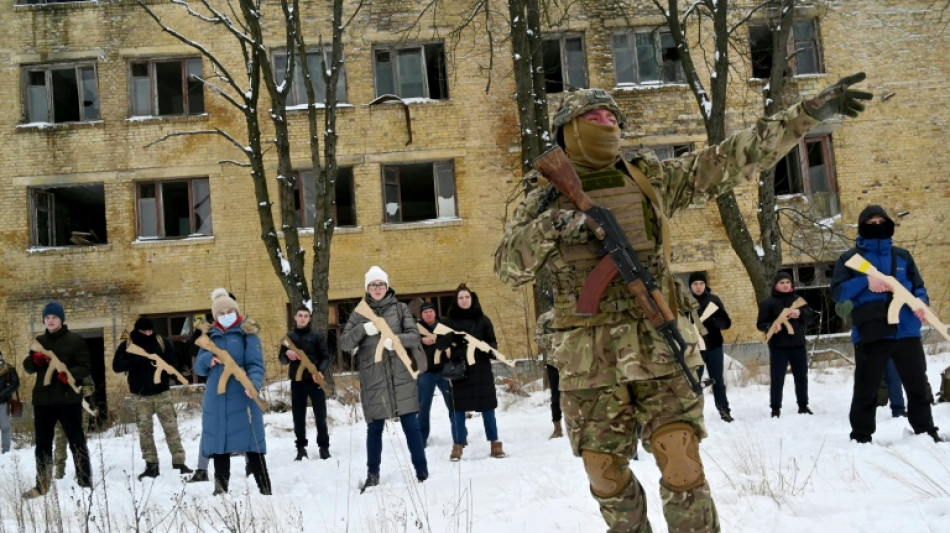
The Russian and US foreign ministers are set to hold fresh talks Tuesday after a UN Security Council meeting on Ukraine, with Washington vowing to work with Western allies to beef up sanctions should Moscow decide to invade its neighbor.
The Security Council is due to convene later Monday over the crisis as fears of an imminent incursion grow, despite Kremlin denials.
Russia announced Foreign Minister Sergei Lavrov will speak with US Secretary of State Antony Blinken.
"Lavrov and Blinken will have a telephone conversation on Tuesday," Russian foreign ministry spokeswoman Maria Zakharova told a press briefing.
The upcoming call is the latest in a flurry of diplomatic meetings between senior diplomats from Moscow, Brussels and Washington over the conflict in Ukraine and disagreements over security concerns in Europe.
The United States and Britain on Sunday flagged new and "devastating" economic sanctions against Russia, as Washington and its allies step up efforts to deter any invasion.
With tensions soaring, the United States said it was prepared to push back against any "disinformation" Moscow put forward in what is expected to be one of the most closely watched United Nations sessions in years.
Russia on Monday is likely to try to block the 15-member council from holding its US-requested meeting, "but the Security Council is unified. Our voices are unified in calling for the Russians to explain themselves," Washington's UN envoy Linda Thomas-Greenfield told ABC News.
"We're going to go in the room prepared to listen to them, but we're not going to be distracted by their propaganda," she said Sunday. "And we're going to be prepared to respond to any disinformation that they attempt to spread during this meeting."
- 'Putin will not stop' -
US Undersecretary of State Victoria Nuland told CBS a proposal on security issues presented last week by the US and NATO to Russia may have stirred interest in Moscow.
The chairman of the Senate Foreign Relations Committee, meanwhile, took a tough stance, saying it was crucial Washington send a powerful message to President Vladimir Putin that any aggression against Ukraine would come at a very high cost.
"Putin will not stop with Ukraine," Senator Bob Menendez said on CNN, indicating that penalities could be levied over actions Russia has already taken in Ukraine and warned of "devastating sanctions that ultimately would crush Russia" should Moscow invade.
Nuland said the White House was working closely with the Senate, and that any sanctions measures would be "very well-aligned" with those coming from European allies.
Putin "will feel it acutely," she said.
In London, Foreign Secretary Liz Truss said Britain would unveil sanctions legislation targeting "a much wider variety" of Russian economic targets.
The Kremlin on Monday denounced Britain's move as an "undisguised attack on business".
"The Anglo-Saxons are massively ramping up tensions on the European continent."
Analysts say an array of sanctions hitting Russian banks and financial institutions would not only affect daily life throughout Russia but could roil major economies in Europe and elsewhere.
- Carrots and sticks -
Western leaders are pursuing a two-pronged approach, stepping up military assistance to Ukraine but also undertaking a full-court diplomatic effort to defuse the crisis.
Britain is preparing to offer NATO a "major" deployment of troops, weapons, warships and jets, Prime Minister Boris Johnson announced Saturday. At the same time, he is expected to speak with Putin next week.
NATO Secretary-General Jens Stoltenberg on Sunday welcomed the increased military support while also endorsing London's diplomatic initiative.
Canada on Sunday announced the temporary repatriation of all non-essential employees from its Kyiv embassy. And its defense minister, Anita Anand, said Canadian forces in Ukraine were protectively being moved west of the Dnieper river.
- Security demands -
Relations between Russia and the West are at their lowest point since the Cold War.
But Russia has repeatedly denied posing a threat to the one-time Soviet republic and said Sunday it wanted "respectful" relations with the United States.
Citing NATO's presence near its border, Russia has put forward security demands to Washington and the US-led military alliance.
They include a guarantee that NATO will not admit new members, in particular Ukraine, and that the United States will not establish new military bases in ex-Soviet countries.
In the face of the Russian build-up, Ukrainian President Volodymyr Zelensky has called on the West to tone down the rhetoric.
That plea, from a country also eager for Western support -- particularly since Moscow seized Crimea in 2014 and began fueling a deadly separatist conflict in the country's east -- has raised eyebrows in Washington.
St.Ch.Baker--CPN