IMF warns China's property stress poses spillover risk

 Lights out in Laos as electricity exports surge

 Steven Strogatz weighs AI mathematics advances and their consequences for researchers

 Anthropic boss calls for AI slowdown, Altman and Musk agree

 French IT giant Capgemini sells subsidiary after row over ICE links
 Quebec Brokerage Qubit Insurance Announces New Data on Coverage Shortfalls as Rebuilding Costs Rise

 Lady Gaga welcomes first child with fiance: US media

 Bhutan business bets on hazelnuts for farming future

 'Widow's Bay' and 'The Pitt' are favorites for Emmys night

 Coastal erosion forces cancellation of California music festival

 Argentina's Dirty War rears its head in Venice film

 UK lawmakers throw out bill to legalise assisted dying

 US inflation steady in August, fueling Fed rate hike expectations

 New York marks 25th anniversary of 9/11 attacks

 Nepal flood reconstruction bill to be $4.78 bn: foreign ministry

 JUMO and Standard Bank launch Social Finance Framework to scale inclusive finance in Africa

 Doomsday tech: could AI really kill us all?

 French comedy show 'Call my agent' makes film comeback

 It's all coming back: Celine Dion fans gear up for Paris return

 Researchers eye AI revolution in natural disaster forecasts

 US braces for inflation report that may push Fed to hike rates

 Musk threatens legal action over documentary

 Latin America fact-check group asks Meta not to replace verification practice

 AI Risks to Enter 60–80% of Liability and Cyber Insurance Underwriting by 2028, ScienceSoft Predicts

 Tribal Launches Campfire, Letting Business and Technical Teams Build on Salesforce Together

 Stocks fall as fresh oil surge fans inflation fears

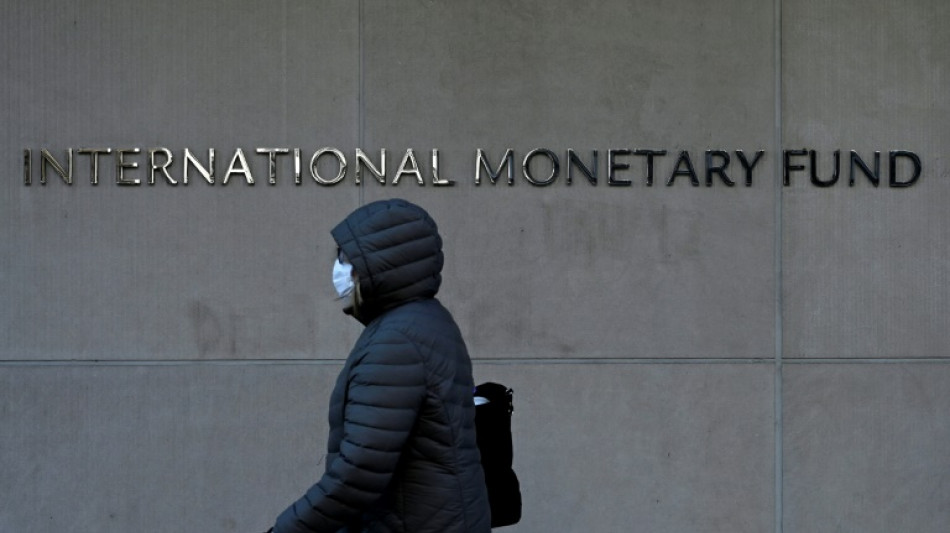
A funding crisis battering China's big property developers could start to shake the wider economy and global markets, the IMF warned on Friday, saying deeper reforms were needed to fully curb the threat.
The International Monetary Fund's report comes as property firms in the world's second-biggest economy struggle with liquidity problems as Beijing looks to curb excessive debt and rampant consumer speculation in the sector.
Among those embroiled in the crisis is Evergrande, one of the country's largest developers, which is involved in restructuring negotiations after racking up $300 billion in liabilities.
Multiple other Chinese developers have also defaulted on bond payments in recent months, piling pressure on the wider economy and rattling investors.
"Property plays a large role in both China's economy and financial system, accounting for about a quarter of both total fixed investment and bank lending over the past five years before the pandemic," the IMF said in a report released on Friday.
It warned that with developers beyond Evergrande also facing funding problems, there were "concerns of negative spillovers to the broader economy and global markets".
A sharper-than-expected slowdown in real estate "could trigger a wide range of adverse effects on aggregate demand, with feedback loops to the financial sector," the IMF said.
Should there be a sudden slowdown in China's growth, this would also create spillovers via trade and commodity prices, the fund added.
The institution this week lowered its 2022 growth forecast for China to 4.8 percent, down 0.8 points from earlier estimates.
Although China's recovery is "well advanced", it lacks balance and momentum has slowed -- partly due to lagging recovery in consumption amid recurrent virus outbreaks -- the IMF said.
China, where the coronavirus first emerged, remains one of the few places left in the world pursuing zero-Covid infections.
Its strategy of rapid lockdowns and mass testing is facing challenges with new virus variants becoming more transmissible, while repeated local outbreaks have weighed on a full resumption of pre-Covid activity.
The IMF noted that the pandemic will likely continue hampering China's consumption recovery before easing in 2023, but this likely requires "more efficacious vaccines and relaxation in the zero-tolerance strategy".
Earlier this week a senior IMF official called for China to begin to "recalibrate" its aggressive anti-Covid policy to ease the negative impact the pandemic continues to have on global supply chains and economic growth.
But Beijing responded by saying its coronavirus approach has achieved "significant results" and that the country remains a key driver of global growth.
M.Mendoza--CPN