Italy again fails to elect president as parties buy time

 Kenya's economy faces climate change risks: World Bank

 Apple tops estimates in CEO Cook's final quarter, but shares fall

 Milei demands expulsion of foreigners expressing 'hate' against Argentina

 Italy's Po River valley on drought alert

 Prada profits pinched as growth hard to chase

 Stocks climb on earnings and rates, oil retreats

 US economic growth slows in second quarter, missing expectations

 Russia adds Telegram founder Durov to 'terrorist' blacklist

 Stocks diverge on earnings, as oil steadies

 Eurozone economy grows despite Middle East war

 Singapore group will develop 'most promising' Ebola vaccine

 Shell profit surges as Mideast war fuels oil prices

 Car maker Stellantis says back in profit in second quarter

 Samsung quarterly operating profit up 1,800% on AI boom

 South Korean stocks bounce after rout, oil holds gains on Mideast woes

 South Korea's women web sleuths fight AI deepfake porn

 Anything but programmable: New cost-efficient EC-power-supply-series for the DIN rail by CAMTEC PS

 Meta misses profit expectations, sticks to massive AI spending

 Campari - king of the spritz - hopes to conquer American heartland
 Air France-KLM and Lufthansa bid for Portugal's TAP airline

 Profits soar at Airbus as it delivers more planes

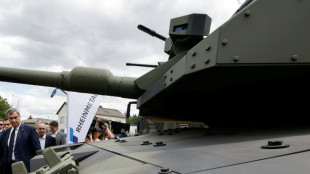 Rheinmetall shares surge after armsmaker reports record profit

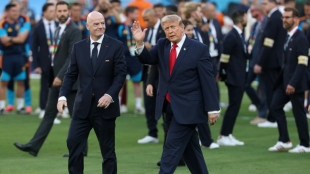 FIFA hit by furious backlash over plans to sell stake in competitions

 MEXC Integrates World-Check to Fortify Institutional Grade Compliance Architecture

 Spain returns wildfire evacuees as France braces for worsening weather
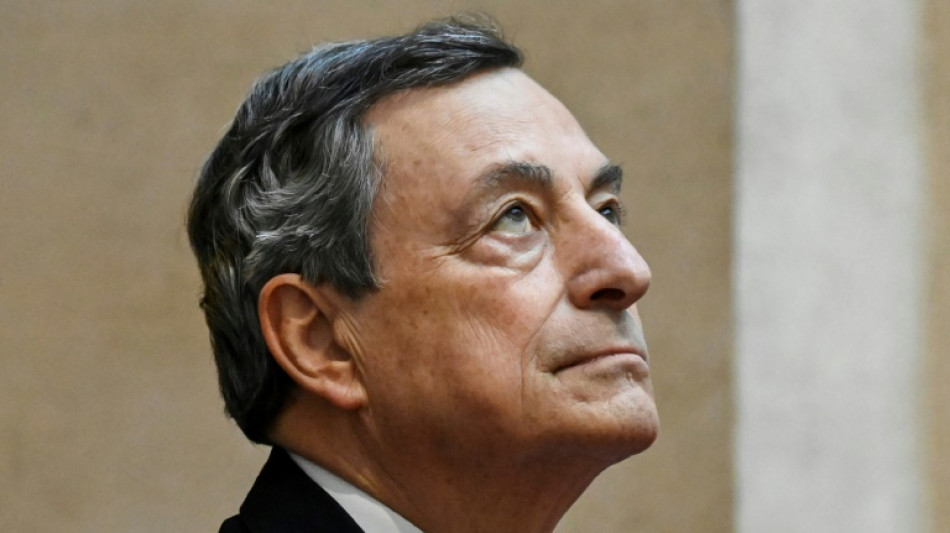
The fourth round of Italy's presidential elections flopped before it began Thursday, with parties unwilling to risk a crisis by picking Prime Minister Mario Draghi, but unable to agree on an alternative candidate.
The right-wing bloc abstained and the centre-left cast blank ballots in the parliamentary vote, prolonging the uncertainty over the leadership of the eurozone's third-largest economy.
The largest number of votes -- over 160 -- went to outgoing President Sergio Mattarella, 80, who has repeatedly said he will not serve another term.
Behind him, with 56 votes, was anti-mafia magistrate Nino Di Matteo, who lives under police protection.
After four days of voting, Italians had hoped for a breakthrough Thursday when the threshold for victory fell from a two-thirds majority of the electoral college to an absolute majority.
Leaders suggested a deal might be found by a fifth round on Friday.
Draghi, a former European Central Bank chief who has led Italy's national unity government since February 2021, was the frontrunner going into the contest.
But concerns his departure would destabilise the coalition, threatening a tight reform programme on which EU recovery funds depend as well as risking snap elections, have persisted over days of intensive backroom talks.
- Increasingly 'fraught' -
Matteo Salvini of the anti-immigration League party, part of the right-wing bloc, insisted on Thursday that Draghi was "precious there, where he is now".
"The presidential race remains wide and unpredictable," with Draghi's candidacy "getting more fraught" by the day, said Wolfango Piccoli of the London-based political risk consultancy Teneo.
The president is a ceremonial figure, but wields great power during political crises -- frequent events in Italy, which has had dozens of different governments since World War II.
Without formal agreement between the parties, lawmakers are effectively refusing to vote -- in each round so far, most ballots have been left blank.
Meanwhile, the list of potential alternatives to Draghi changes daily, from ex-premiers to judges and even Italy's spy chief, Elisabetta Belloni.
Former Chamber of Deputies speaker Pier Ferdinando Casini and Senate speaker Elisabetta Casellati -- who would be the first female president -- are considered to be in with a chance.
- 'Divided' -
Draghi has led a remarkably united government for the past 11 months, overseeing the economic recovery after a punishing pandemic-induced recession.
Many want him to stay to oversee major reforms to the tax and justice systems and public administration demanded in exchange for almost 200 billion euros ($225 billion) worth of funds from the EU's post-virus recovery scheme.
But with parties already campaigning for the 2023 general election, many analysts believe he will find it increasingly difficult to get things done.
Former senate speaker Renato Schifani said it was "the first time I've seen parliament so divided".
Some even raised the possibility that Draghi could tire of the politics and resign as premier.
The electoral college is made up of more than 1,000 senators, MPs and regional representatives.
Y.Uduike--CPN