US lawmakers mull computer chips, China competition bill

 Lights out in Laos as electricity exports surge
 Steven Strogatz weighs AI mathematics advances and their consequences for researchers

 Anthropic boss calls for AI slowdown, Altman and Musk agree

 French IT giant Capgemini sells subsidiary after row over ICE links

 Quebec Brokerage Qubit Insurance Announces New Data on Coverage Shortfalls as Rebuilding Costs Rise

 Lady Gaga welcomes first child with fiance: US media

 Bhutan business bets on hazelnuts for farming future

 'Widow's Bay' and 'The Pitt' are favorites for Emmys night

 Coastal erosion forces cancellation of California music festival

 Argentina's Dirty War rears its head in Venice film

 UK lawmakers throw out bill to legalise assisted dying

 US inflation steady in August, fueling Fed rate hike expectations

 New York marks 25th anniversary of 9/11 attacks

 Nepal flood reconstruction bill to be $4.78 bn: foreign ministry

 JUMO and Standard Bank launch Social Finance Framework to scale inclusive finance in Africa

 Doomsday tech: could AI really kill us all?

 French comedy show 'Call my agent' makes film comeback

 It's all coming back: Celine Dion fans gear up for Paris return

 Researchers eye AI revolution in natural disaster forecasts

 US braces for inflation report that may push Fed to hike rates

 Musk threatens legal action over documentary

 Latin America fact-check group asks Meta not to replace verification practice

 AI Risks to Enter 60–80% of Liability and Cyber Insurance Underwriting by 2028, ScienceSoft Predicts

 Tribal Launches Campfire, Letting Business and Technical Teams Build on Salesforce Together

 Stocks fall as fresh oil surge fans inflation fears

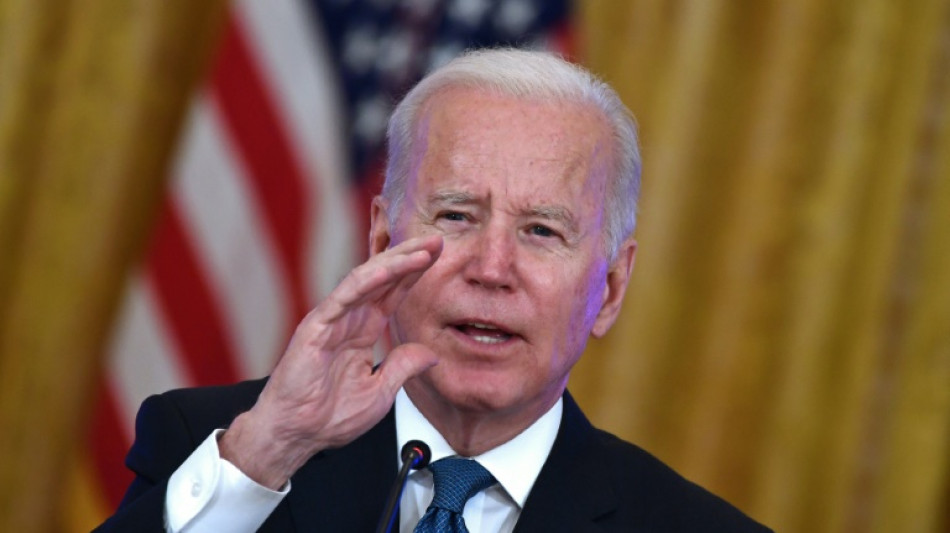
US lawmakers were studying proposals Wednesday to jumpstart high-tech research and manufacturing, boost competition with China and ease a global shortage of crucial computer chips.
The House Democrats' "America Competes" bill, unveiled late Tuesday, is their version of the Senate's $200 billion US Innovation and Competition Act, aimed at addressing supply bottlenecks.
The move came after the US Commerce Department said Tuesday that companies have an average of less than five days' worth of semiconductor chips on hand, leaving them vulnerable to shutdowns.
President Joe Biden wants to invest $52 billion in domestic research and production, but House Democrats have been sitting on a bill that passed the Senate in June with cross-party support.
Speaker Nancy Pelosi recently listed the package as a top priority, with supply chain issues increasingly worrying manufacturers.
The White House, which sees the initiative as the main legislative tool to combat China's growing prowess, has also been pushing the House of Representatives behind the scenes to move the bill quickly.
"The proposals laid out by the House and Senate represent the sort of transformational investments in our industrial base and research and development that helped power the United States to lead the global economy in the 20th century and expand opportunity for middle class families," Biden said in a statement late Tuesday.
Chip demand is currently 20 percent higher than its level in 2019, according to government officials, and companies expect more orders than supply for another six months.
The 2,900-page House version of the bill is set to be controversial, however, as it includes a proposal that the US Chamber of Commerce pushed to be taken out of the Senate bill -- new government screening protocols for investments in US rivals such as China.
Meanwhile, Republicans complained they had been left out of discussions to formulate the package.
"We have been in talks with House and Senate committees of jurisdiction for weeks, trying to put together a bipartisan bill that could pass Congress," Texas Republican congressman Michael McCaul said in a statement.
"Rather than allowing those talks to play out, Speaker (Nancy) Pelosi and House Democrats have decided to torpedo the chance of a bipartisan, bicameral bill to confront the generational threat posed by the Chinese Communist Party."
M.García--CPN