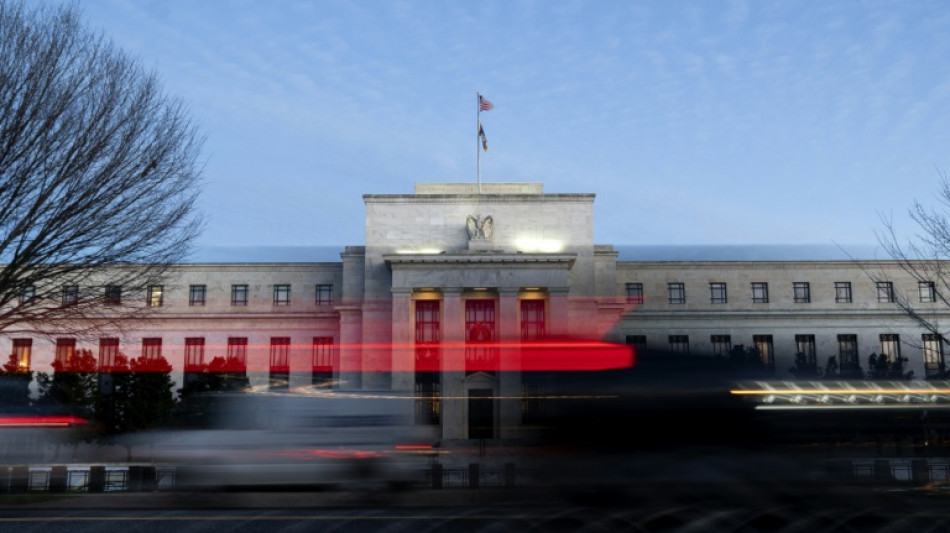
Fed sharpens inflation-fighting tools as rate hikes near

 Lights out in Laos as electricity exports surge

 Steven Strogatz weighs AI mathematics advances and their consequences for researchers

 Anthropic boss calls for AI slowdown, Altman and Musk agree

 French IT giant Capgemini sells subsidiary after row over ICE links

 Quebec Brokerage Qubit Insurance Announces New Data on Coverage Shortfalls as Rebuilding Costs Rise

 Lady Gaga welcomes first child with fiance: US media

 Bhutan business bets on hazelnuts for farming future

 'Widow's Bay' and 'The Pitt' are favorites for Emmys night

 Coastal erosion forces cancellation of California music festival

 Argentina's Dirty War rears its head in Venice film

 UK lawmakers throw out bill to legalise assisted dying

 US inflation steady in August, fueling Fed rate hike expectations

 New York marks 25th anniversary of 9/11 attacks

 Nepal flood reconstruction bill to be $4.78 bn: foreign ministry

 JUMO and Standard Bank launch Social Finance Framework to scale inclusive finance in Africa

 Doomsday tech: could AI really kill us all?

 French comedy show 'Call my agent' makes film comeback

 It's all coming back: Celine Dion fans gear up for Paris return

 Researchers eye AI revolution in natural disaster forecasts

 US braces for inflation report that may push Fed to hike rates

 Musk threatens legal action over documentary

 Latin America fact-check group asks Meta not to replace verification practice

 AI Risks to Enter 60–80% of Liability and Cyber Insurance Underwriting by 2028, ScienceSoft Predicts

 Tribal Launches Campfire, Letting Business and Technical Teams Build on Salesforce Together

 Stocks fall as fresh oil surge fans inflation fears

The Federal Reserve has its inflation-fighting weapons ready to fire, and when the US central bank's policy committee convenes this coming week, the focus will not be on whether they will pull the trigger but rather how many times.
With the Omicron variant of Covid-19 adding to economic uncertainty and fueling a spike in consumer prices rose not seen for decades, the Fed's decision Wednesday will be closely scrutinized for signs policymakers will take more aggressive steps to contain inflation.
The policy-setting Federal Open Market Committee (FOMC), which opens its two-day meeting on Tuesday, is widely expected to begin hiking interest rates in March, though a few economists note the possibility of early action.
"I think it's kind of a holding operation rather than a blockbuster meeting, but the March one will be more fun," Ian Shepherdson, chief economist at Pantheon Macroeconomics, told AFP.
Only months ago, Fed Chair Jerome Powell and other top officials were arguing that the sharp rise in inflation would be "transitory," but that stance grew increasingly shaky with each new data report showing prices rising and spreading to many goods, beyond cars and energy.
By the end of 2021, policymakers conceded they had miscalculated and pivoted, announcing they were ready to attack inflation head on.
They started by tapering the bond buying program implemented to stimulate the economy, and accelerated the pace of the wind down at their last meeting in December.
- Hawkish or dovish? -
In recent weeks, Fed officials have given strong signals that once the tapering concludes in March, they will hike the benchmark lending rate for the first time since they slashed it to zero in March 2020 at the start of the Covid-19 pandemic.
"The move towards a March rate increase is pretty clear -- and I expect Powell in his press conference (Wednesday) to reinforce that perception," said David Wessel, a senior fellow in economic studies at the Brookings Institution.
Hiking could help contain consumer prices that spiked seven percent in 2021, with costs for gasoline, food, housing and used cars shooting up.
But the question remains as to how many times the Fed will increase rates.
The causes of the inflation are myriad, from global issues such as the semiconductor shortage to more domestic concerns like a scarcity of workers and the massive government outlays during the pandemic that have fattened Americans' wallets and boosted demand.
"If there's any mention of the persistence of inflation, that would also be an indication that the Fed is not just ready for lift off but that they want to fly high," Beth Ann Bovino, US chief economist at S&P Global Ratings, said in an interview.
FOMC members released forecasts at the December meeting indicating most expect three rate hikes this year, though many private economists now expect four.
Another sign would be if central bankers say the labor market has returned "maximum employment" after the mass layoffs that struck as the pandemic began, Bovino said.
- Omicron uncertainty -
Some traders are speculating the Fed could announce an early end to the tapering process and a surprise rate hike at next week's meeting, or opt to hike twice as much as they typically do at the March meeting.
But with complications from Omicron already evident, including a slump in retail sales during the December holiday season and an uptick in new unemployment benefit applications last week, Shepherdson doubts Powell would want to change tack.
"Why would he do that? It would be really perverse given the uncertainty," he said.
H.Meyer--CPN