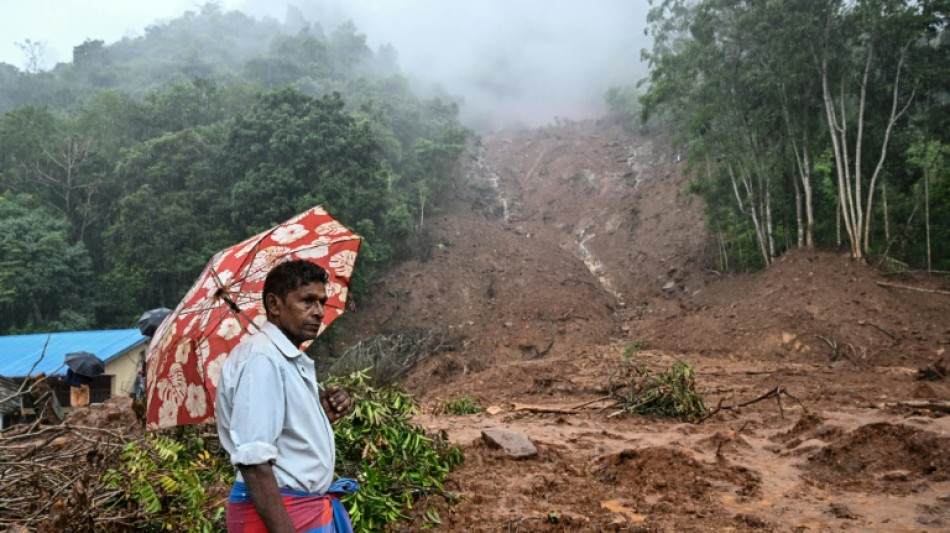
Sri Lanka cyclone caused $4.1 bn damage: World Bank / Photo: Ishara S. KODIKARA - AFP/File

 Multi-Asset Trading Venue Monochrome Exchange Announces IEO of Its Native Token, $MCR

 Data centre command hub keeps AI up and running
 Leo XIV, first US pope transcends his restrained style
 France's debt climbs to highest since 1978: ministry
 Thousands protest inaction over climate crisis in Switzerland

 UK actor Naomi Watts honoured at Spain film festival
 Trump signs bill authorizing sweeping Russia sanctions

 Anthropic picks Accenture for in-house AI safety evaluation
 Hushing and hedging: US companies retreat on climate

 Crisis-wracked Volkswagen warns of 10-bn-euro hit to profits

 Shakira to cap off world tour with Madrid 12-gig run

 Isolated Syrian-Druze city shortages

 UNESCO can be 'moderator' in AI debate: chief to AFP

 Russia seizes assets of Nestle, French firms

 Anthropic says AI systems moving towards building themselves

 Asian stocks boosted by falling oil, yen weakens after BoJ rate hike

 Afghan medical students in Pakistan hope court stops college expulsions

 Australia to detain tourists who overstay visa, minister says

 Asian stocks track Wall St rally as oil prices drop

 Prized Mexican relic returns on loan, two centuries on

 'In our lane': Fed's Warsh defies Trump but still fighting for credibility

 Trump admin makes major cut to endangered species protections

 GM delivers first components for US interceptor missiles

 Travis Scott and Keith Richards feature on GTA VI soundtrack

 King Charles warns tech bosses of 'existential dangers' of AI

Cyclone Ditwah, which struck Sri Lanka last month, caused an estimated $4.1 billion in direct physical damage to buildings, agriculture and critical infrastructure, according to a World Bank report released Monday.
The natural disaster killed more than 640 people, and affected more than 10 percent of Sri Lanka's population. Floods and landslides caused by the cyclone left extensive damage throughout the South Asian island nation.
The total damage estimated by the World Bank is equivalent to about 4 percent of Sri Lanka's GDP.
Infrastructure, including roads, bridges, railways and water supply networks, accounted for the largest share of damage, at an estimated $1.735 billion, according to the World Bank's Global Rapid Post-Disaster Damage Estimation (GRADE) report.
Housing damage was valued at $985 million, accounting for 24 percent of the total damage.
The estimate is limited to direct physical damage and "does not include losses related to income or production, nor the full costs of recovery and reconstruction".
Buildings such as "schools, health facilities, businesses, and large industrial facilities and factories located along major rivers and creeks, were also heavily impacted, accounting for $562 million in estimated damages," the World Bank said.
The Sri Lankan government has also secured a World Bank agreement to repurpose $120 million from an ongoing project for disaster recovery spending.
The latest World Bank report comes after the International Monetary Fund (IMF) said Friday that its board had approved $206 million in emergency financing for Sri Lanka, to help in the country's recovery.
The cyclone struck as the country was emerging from its worst ever economic meltdown in 2022, when it ran out of foreign exchange reserves to pay for essential imports such as food, fuel and medicines.
Following a $2.9 billion bailout from the IMF approved in early 2023, the country's economy has stabilised.
O.Hansen--CPN
