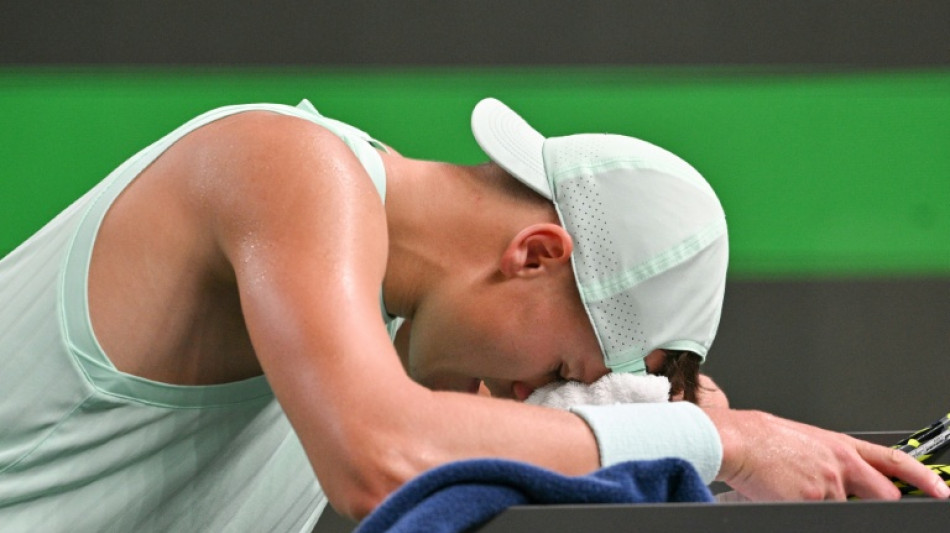
Men's ATP tennis to apply extreme heat rule from 2026 / Photo: Hector RETAMAL - AFP

 France's Macron, Canada's Carney announce closer ties

 AI 'warning shots' focus Beijing on national security risks
 Philippine tribe in limbo over US-led tech hub

 Saudi-led coalition says Houthis fired ballistic missile at Riyadh
 Cuba works to restore power after another blackout
 Brigitte Bardot widower slams sale of star's belongings

 Indonesia accepts Malaysia's help to tackle wildfires

 Nvidia, OpenAI CEOs to attend Xi dinner at White House

 Cuba hit with seventh major blackout of the year

 Nigeria miners struggled to breathe in cell before 37 died: survivors

 Warren Buffett steps down as Berkshire Hathaway chairman

 Isolated Syrian-Druze city blames Damascus for shortages

 Kerry James Marshall: American 'blackness' painter celebrated in Europe

 Infantino 'must go', says German FA vice-president

 Japan's busiest rail station tests robot bins

 Backpackers fret over Australian visa crackdown

 Bank of Japan hikes rates to 31-year high to battle inflation

 AI doomsday warnings unlikely to slow IPOs but questions linger

 In Brazil's Amazon, the hunt for oil fuels hopes and fears

 Baby orangutans in India expose 'frightening' scale of trafficking

 Oversight Board blasts 'inadequate' Meta safeguards for AI deepfakes

 Harry makes first public appearance since return to UK

 Princess Diana's brother makes new explosive claims against Charles

 Trump admin overhauls key protection for endangered species

 Mbappe draws political fire over Ceuta t-shirt controversy

The ATP men's tennis tour will introduce an extreme heat policy from 2026 after criticism from players who sweltered through some tournaments this year.
The move brings the ATP into line with the women's WTA tour, which has a long-standing policy, and sports such as Formula One which has its own measures to protect drivers.
In October, Danish tennis star Holger Rune called temperatures of more than 30C and humidity soaring past 80 percent at the Shanghai Masters "brutal".
"Do you want a player to die on court?" Rune was heard to ask as he wilted in the fierce conditions.
The ATP has now acted, saying on Monday it was "strengthening protections for players competing in extreme conditions".
The new rules are based on the Wet Bulb Globe Temperature (WBGT), which measures air temperature, humidity, wind speed and other factors to estimate heat stress.
Under the measures, a player can request a 10-minute cooling break in best-of-three singles matches if the WBGT reaches 30.1 degrees or higher during the first two sets.
Play will be suspended when the WBGT exceeds 32.2 degrees.
"The new heat rule provides a structured, medically supported approach to managing extreme heat, with the objective of safeguarding player health," the ATP said.
It added it will "also improve conditions for spectators, officials, ball persons and tournament staff".
The rules do not apply to the four Grand Slams, which have their own policies.
Previously, decisions over weather conditions, including heat, were down to the on-site ATP supervisor in coordination with medical teams and local organisers.
The planet is on track to log its second hottest year on record in 2025, Europe's global warming monitor said last week.
Ng.A.Adebayo--CPN
