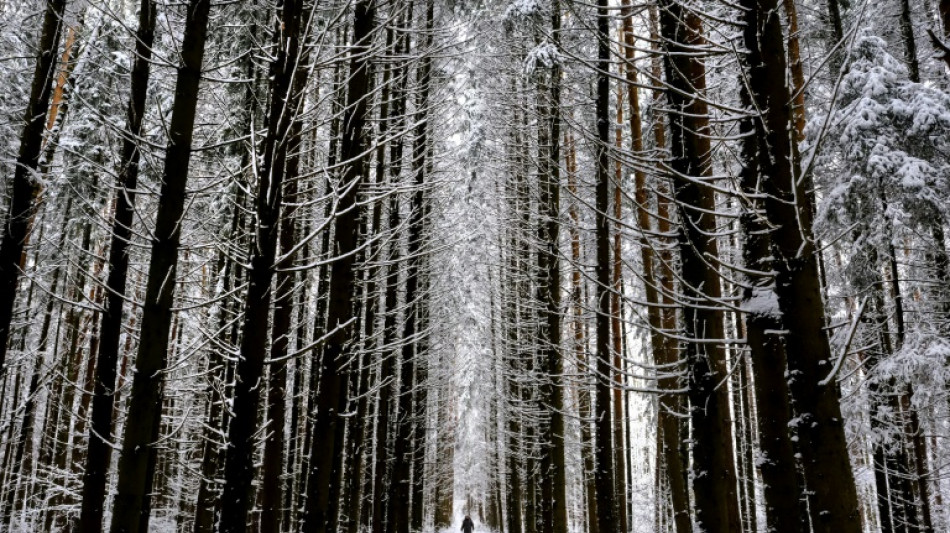
UN says forests should form key plank of COP30 / Photo: Yuri KADOBNOV - AFP

 Spanish PM says unregulated AI could be 'devastating'

 From Korean Chipmakers to Leveraged Semiconductor ETFs: STARTRADER Launches 49 New 24/7 Stock and ETF CFDs
 Asia stocks rise on AI, US-China trade talks optimism
 Multi-Asset Trading Venue Monochrome Exchange Announces IEO of Its Native Token, $MCR

 Data centre command hub keeps AI up and running
 Leo XIV, first US pope transcends his restrained style

 France's debt climbs to highest since 1978: ministry

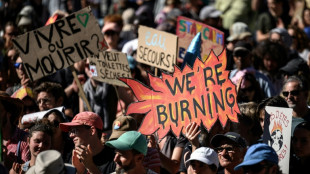 Thousands protest inaction over climate crisis in Switzerland

 UK actor Naomi Watts honoured at Spain film festival

 Trump signs bill authorizing sweeping Russia sanctions

 Anthropic picks Accenture for in-house AI safety evaluation

 Hushing and hedging: US companies retreat on climate

 Crisis-wracked Volkswagen warns of 10-bn-euro hit to profits

 Shakira to cap off world tour with Madrid 12-gig run

 Isolated Syrian-Druze city shortages

 UNESCO can be 'moderator' in AI debate: chief to AFP

 Russia seizes assets of Nestle, French firms

 Anthropic says AI systems moving towards building themselves

 Asian stocks boosted by falling oil, yen weakens after BoJ rate hike

 Afghan medical students in Pakistan hope court stops college expulsions

 Australia to detain tourists who overstay visa, minister says

 Asian stocks track Wall St rally as oil prices drop

 Prized Mexican relic returns on loan, two centuries on

 'In our lane': Fed's Warsh defies Trump but still fighting for credibility

 Trump admin makes major cut to endangered species protections

The United Nations warned Wednesday that climate change poses a threat to the world's northern forests, saying it was putting the planet's most powerful natural defence at serious risk.
The UNECE regional agency urged the forthcoming COP30 climate summit to put forest resilience at the centre of efforts to combat global warming.
"The forests of the northern hemisphere are of crucial importance when it comes to climate," said Paola Deda, UNECE's forests division director.
"Over the years, the attention to forests in COPs has been lost. The technicalities of the discussion have taken over," she told a press conference in Geneva.
"You cannot talk about climate solutions, mitigation and adaptation without talking about forests."
Some 54 percent of the world’s forests are in only five countries: Brazil, China, Canada, Russia and the United States, with the latter three in the UNECE region, and Russia having the biggest forest area of all.
UNECE covers 56 countries across Europe, North America, the Caucasus and central Asia.
Its 2025 Forest Profile is a five-yearly overview that measures and monitors the ecological, economic and socioeconomic condition of the region's forests, to inform policy.
Forests cover 4.14 billion hectares (10.23 billion acres), or around a third of the world's land surface, of which 42.5 percent is in the UNECE area.
Half of the forest loss in the past 10,000 years happened since 1900, the report said.
- 'Tipping point' -
Although the world's forest area has shrunk by 203 million hectares since 1990, in the UNECE region it has grown by around 60 million hectares -- an area roughly as big as France.
However, these gains "are now being jeopardised by record wildfires, pests, and an escalating climate-driven crisis", UNECE warned.
It said the region's forests were growing increasingly vulnerable to such threats.
The report said wildfires had become more severe and more common, fuelled by rising temperatures and drier conditions, while insect outbreaks have severely damaged millions of hectares of forests.
"What we have achieved over the last three decades is now at serious risk from the climate emergency," UNECE chief Tatiana Molcean said in a statement.
"We cannot afford to lose the planet's most powerful natural defence. The rising tide of wildfires and drought is pushing our forests past a critical tipping point."
Leaders at the COP30 UN climate summit in Belem, Brazil, which runs from November 10 to 21, "must recognise that forest protection... is a cornerstone of global carbon security," said Molcean.
- Forest management -
Boreal forests -- roughly in a ring around the Arctic Circle, notably in Russia and Canada -- cover 9.3 percent of the planet's land surface.
They contain about 32 percent of global terrestrial carbon stocks, with boreal soils holding "vast amounts of carbon", said UNECE.
However, "they are highly sensitive to climate impacts, including rising temperatures, thawing permafrost and wildfires", it said.
The fear is that the region's vast forests -- currently a carbon sink -- could become a net source of emissions.
Kathy Abusow, president of the Sustainable Forestry Initiative, said: "There is a solution: if we can manage our forests in climate-informed ways", such as changing the tree species to reflect the new environmental conditions.
UNECE stressed the need for fire prevention, pest management and forest restoration. Thinning out forests and clearing out deadwood can also help make them less vulnerable to catastrophic wildfires that become major carbon emitters.
T.Morelli--CPN