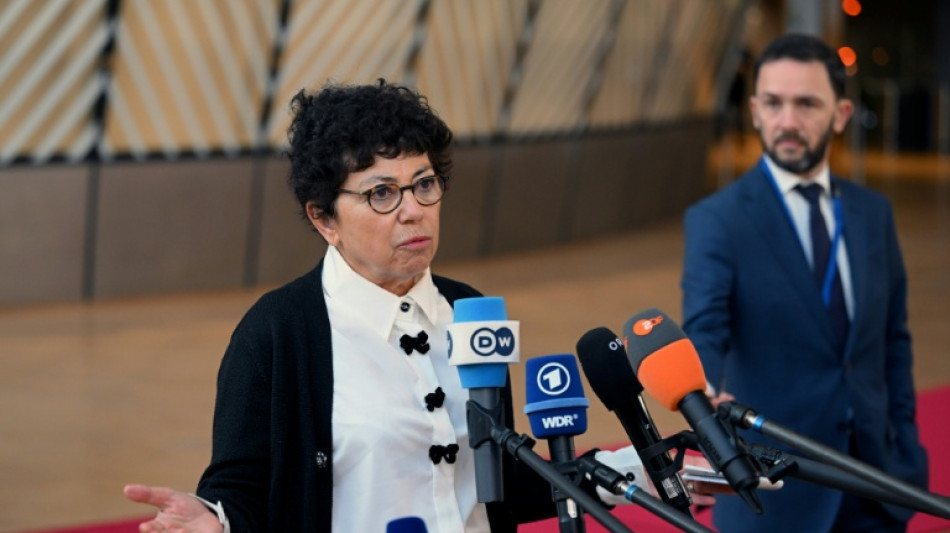
No deal yet on EU climate targets as COP30 looms / Photo: Nicolas TUCAT - AFP

 Spanish PM says unregulated AI could be 'devastating'

 From Korean Chipmakers to Leveraged Semiconductor ETFs: STARTRADER Launches 49 New 24/7 Stock and ETF CFDs
 Asia stocks rise on AI, US-China trade talks optimism
 Multi-Asset Trading Venue Monochrome Exchange Announces IEO of Its Native Token, $MCR
 Data centre command hub keeps AI up and running
 Leo XIV, first US pope transcends his restrained style
 France's debt climbs to highest since 1978: ministry
 Thousands protest inaction over climate crisis in Switzerland

 UK actor Naomi Watts honoured at Spain film festival
 Trump signs bill authorizing sweeping Russia sanctions
 Anthropic picks Accenture for in-house AI safety evaluation

 Hushing and hedging: US companies retreat on climate

 Crisis-wracked Volkswagen warns of 10-bn-euro hit to profits

 Shakira to cap off world tour with Madrid 12-gig run

 Isolated Syrian-Druze city shortages

 UNESCO can be 'moderator' in AI debate: chief to AFP

 Russia seizes assets of Nestle, French firms

 Anthropic says AI systems moving towards building themselves

 Asian stocks boosted by falling oil, yen weakens after BoJ rate hike

 Afghan medical students in Pakistan hope court stops college expulsions

 Australia to detain tourists who overstay visa, minister says

 Asian stocks track Wall St rally as oil prices drop

 Prized Mexican relic returns on loan, two centuries on

 'In our lane': Fed's Warsh defies Trump but still fighting for credibility

 Trump admin makes major cut to endangered species protections

The European Union's member states have not yet reached an agreement on key emissions targets before the UN's COP30 summit in Brazil, and ministers will meet again on Wednesday to thrash out a deal, according to Brussels officials.
EU countries have been haggling for months over two separate targets for slashing greenhouse-gas emissions: one for 2035 that they must bring to the UN climate talks, and the other for 2040.
But talks in Brussels ended on Tuesday without an accord, and a European Council spokesperson saying "the negotiations will continue all night".
"Ministers will reconvene tomorrow morning at approximately 9:00 am (0800 GMT)," the spokesperson told reporters.
EU officials have stressed the importance of the talks, which come ahead of the COP30 summit next week in Brazil.
French Environment Minister Monique Barbut had warned that turning up empty-handed to the summit would spell "disaster" for the EU.
Behind only China, the United States and India in terms of emissions, the EU has been the most committed of the major polluters to climate action and has already cut emissions by 37 percent compared to 1990 levels.
But after blazing a trail, the EU's political landscape has shifted right, and climate concerns have taken a backseat to defence and competitiveness -- with concerns in some capitals that greening Europe's economy is harming growth.
"It's very, very difficult," said an EU diplomat, summing up the state of play in Brussels late Tuesday.
Denmark, which holds the bloc's rotating presidency, was understood to be working hard to win over Italy, one of the countries most sceptical of the proposed targets.
The most urgent challenge for ministers is to reach a unanimous deal on an EU emissions target for 2035, known as a Nationally Determined Contribution (NDC), which Paris Agreement signatories are supposed to bring to the COP30.
"I want our heads of state and government to go to Brazil with a very strong mandate, a clear leadership role for Europe," German Environment Minister Carsten Schneider said.
The EU also hopes to lock in the support of a weighted majority of countries for the next big climate target set out by the European Commission on the path to carbon neutrality by 2050.
The EU executive said in July it wanted to cut emissions by 90 percent by 2040, compared to 1990 levels -- a major stride towards net zero.
But member states have yet to endorse that next step, which would require sweeping changes to industry and daily life at a time of growing concern over adverse impacts on Europe's economy.
Spain and the Nordic countries support the 2040 proposal, as does Germany, with some caveats. But Hungary, Poland, the Czech Republic and Italy remain opposed, citing risks to their industrial sectors.
Heavyweight France, meanwhile, has kept observers guessing on its position -- demanding guarantees its nuclear sector would not lose out under green transition plans and wiggle room on emissions should Europe's forests absorb less carbon than expected.
- 'Not pretty' -
To win over the staunchest sceptics, Tuesday's talks covered a range of "flexibilities" for member states, including letting countries count carbon credits purchased to finance projects outside Europe.
A commission pledge for credits to account for up to three percent of a nation's 2040 emission cuts failed to win over hardliners, with countries pushing for a higher threshold of five percent.
Some also want the overall objective reassessed every two years.
Environmental groups have accused countries of undermining the EU's climate ambitions with loopholes.
But a diplomat involved in the process defended the compromise shaping up in Brussels, while conceding it was "not necessarily pretty".
"In the muddy, messy, nasty real world out there, we are trying to achieve something good," said the diplomat, granted anonymity to discuss the sensitive deliberations.
The EU insists it remains committed to its role as global climate leader, having mobilised 31.7 billion euros ($36.4 billion) in public climate finance in 2024, making it the world's largest donor.
D.Avraham--CPN