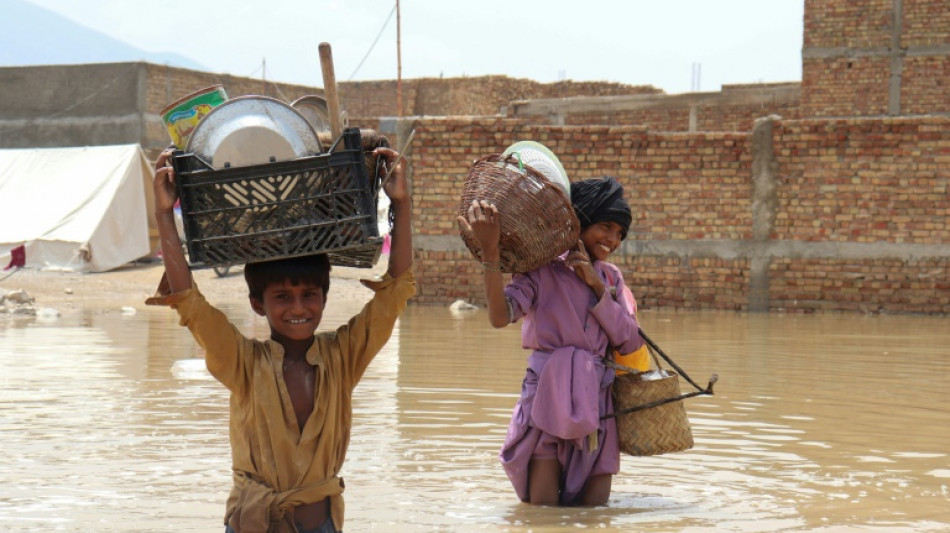
Monsoon rains kill 77 in Pakistan / Photo: Banaras KHAN - AFP

 Lights out in Laos as electricity exports surge

 Steven Strogatz weighs AI mathematics advances and their consequences for researchers

 Anthropic boss calls for AI slowdown, Altman and Musk agree

 French IT giant Capgemini sells subsidiary after row over ICE links

 Quebec Brokerage Qubit Insurance Announces New Data on Coverage Shortfalls as Rebuilding Costs Rise

 Lady Gaga welcomes first child with fiance: US media

 Bhutan business bets on hazelnuts for farming future

 'Widow's Bay' and 'The Pitt' are favorites for Emmys night

 Coastal erosion forces cancellation of California music festival

 Argentina's Dirty War rears its head in Venice film

 UK lawmakers throw out bill to legalise assisted dying

 US inflation steady in August, fueling Fed rate hike expectations

 New York marks 25th anniversary of 9/11 attacks

 Nepal flood reconstruction bill to be $4.78 bn: foreign ministry

 JUMO and Standard Bank launch Social Finance Framework to scale inclusive finance in Africa

 Doomsday tech: could AI really kill us all?

 French comedy show 'Call my agent' makes film comeback

 It's all coming back: Celine Dion fans gear up for Paris return

 Researchers eye AI revolution in natural disaster forecasts

 US braces for inflation report that may push Fed to hike rates

 Musk threatens legal action over documentary

 Latin America fact-check group asks Meta not to replace verification practice

 AI Risks to Enter 60–80% of Liability and Cyber Insurance Underwriting by 2028, ScienceSoft Predicts

 Tribal Launches Campfire, Letting Business and Technical Teams Build on Salesforce Together

 Stocks fall as fresh oil surge fans inflation fears

At least 77 people have died in monsoon rains lashing Pakistan, the country's climate change minister said Wednesday, warning more heavier-than-usual downpours lay ahead.
"For me, it's a national tragedy," Sherry Rehman told a news conference in the capital, adding the toll was taken from June 14, when the monsoon started.
"When people die like that, it's not a small thing... It is just the beginning. We have to prepare for it."
Most of the deaths were in the southwestern province of Balochistan, where 39 people drowned or were electrocuted by downed power lines.
The monsoon, which usually lasts from June to September, is essential for irrigating crops and replenishing lakes and dams across the Indian subcontinent, but each year also brings a wave of destruction.
Poorly built homes across Pakistan -- particularly in rural areas -- are prone to collapse in floods, which also destroy huge tracts of prime farmland.
The worst floods of recent times were in 2010 -- covering almost a fifth of the country's landmass -- killing nearly 2,000 people and displacing 20 million.
Pakistan is the eighth most vulnerable country to extreme weather caused by climate change, according to the Global Climate Risk Index compiled by environmental NGO Germanwatch.
"One day you have drought and next morning you are expecting flash flood... so you can see how serious the situation is in Pakistan", Rehman said.
O.Hansen--CPN