
Fresh Pakistan monsoon rains kill 20, halt rescue efforts / Photo: Abdul MAJEED - AFP

 Archaeological 'breakthrough' could confirm origins of Paris

 Australian PM says OpenAI hacked government health website

 Rio breaks record for rainiest September amid powerful El Nino

 Mandela Digital Extends Early Access Programme to 11 February 2027 Following Strong Response

 McDonald's to boost franchisees as inflation weighs on consumers

 Archaelogical 'breakthrough' could confirm origins of Paris

 Fendi brings disco bling, Italian style, to Milan Fashion Week

 アレックス・ボディ氏とシュテファン・ハウプト教授、ルーマニアの伝説的な美術コレクションをめぐり提携に合意

 Stocks dip, oil rises as traders eye chances of Iran deal

 Oil falls, stocks steady as Trump hails 'good' Iran talks

 Canada judge to decide prison term for suicide poison seller

 Meta leans into AI, smart glasses amid privacy pushback
 Oil prices fall after Trump hails 'good' talks with Iran

 AI political ads warp reality ahead of US midterms

 Oil prices retreat as markets welcome US-Iran talks
 French prosecutors probe secret filming of women with smart glasses

 Trump renames AI "super intelligence," rejects international oversight

 How is the EU approaching record fuel prices?

 11 hurt as teen opens fire outside school in western Turkey

 UN chief says 'Big Oil' treats atmosphere as open sewer
 Memoir by Diana's brother goes on sale after rocking UK monarchy

 Stocks climb as oil slides, AI buzz returns

 MEXC Launches “Real Stocks, Real Friends” with Rewards for Bringing Friends to Wall Street

 Stocks rise on AI buzz, oil prices cool

 In Bangladesh, Pakistan's Jinnah photo stirs anger

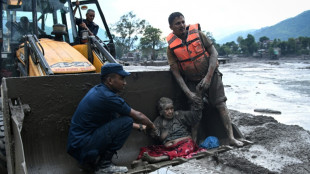
Fresh torrential rains in northern Pakistan killed at least 20 people on Monday, local officials said, as the region is ravaged by an unusually intense monsoon season that has left more than 300 people dead in recent days.
Torrential rains across the country's north have caused flooding and landslides that have swept away entire villages, leaving many residents trapped in the rubble and around 200 still missing.
"A cloudburst in Swabi completely destroyed several houses, killing more than 20 people," an official in the district, located in northwestern Khyber Pakhtunkhwa province, told AFP on Monday.
Several villages were wiped out by the huge amount of rain falling in a short period of time, a second local official said, confirming the death toll.
Since the first heavy rains on Thursday most of the deaths -- more than 340 -- were reported in Khyber Pakhtunkhwa, according to the provincial disaster agency, which warned of new flash floods over the next few days.
The latest heavy rains halted the ongoing search efforts for the missing, with volunteers and rescue workers racing to find possible survivors and retrieve bodies.
"This morning fresh rains forced a halt to relief operations," said Nisar Ahmad, 31, a volunteer in worst-hit Buner district, adding that 12 villages had been destroyed and 219 bodies recovered.
"Dozens of bodies are still buried under the mud and rocks, which can only be recovered with heavy machinery. However the makeshift tracks built to access the area have once again been destroyed by the new rains."
- 'We feel scared' -
Many people fled to seek shelter under damaged infrastructure and in the mountains in Buner, an area with difficult terrain.
"Even if it rains a little now, we feel scared because there was light rain that day. And then the unsuspecting people were swept away by the storm," said Buner resident Ghulam Hussain, 35.
"Children and women are running and screaming up the mountains to escape," Hazrat Ullah, 18, told AFP.
Volunteer Ahmad said there were also fears for the future due to a lack of food supplies and clean water.
"Many livestock have also perished in the cloudburst, and their decomposing bodies are spreading a foul odour in several places. Right now, our most urgent need is clean drinking water, and I appeal to the government to provide it," he said.
The monsoon season brings about three-quarters of South Asia's annual rainfall, which is vital for agriculture and food security but also causes widespread destruction.
- 'Lies in ruins' -
According to the National Disaster Agency, the intensity of this year's monsoon is about 50 to 60 percent higher than last year.
Preliminary government estimates put the cost of flood damage to government and private property at around $445,000, the prime minister's office said in a statement Monday.
A senior official from Khyber Pakhtunkhwa's Provincial Disaster Management Authority (PDMA) told AFP that hundreds of houses, dozens of schools, and at least 23 buildings were damaged by the heavy rains.
Sharif Khan, a 47-year-old flour dealer from Buner, lost his house and moved into his cousin's home with his wife and four children.
"Nothing compares to one's own home. I had built that house over six years... and now it lies in ruins," Khan said.
"Since most houses in my area have been destroyed, it seems likely I will have to move outside the area."
Landslides and flash floods are common during the monsoon season, which typically begins in June and lasts until the end of September.
The heavy rains that have battered Pakistan since the start of the summer monsoon have claimed the lives of more than 650 people, with over 920 injured.
Pakistan is among the world's most vulnerable countries to the effects of climate change and is increasingly facing extreme weather events.
In 2022, monsoon floods submerged one-third of the country and resulted in approximately 1,700 deaths.
L.K.Baumgartner--CPN