
Five key things about heatwaves in Europe / Photo: Tobias SCHWARZ - AFP/File

 Markets mixed as China's Xi arrives for US talks

 Archaeological 'breakthrough' could confirm origins of Paris

 Australian PM says OpenAI hacked government health website

 Rio breaks record for rainiest September amid powerful El Nino

 Mandela Digital Extends Early Access Programme to 11 February 2027 Following Strong Response

 McDonald's to boost franchisees as inflation weighs on consumers

 Archaelogical 'breakthrough' could confirm origins of Paris

 Fendi brings disco bling, Italian style, to Milan Fashion Week

 アレックス・ボディ氏とシュテファン・ハウプト教授、ルーマニアの伝説的な美術コレクションをめぐり提携に合意

 Stocks dip, oil rises as traders eye chances of Iran deal

 Oil falls, stocks steady as Trump hails 'good' Iran talks

 Canada judge to decide prison term for suicide poison seller

 Meta leans into AI, smart glasses amid privacy pushback

 Oil prices fall after Trump hails 'good' talks with Iran

 AI political ads warp reality ahead of US midterms

 Oil prices retreat as markets welcome US-Iran talks

 French prosecutors probe secret filming of women with smart glasses

 Trump renames AI "super intelligence," rejects international oversight

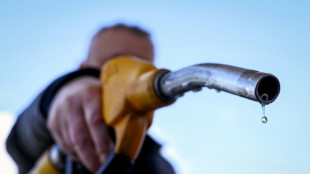 How is the EU approaching record fuel prices?

 11 hurt as teen opens fire outside school in western Turkey

 UN chief says 'Big Oil' treats atmosphere as open sewer

 Memoir by Diana's brother goes on sale after rocking UK monarchy

 Stocks climb as oil slides, AI buzz returns

 MEXC Launches “Real Stocks, Real Friends” with Rewards for Bringing Friends to Wall Street

 Stocks rise on AI buzz, oil prices cool

Scorching temperatures, such as those recorded in southern Europe, illustrate the intensifying heatwaves in Europe, which scientists consider a direct result of climate change.
Here are five things to know about the heatwaves in Europe, which the EU climate monitor Copernicus says is the "fastest-warming continent on Earth".
- 2003: shockwave –
The intense heatwave that struck Western Europe during the first half of August 2003 was a massive shock for the region.
In the years that followed, several countries put in place alert systems for heatwaves, such as the "heatwave plan" introduced in France.
The exceptional temperatures experienced in 2003 in France, Italy, Spain, and Portugal led to tens of thousands of deaths, with scientific studies estimating more than 70,000 deaths across 16 countries.
The 2003 episode is not the only one to have caused a high number of deaths.
A heatwave that struck Russia in 2010 resulted in 56,000 "excess deaths," according to the Russian statistics agency Rosstat.
Some 60,000 deaths were also attributed to the summer heat in 2022 across 35 European countries, according to a study by Inserm/ISGlobal.
- Across the continent -
Although it was essentially the west and south of Europe that was affected by the 2003 heatwave, the whole European continent has been affected by heatwaves since the start of this century.
In 2010, Eastern Europe suffered most, particularly Russia. This exceptionally long 45-day episode was marked by a record temperature of 37.2 degrees Celsius in July in Moscow.
In June and July 2019, it was mostly the northern half of Europe that endured the heat, with record temperatures recorded in the Netherlands, Belgium, Germany and Britain.
In 2021, it was southern Europe again that sweltered with what the Greek government described as the worst heatwave since 1987 for the country and an all-time temperature record in August for Spain.
Two years later in June, abnormal heat hit northern Europe. Then in July and August the south sweltered, with temperatures hitting 38 to 46 degrees, according to Copernicus.
- Earlier and later in season -
Geographically more extensive, European heatwaves are also stretching out on the calendar.
In 2019 and again in 2022, the first heatwave to hit Europe arrived in mid-June, with, for example, heat records broken in 2022 for the month of June in Germany and Austria.
The following year, the European heatwave extended until September, exacerbating drought conditions in southern Europe and complicating the organisation of the 2023 Rugby World Cup in France.
- More often -
Studies and scientific organisations agree heatwave episodes in Europe have become more frequent.
Climate change is a significant factor contributing to the increasing frequency and intensity of heatwaves, according to Copernicus.
An academic study published in 2025 in the journal Weather and Climate Extremes on heatwaves from 1921 to 2021 concluded there had been a "significant upward trend in heat wave occurrences across most European regions, with a notable surge in the last three decades."
Meteo France notes that, of the 50 heatwaves recorded nationwide since 1947, 33 have occurred since 2000.
- Absolute temperature records -
The heatwaves in Europe this century have been accompanied by local record-breaking temperatures, including the absolute peak for Europe reached on August 11, 2021, in Syracuse, Italy with 48.8 degrees, a record certified by the World Meteorological Organization.
Several other absolute records have been registered for various countries on the continent in recent years. Some examples:
COUNTRYTEMPERATURE (in Celsius)DATE
France46June 2
019
Portugal47.3August 2003
Spain47.4August 2021
Germany41.2July 2019
Britain40.3July 2022
D.Avraham--CPN