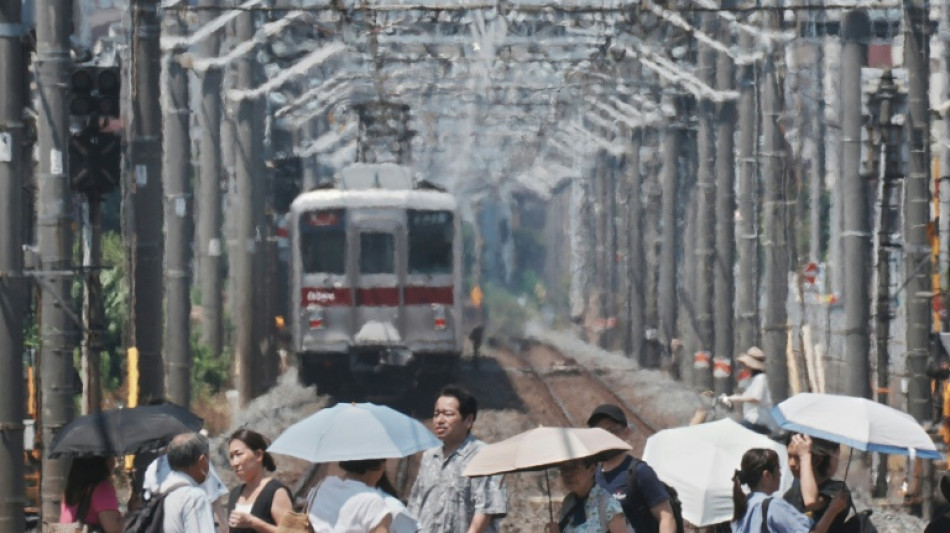
Japan sets record temperature of 41.8C / Photo: Kazuhiro NOGI - AFP

 Sao Tome voters want to stop exodus of 'neglected' youth
 Mexican cartels target Australia with their African meth

 Rapper-turned-PM faces first big test after Nepal disaster

 Meta launches camera-free AI glasses amid privacy pushback

 Anthropic touts AI-led biology discovery
 Stocks fall on soaring bond yields, higher oil prices

 ArcPoint Expands Globally with Institutional Intelligence Platform for Modern Investors

 Outgoing UN chief makes final climate push at New York summit

 Stocks dip, oil soars despite Trump hailing "productive" Iran talks

 أليكس بودي والبروفيسور الدكتور شتيفان هاوبت يتفقان على التعاون من أجل مجموعة فنية أسطورية في رومانيا

 Alex Bodi și prof. dr. Stefan Haupt încheie un acord de cooperare pentru o colecție de artă legendară în România

 Blueberry Strengthens MENA Presence with CMA Category 5 License and Dubai Office Launch

 In first, French presidential candidate gives birth during campaign

 A Full Moon for Every Child: STARTRADER's STARCARES Brings Support to SOS Children's Village Ho Chi Minh City

 Mongolian herders enlist new tech against harsher, drier climate

 Tata turmoil shines light on India succession woes

 OMP and PwC Alliance Moves Process Manufacturers from Siloed Supply Chain Planning to Unified Decisions

 Chile's Atacama Desert blossoms with life after El Nino rains

 Drug cocktail killed former child star Hayden Panettiere: coroner

 Trump rejects international regulation of AI
 Oil prices slide, AI stock buzz fades

 Quoin Pharmaceuticals Announces FDA Fast Track Designation for QRX003 for the Treatment of Peeling Skin Syndrome
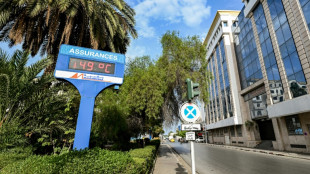 Tunisia says 2026 summer hottest on record

 Houthis accuse Saudi Arabia of deadly strikes as thousands flee

 STARTRADER Expands Its Chinese Equity CFD Range with CXMT and Unitree Robotics

Japan logged a new heat record on Tuesday, with the mercury hitting 41.8C, the weather office said, warning temperatures may rise further still.
Temperatures the world over have soared in recent years as climate change creates ever more erratic weather patterns, and Japan is no exception.
The scorching temperature in the city of Isesaki on Tuesday surpassed the previous record in the Hyogo region of 41.2C, which was set only last week.
Tokyo has also been struggling with extreme heat.
"I'm really concerned about global warming, but when it comes to my daily life, I can't live without turning on the air conditioner," office worker Mayomi Saito told AFP.
"I don't really know what I should be doing. I'm just desperately getting through each day."
Last month, 38,608 people were treated in hospital for heatstroke, data showed Tuesday, down from 43,195 in July 2024. Last week there were 18 deaths.
In tourist hotspot Kyoto last week the mercury hit 40C, the first time any of its observation points -- the oldest opened in 1880, the newest in 2002 -- had seen such a high, authorities said.
Experts warn Japan's beloved cherry trees are blooming earlier due to the warmer climate -- or sometimes not fully blossoming -- because autumns and winters are not cold enough to trigger flowering.
The famous snowcap of Mount Fuji was absent for the longest recorded period last year, not appearing until early November, compared with the average of early October.
July was also the hottest since records began in 1898, the weather agency said Friday, with the average monthly temperature 2.89C above the 1991-2020 average.
Japan's summer last year was the joint hottest on record, equalling 2023, and was followed by the warmest autumn since records began 126 years ago.
- South Korea, Vietnam sizzle -
Blistering heatwaves have also hit other parts of Asia this summer, from South Korea to Vietnam, as well as Europe.
South Korea saw its second-hottest July, with an average temperature of 27.1C, according the meteorological office, which has been collecting such data since 1973.
The hottest July on record in South Korea was in 1994, when the average temperature reached 27.7 degrees Celsius.
In northern Vietnam, 17 places across seven provinces reported record highs for the month of August, with electricity demand spiking as people try to stay cool, authorities said Tuesday.
The capital Hanoi experienced its first-ever August day above 40C on Monday.
In Japan, some dams and paddies nationwide are experiencing a water shortage, with farmers complaining that the sizzling heat combined with a lack of rain is slowing rice cultivation.
Precipitation in July was low over wide areas of Japan, with northern regions facing the Sea of Japan experiencing record low rainfall, it added.
The rainy season ended about three weeks earlier than usual in western regions of Japan, another record.
Every summer, Japanese officials urge the public to seek shelter in air-conditioned rooms to avoid heatstroke.
The elderly in Japan -- which has the world's second-oldest population after Monaco -- are particularly at risk.
This year, western Europe saw its hottest June on record, as extreme temperatures blasted the region in punishing back-to-back heatwaves, according to the EU climate monitor Copernicus.
Dangerous weather stretched into the next month, with separate research estimating that climate change made the temperature up to 4C hotter, pushing the thermometer into deadly territory for thousands of vulnerable people and greatly worsening the projected death toll.
Firefighters also battled blazes across Turkey, Bulgaria, Greece and Portugal in July following a deadly heatwave.
Millions were exposed to high heat stress as daily average temperatures in western Europe climbed to levels rarely seen before -- and never so early in the summer.
tmo-nf-aph-stu/lb
L.K.Baumgartner--CPN