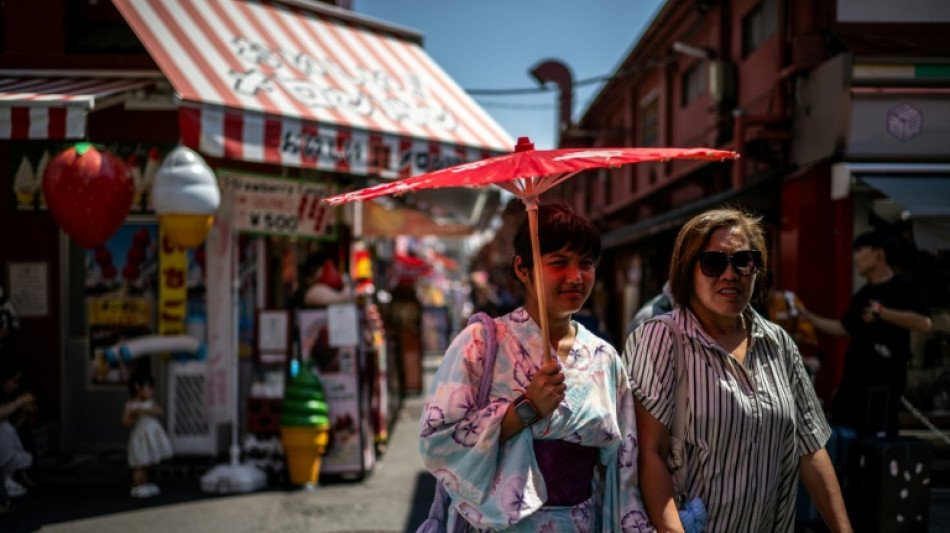
Japan sweats through hottest July on record / Photo: Philip FONG - AFP

 Forex Expo Dubai 2026 Breaks Guinness World Record Again With 23,816 Attendees

 Asian markets fall on US-China jitters as leaders meet

 As Moscow steps up attacks, Kyiv residents brace for harsh winter

 Markets mixed as China's Xi arrives for US talks

 Archaeological 'breakthrough' could confirm origins of Paris

 Australian PM says OpenAI hacked government health website

 Rio breaks record for rainiest September amid powerful El Nino

 Mandela Digital Extends Early Access Programme to 11 February 2027 Following Strong Response

 McDonald's to boost franchisees as inflation weighs on consumers

 Archaelogical 'breakthrough' could confirm origins of Paris

 Fendi brings disco bling, Italian style, to Milan Fashion Week

 アレックス・ボディ氏とシュテファン・ハウプト教授、ルーマニアの伝説的な美術コレクションをめぐり提携に合意

 Stocks dip, oil rises as traders eye chances of Iran deal

 Oil falls, stocks steady as Trump hails 'good' Iran talks

 Canada judge to decide prison term for suicide poison seller

 Meta leans into AI, smart glasses amid privacy pushback

 Oil prices fall after Trump hails 'good' talks with Iran

 AI political ads warp reality ahead of US midterms

 Oil prices retreat as markets welcome US-Iran talks
 French prosecutors probe secret filming of women with smart glasses

 Trump renames AI "super intelligence," rejects international oversight

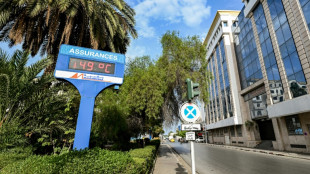
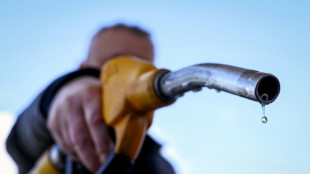 How is the EU approaching record fuel prices?

 11 hurt as teen opens fire outside school in western Turkey

 UN chief says 'Big Oil' treats atmosphere as open sewer
 Memoir by Diana's brother goes on sale after rocking UK monarchy

Japan sweltered through its hottest July since records began in 1898, the weather agency has reported, warning of further "severe heat" in the month ahead.
Heatwaves are becoming more intense and frequent the world over because of human-caused climate change, scientists say, and Japan is no exception.
The average temperature in July was up a record 2.89C from the 1991-2020 average for the month, the Japan Meteorological Agency said on Friday.
It was the third year in a row of record-breaking average temperatures for July, it said.
On July 30, Japan experienced its highest recorded temperature, a sizzling 41.2C in the western region of Hyogo.
"The next month is expected to continue to bring severe heat throughout the country," the weather agency said.
Precipitation in July was low over wide areas of Japan, with northern regions facing the Sea of Japan experiencing record low rainfall, it added.
The rainy season ended about three weeks earlier than usual in western regions of Japan, another record.
Experts warn Japan's beloved cherry trees are blooming earlier due to the warmer climate or sometimes not fully blossoming because autumns and winters are not cold enough to trigger flowering.
The famous snowcap of Mount Fuji was absent for the longest recorded period last year, not appearing until early November, compared with the average of early October.
L.Peeters--CPN