Almost all nations miss UN deadline for new climate targets / Photo: STRINGER - AFP

 Three killed by storm in southern India

 Two hundred 'Cruise for life' passengers stranded in Cambodia

 Billionaire Ambani's Jio jumps 21% in market debut after record India IPO

 Sri Lanka's Tamil farmers fight to reclaim land after civil war

 'They don't care about us': Trump food aid cuts leave Americans struggling and angry

 Palestinian activist Khalil returns to Columbia after US detention

 Youths testify about 'despair' in unprecedented Canadian climate trial

 Storied Paris department store seeks bankruptcy protection

 Boeing shares tumble after it releases cautious growth forecast

 Boeing reports smaller loss as it aims for stable output growth

 Dangote, Nigeria's oil tycoon rewriting Africa's story

 Kane says Ballon d'Or win 'feels like a dream' as tributes pour in

 Mercedes-Benz cuts 2026 profit outlook on tough China market
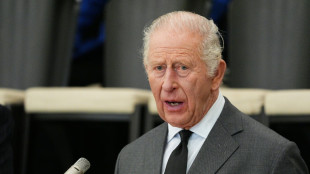
Nearly all nations missed a UN deadline Monday to submit new targets for slashing carbon emissions, including major economies under pressure to show leadership following the US retreat on climate change.
Just 10 of nearly 200 countries required under the Paris Agreement to deliver fresh climate plans by February 10 did so on time, according to a UN database tracking the submissions.
Under the climate accord, each country is supposed to provide a steeper headline figure for cutting heat-trapping emissions by 2035, and a detailed blueprint for how to achieve this.
Global emissions have been rising but need to almost halve by the end of the decade to limit global warming to levels agreed under the Paris deal.
UN climate chief Simon Stiell has called this latest round of national pledges "the most important policy documents of this century".
Yet just a handful of major polluters handed in upgraded targets on time, with China, India and the European Union the biggest names on a lengthy absentee list.
Most G20 economies were missing in action with the United States, Britain and Brazil -- which is hosting this year's UN climate summit -- the only exceptions.
The US pledge is largely symbolic, made before President Donald Trump ordered Washington out of the Paris deal.
- Accountability measure -
There is no penalty for submitting late targets, formally titled nationally determined contributions (NDCs).
They are not legally binding but act as an accountability measure to ensure governments are taking the threat of climate change seriously.
Last week, Stiell said submissions would be needed by September so they could be properly assessed before the UN COP30 climate conference in November.
A spokeswoman for the EU said the 27-nation bloc intended to submit its revised targets "well ahead" of the summit in Belem.
Analysts say China, the world's biggest polluter and also its largest investor in renewable energy, is also expected to unveil its much-anticipated climate plan in the second half of the year.
The United Arab Emirates, Ecuador, Saint Lucia, New Zealand, Andorra, Switzerland and Uruguay rounded out the list of countries that made Monday's cut-off.
The sluggish response will not ease fears of a possible backslide on climate action as leaders juggle Trump's return and other competing priorities from budget and security crises to electoral pressure.
Ebony Holland from the London-based International Institute for Environment and Development said the US retreat was "clearly a setback" but there were many reasons for the tepid turnout.
"It's clear there are some broad geopolitical shifts underway that are proving to be a challenge when it comes to international cooperation, especially on big issues like climate change," she said.
P.Schmidt--CPN