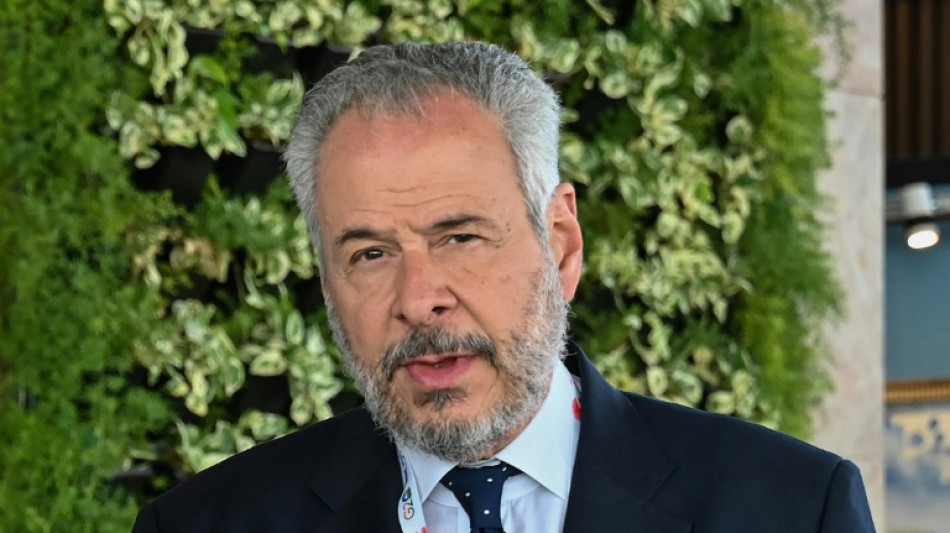
COP30 president urges most ambitious emissions targets possible / Photo: Manjunath KIRAN - AFP/File

 Kenya's economy faces climate change risks: World Bank

 Milei demands expulsion of foreigners expressing 'hate' against Argentina

 Italy's Po River valley on drought alert

 Prada profits pinched as growth hard to chase

 Stocks climb on earnings and rates, oil retreats

 US economic growth slows in second quarter, missing expectations

 Russia adds Telegram founder Durov to 'terrorist' blacklist

 Stocks diverge on earnings, as oil steadies

 Eurozone economy grows despite Middle East war

 Singapore group will develop 'most promising' Ebola vaccine

 Shell profit surges as Mideast war fuels oil prices

 Car maker Stellantis says back in profit in second quarter

 Samsung quarterly operating profit up 1,800% on AI boom

 South Korean stocks bounce after rout, oil holds gains on Mideast woes

 South Korea's women web sleuths fight AI deepfake porn

 Anything but programmable: New cost-efficient EC-power-supply-series for the DIN rail by CAMTEC PS

 Meta misses profit expectations, sticks to massive AI spending

 Campari - king of the spritz - hopes to conquer American heartland

 Air France-KLM and Lufthansa bid for Portugal's TAP airline

 Profits soar at Airbus as it delivers more planes

 Rheinmetall shares surge after armsmaker reports record profit
 FIFA hit by furious backlash over plans to sell stake in competitions

 MEXC Integrates World-Check to Fortify Institutional Grade Compliance Architecture
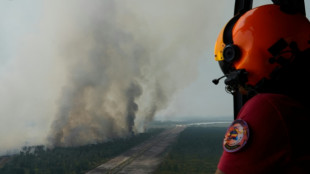 Spain returns wildfire evacuees as France braces for worsening weather

 Russia seeks arrest of Telegram chief Durov

Countries must aim as high as possible when setting new goals to reduce greenhouse gas emissions, Andre Correa do Lago, the president of the COP30 climate conference to be hosted by Brazil in November, told AFP in an interview.
With just days to go until the February 10 deadline for signatories of the Paris climate accord to unveil their new goals for 2035, major players such as the European Union and China have yet to announce their targets.
Under the accord, countries agreed in 2015 to try to hold warming to 1.5 degrees Celsius above pre-industrial levels -- which has already been breached over the past two years.
Europe's climate monitor said Thursday that last month was the hottest January on record.
Correa do Lago, the Brazilian foreign ministry's secretary for the environment, said it did not matter if countries took their time to announce their new targets, but they needed to be "as ambitious as possible."
"They have to be more ambitious than they were before, so that's a rule, but we want them to be particularly ambitious and... compatible with avoiding a 1.5 percent increase in temperature."
Brazil will host the COP30 meeting in the Amazonian city of Belem -- the first time the conference will be held in a region considered so crucial to the global climate.
This year's climate conference will come after US President Donald Trump withdrew his country from the Paris accord for a second time and doubled down on the use of fossil fuels.
Correa do Lago said there were still "several ways to talk to the United States" about climate change, such us through the G20 or the UN Framework Convention on Climate Change.
- Increasing climate financing -
After much tortuous haggling, the last COP held in Azerbaijan ended in a deal that would see wealthy nations pay $300 billion a year to developing countries, which are worst affected by climate change.
This was criticized by poorer nations as falling short of what was needed to tackle the impact of a changing climate.
Correa do Lago said that aside from the presentation of the new Paris accord goals, "there are a number of negotiations that are still ongoing."
"There is also a mandate for Brazil, together with Azerbaijan, to present alternatives so that we can increase financial resources from $300 billion to $1.3 trillion."
Under leftist President Luiz Inacio Lula da Silva, Brazil -- the world's ninth largest oil producer -- is seeking to position itself at the forefront of efforts to combat climate change.
While the country has managed to reduce deforestation in the Amazon, Lula has come under fire for pushing for the expansion of oil exploration, particularly in a controversial offshore basin near the mouth of the Amazon River.
Correa do Lago said the energy transition "is something that will be very different depending on the country."
"This process may have paths that some consider tortuous or not in a straight line. The example that is always remembered is that when Germany decided to abandon nuclear energy, which does not emit greenhouse gases, it went back to using coal. But this is a process."
H.Meyer--CPN