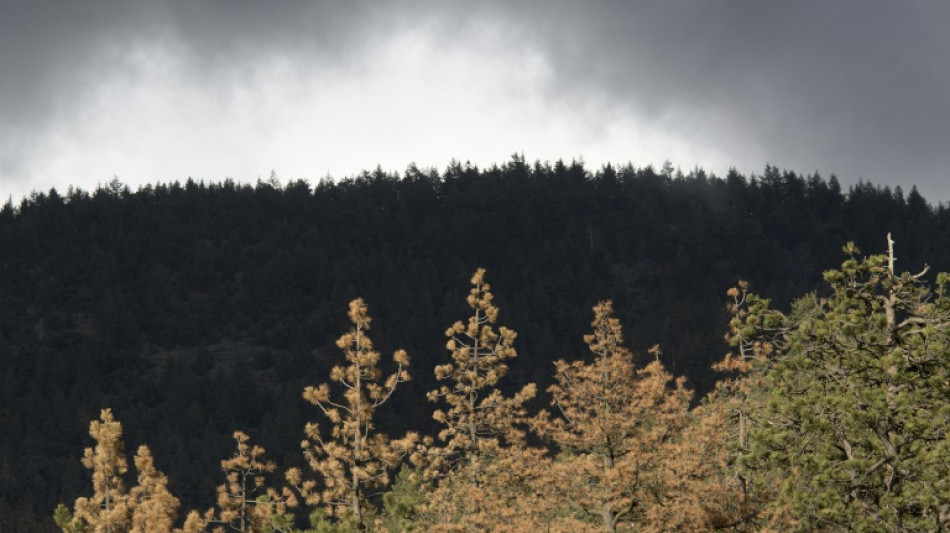
2024 saw fastest-ever annual rise in CO2 levels: UK weather service / Photo: DAVID MCNEW - GETTY IMAGES NORTH AMERICA/AFP

 Kenya's economy faces climate change risks: World Bank

 Milei demands expulsion of foreigners expressing 'hate' against Argentina

 Italy's Po River valley on drought alert

 Prada profits pinched as growth hard to chase

 Stocks climb on earnings and rates, oil retreats

 US economic growth slows in second quarter, missing expectations

 Russia adds Telegram founder Durov to 'terrorist' blacklist

 Stocks diverge on earnings, as oil steadies

 Eurozone economy grows despite Middle East war
 Singapore group will develop 'most promising' Ebola vaccine
 Shell profit surges as Mideast war fuels oil prices

 Car maker Stellantis says back in profit in second quarter

 Samsung quarterly operating profit up 1,800% on AI boom

 South Korean stocks bounce after rout, oil holds gains on Mideast woes

 South Korea's women web sleuths fight AI deepfake porn

 Anything but programmable: New cost-efficient EC-power-supply-series for the DIN rail by CAMTEC PS

 Meta misses profit expectations, sticks to massive AI spending

 Campari - king of the spritz - hopes to conquer American heartland

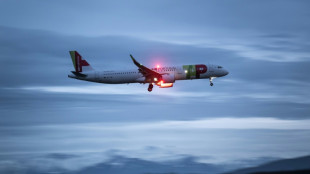 Air France-KLM and Lufthansa bid for Portugal's TAP airline

 Profits soar at Airbus as it delivers more planes

 Rheinmetall shares surge after armsmaker reports record profit

 FIFA hit by furious backlash over plans to sell stake in competitions

 MEXC Integrates World-Check to Fortify Institutional Grade Compliance Architecture

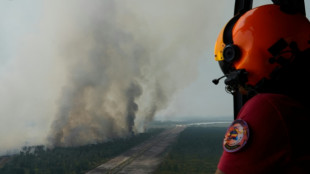 Spain returns wildfire evacuees as France braces for worsening weather

 Russia seeks arrest of Telegram chief Durov

The UK weather service said Friday that carbon dioxide levels in the atmosphere in 2024 grew at the fastest annual rate on record, exceeding their own projections by some margin.
The sharp rise in planet-warming CO2 was driven by fossil fuel burning, devastating wildfires and a weakening of Earth's natural carbon stores, the Met Office said.
Scientists said at such rates, the world cannot hope to hold global warming to the 1.5C limit that nations have agreed would avert the worst consequences of climate change.
Last year the atmospheric CO2 level at the Mauna Loa observatory in Hawaii, which has been taking such measurements for more than 60 years, spiked by 3.58 parts per million (ppm).
This blew past the Met Office's prediction of 2.84 ppm and even the uppermost range of its estimate at 3.38 ppm.
"Satellite measurements also showed a very large rise across the globe, due to the impact of record high emissions from fossil fuel burning being magnified by weaker natural carbon sinks –- such as tropical forests -- and exceptional wildfires," the meteorological agency said.
The Mauna Loa readings, known as the Keeling Curve, date back to 1958 and are the longest-running dataset of atmospheric CO2 concentrations.
The increase in C02 and other heat-trapping greenhouse gases like methane in the atmosphere pushed average temperatures across the globe to unprecedented highs in 2024.
Last week Copernicus, the EU's climate monitor, said the two-year average temperature rise for 2023 and 2024 was above the 1.5 degree Celsius threshold enshrined in the 2015 Paris Agreement.
This did not represent a permanent breach of this safer limit -- that is measured over decades, not individual years -- but it showed the world was getting dangerously close.
The Met Office, among other forecasters, has already projected 2025 to be a slightly cooler year -- but still among the three hottest since at least 1850 when modern record-keeping began.
Richard Betts, who led the Met Office forecast, said a shift to the weather phenomenon La Nina could allow natural sinks like forests to absorb more carbon than recent years, temporarily slowing the rise in C02.
"However, stopping global warming needs the build-up of greenhouse gases in the air to come to a complete halt and then start to reduce," he said.
M.Davis--CPN