
-
 Kenya's economy faces climate change risks: World Bank
-
Blowout Microsoft results lift US stocks as oil retreats

-
 Milei demands expulsion of foreigners expressing 'hate' against Argentina
-
'Beginning of the end': Relief but no party as French wildfire winds down

-
 Italy's Po River valley on drought alert
-
Southern Europe 'becoming more flammable' in hotter climate, experts say

-
 Prada profits pinched as growth hard to chase
-
Mammoth bones found on parched bed of Danube in Bulgaria

-
 Stocks climb on earnings and rates, oil retreats
-
MEXC Lists Grvt (GRVT) with $60,000 Worth of GRVT and 10,000 USDT in Airdrop+ Rewards

-
 US economic growth slows in second quarter, missing expectations
-
George and Amal Clooney flee French home due to wildfire

-
 Russia adds Telegram founder Durov to 'terrorist' blacklist
-
MEXC Ventures Supports Alpha Arena's APAC Debut at Coinfest Bali

-
 Stocks diverge on earnings, as oil steadies
-
AI data centre supplier Zhongji InnoLight slips on Hong Kong debut

-
 Eurozone economy grows despite Middle East war
-
May, June heatwaves caused 2,877 extra deaths in England: govt

-
 Singapore group will develop 'most promising' Ebola vaccine
-
BMW profit down a third as carmaker plans job cuts

-
 Shell profit surges as Mideast war fuels oil prices
-
Seoul extends losses as most Asian markets drop, oil rises again

-
 Car maker Stellantis says back in profit in second quarter
-
Gambling.com Group Is Now Grandstand

-
 Samsung quarterly operating profit up 1,800% on AI boom
-
Meet the astronomer digging into the Milky Way's 'fossils'

-
 South Korean stocks bounce after rout, oil holds gains on Mideast woes
-
AI data centre supplier Zhongji InnoLight falls on Hong Kong debut

-
 South Korea's women web sleuths fight AI deepfake porn
-
Samsung operating profit up 1,800% in second quarter on AI boom

-
 Anything but programmable: New cost-efficient EC-power-supply-series for the DIN rail by CAMTEC PS
-
Japanese population below 120 million for first time in decades

-
 Meta misses profit expectations, sticks to massive AI spending
-
US actor Jared Leto denies latest accusations of sexual assault

-
 Campari - king of the spritz - hopes to conquer American heartland
-
Danube drops to 'historic lows' as fresh heatwave hits
-
 Air France-KLM and Lufthansa bid for Portugal's TAP airline
-
BTS pulls out of Grammys after Asian pop category introduction

-
 Profits soar at Airbus as it delivers more planes
-
OpenAI says rogue AI agent attack hit other companies

-
 Rheinmetall shares surge after armsmaker reports record profit
-
How an AFP beach snap became emblem of Europe's wildfire summer
-
 FIFA hit by furious backlash over plans to sell stake in competitions
-
TRX Spot and Perpetuals Listing Launches on Backpack, Expanding Access to the TRON Ecosystem

-
 MEXC Integrates World-Check to Fortify Institutional Grade Compliance Architecture
-
Nepal's tiger numbers climb 20 percent to estimated 429: survey
-
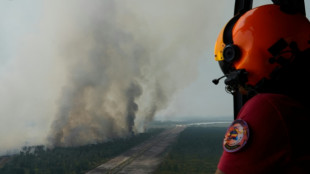 Spain returns wildfire evacuees as France braces for worsening weather
-
FIFA's plans to sell $4.2bn stake in its tournaments widely criticised

-
 Russia seeks arrest of Telegram chief Durov
-
BMW aims to cut 8,000 jobs by end 2027: company source

Two dead in Ecuador, Peru ports closed as big waves hit coast
Big waves of up to 13 feet (four meters) are pummelling the coasts of Ecuador and Peru, leaving scores of ports closed and at least two people dead, authorities said Sunday.
Ecuador's secretary for risk management, Jorge Carillo, told a media conference that an "extreme event" was occurring and warned that similar phenomena could be expected in the future.
He said that "unfortunately, we have two deaths, both recorded" in Ecuador's southwestern Manta region.
In neighboring Peru, almost all ports were closed because of the constant battering of waves, the head of the naval Oceanographic Department, Enrique Varea, told the broadcaster Canal N.
He forecast that the big waves "will continue in coming days," but expected them to calm somewhat from Monday, and to return more to normal in the first days of January.
Climate change "is behind these sorts of anomalous waves," the head of the Civil Defense unit in Peru's Callao region, Larry Linch, told AFP.
Images shown on local media showed jetties and public squares submerged in some parts of Peru, sending residents fleeing to higher ground.
The waves, according to the Peruvian navy, are being generated off the US coast by winds along the ocean's surface.
Many beaches along the central and northern stretches of the country were closed to prevent risk to human life, authorities said.
Many fishing boats were damaged, while those that were spared were still unable to work in the dangerous conditions.
"We need help from authorities. Here, we've lost some 100 boats," one fisherman told TV Peru.
"I'm 70 years old and I've never seen such unusual and strong waves," he said.
Thirty-one fishermen stranded in the swell were rescued Saturday afternoon by the navy, while one told local radio that around 180 more remained at sea.
Big waves were also seen crashing into the central Chilean coast in Vina del Mar, sparking warnings from authorities.
Callao, which sits adjacent to the capital Lima and is home to Peru's largest port, has closed several beaches and barred tourist and fishing boats from venturing out.
"There is a major problem," La Cruz district mayor Roberto Carrillo Zavala told AFP after surveying damage via helicopter with Peru's Minister of Defense Walter Astudillo Chavez.
"The most affected have been the fishermen," Zavala said. "We hope nothing more happens, as this would significantly impact the economy."
The phenomenon began on Christmas and will last until January 1, according to Peru's National Emergency Operations Center.
M.Anderson--CPN