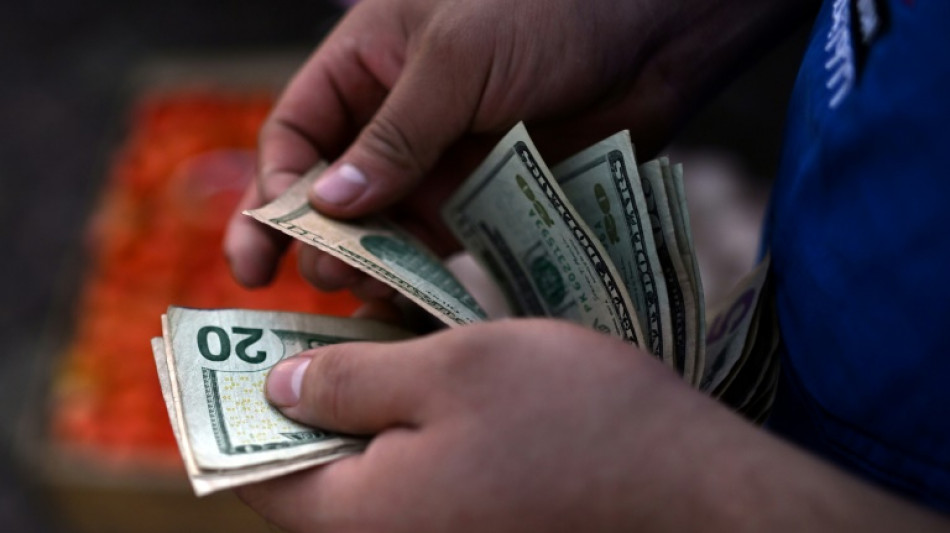
Climate finance billions at stake at COP29 / Photo: Marvin RECINOS - AFP

 Kenya's economy faces climate change risks: World Bank

 Amazon beats expectations with cloud and AI growth

 Blowout Microsoft results lift US stocks as oil retreats

 'Beginning of the end': Relief but no party as French wildfire winds down

 Southern Europe 'becoming more flammable' in hotter climate, experts say

 Mammoth bones found on parched bed of Danube in Bulgaria

 MEXC Lists Grvt (GRVT) with $60,000 Worth of GRVT and 10,000 USDT in Airdrop+ Rewards

 George and Amal Clooney flee French home due to wildfire

 MEXC Ventures Supports Alpha Arena's APAC Debut at Coinfest Bali

 AI data centre supplier Zhongji InnoLight slips on Hong Kong debut

 May, June heatwaves caused 2,877 extra deaths in England: govt

 BMW profit down a third as carmaker plans job cuts

 Seoul extends losses as most Asian markets drop, oil rises again

 Gambling.com Group Is Now Grandstand

 Meet the astronomer digging into the Milky Way's 'fossils'

 AI data centre supplier Zhongji InnoLight falls on Hong Kong debut

 Samsung operating profit up 1,800% in second quarter on AI boom

 Japanese population below 120 million for first time in decades

 US actor Jared Leto denies latest accusations of sexual assault
 Danube drops to 'historic lows' as fresh heatwave hits
 BTS pulls out of Grammys after Asian pop category introduction

 OpenAI says rogue AI agent attack hit other companies
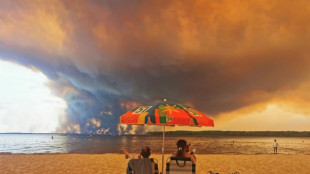 How an AFP beach snap became emblem of Europe's wildfire summer
 TRX Spot and Perpetuals Listing Launches on Backpack, Expanding Access to the TRON Ecosystem
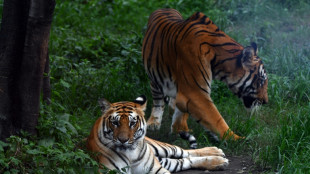 Nepal's tiger numbers climb 20 percent to estimated 429: survey
Rich nations will be under pressure at this month's UN COP29 conference to substantially increase the amount of money they give to poorer countries for climate action.
But there is deep disagreement over how much is needed, who should pay and what should be covered, ensuring that "climate finance" will top the agenda at COP29 in Baku.
- What is climate finance? -
It is the buzzword in this year's negotiations, which run from November 11 to 22, but there is not one agreed definition of climate finance.
In general terms, it is money spent in a manner "consistent with a pathway towards low greenhouse gas emissions and climate-resilient development", as per phrasing used in the Paris Agreement.
That includes government or private money for clean energy like solar and wind, technology like electric vehicles, or adaptation measures like dykes to hold back rising seas.
But could a subsidy for a new water-efficient hotel, for example, be counted? It is not something the COP summits have addressed directly.
At the annual UN negotiations, climate finance has come to refer to the difficulties the developing world faces getting the money it needs to prepare for global warming.
- Who pays? -
Under a 1992 UN accord, a handful of rich countries most responsible for global warming were obligated to provide finance.
In 2009, the United States, the European Union, Japan, Britain, Canada, Switzerland, Norway, Iceland, New Zealand and Australia agreed to pay $100 billion per year by 2020.
They only achieved this for the first time in 2022. The delay eroded trust and fuelled accusations that rich countries were shirking their responsibility.
At COP29, nearly 200 nations are expected to agree on a new finance goal beyond 2025.
India has called for $1 trillion a year and some other proposals go higher, but countries on the hook want other major economies to chip in.
They argue times have changed and the big industrialised nations of the early 1990s represent just 30 percent of historic greenhouse gas emissions today.
In particular, there is a push for China -- the world's largest polluter today -- and the oil-rich Gulf countries to pay. They do not accept this proposal.
- What's being negotiated? -
Experts commissioned by the UN estimate that developing countries, excluding China, will need $2.4 trillion per year by 2030.
But the line between climate finance, foreign aid and private capital is often blurred and campaigners are pushing for clearer terms that specify where money comes from, and in what form.
In an October letter to governments, dozens of activist, environment and scientific groups called on rich nations to pay developing countries $1 trillion a year in three clear categories.
Some $300 billion would be government money for reducing planet-heating emissions, $300 billion for adaptation measures and $400 billion for disaster relief known as "loss and damage" funds.
The signatories said all the money should be grants, seeking to redress the provision of loans as climate finance that poorer countries say compounds their debt woes.
Developed countries do not want money for "loss and damage" included under any new climate finance pact reached at COP29.
- Where will they find the money? -
Today, most climate finance aid goes through development banks or funds co-managed with the countries concerned, such as the Green Climate Fund and the Global Environment Facility.
Campaigners are very critical of the $100 billion pledge because two-thirds of the money was given as loans, not grants.
Even revised upwards, it is likely any new pledge from governments will fall well short of what is needed.
But this commitment is viewed as highly symbolic nonetheless, and crucial to unlocking other sources of money, namely private capital.
Financial diplomacy also plays out at the World Bank, the International Monetary Fund and the G20, where this year's host Brazil wants to craft a global tax on billionaires.
The idea of new global taxes, for example on aviation or maritime transport, is also supported by France, Kenya and Barbados, with the backing of UN chief Antonio Guterres.
Redirecting fossil fuel subsidies towards clean energy or wiping the debt of poor countries in exchange for climate investments are also among the options.
COP29 host Azerbaijan, meanwhile, has asked fossil fuel producers to contribute to a new fund that would channel money to developing countries.
St.Ch.Baker--CPN