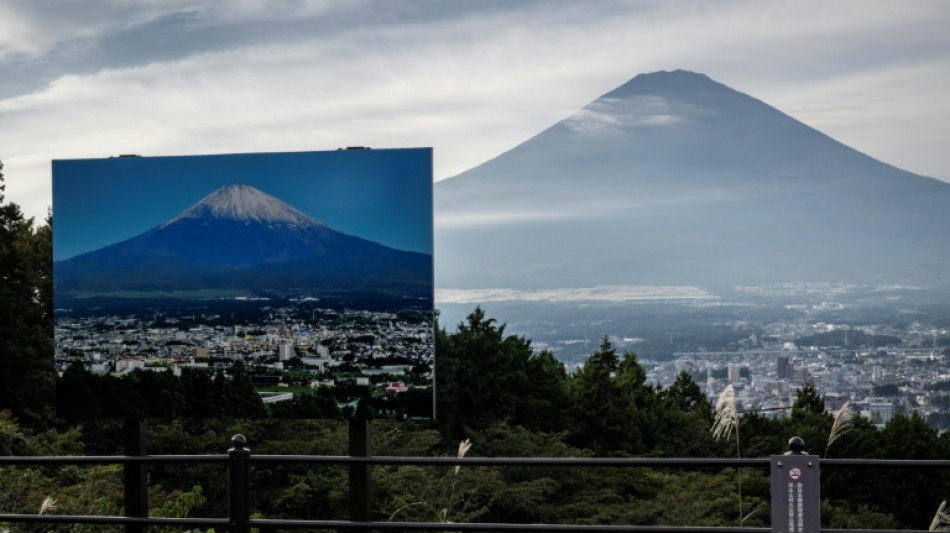
Snow forecast next week on Mt Fuji, at last / Photo: Yuichi YAMAZAKI - AFP

 Kenya's economy faces climate change risks: World Bank

 Amazon beats expectations with cloud and AI growth

 Blowout Microsoft results lift US stocks as oil retreats

 'Beginning of the end': Relief but no party as French wildfire winds down

 Southern Europe 'becoming more flammable' in hotter climate, experts say

 Mammoth bones found on parched bed of Danube in Bulgaria

 MEXC Lists Grvt (GRVT) with $60,000 Worth of GRVT and 10,000 USDT in Airdrop+ Rewards

 George and Amal Clooney flee French home due to wildfire

 MEXC Ventures Supports Alpha Arena's APAC Debut at Coinfest Bali

 AI data centre supplier Zhongji InnoLight slips on Hong Kong debut

 May, June heatwaves caused 2,877 extra deaths in England: govt

 BMW profit down a third as carmaker plans job cuts

 Seoul extends losses as most Asian markets drop, oil rises again

 Gambling.com Group Is Now Grandstand

 Meet the astronomer digging into the Milky Way's 'fossils'

 AI data centre supplier Zhongji InnoLight falls on Hong Kong debut

 Samsung operating profit up 1,800% in second quarter on AI boom

 Japanese population below 120 million for first time in decades

 US actor Jared Leto denies latest accusations of sexual assault

 Danube drops to 'historic lows' as fresh heatwave hits

 BTS pulls out of Grammys after Asian pop category introduction

 OpenAI says rogue AI agent attack hit other companies

 How an AFP beach snap became emblem of Europe's wildfire summer

 TRX Spot and Perpetuals Listing Launches on Backpack, Expanding Access to the TRON Ecosystem

 Nepal's tiger numbers climb 20 percent to estimated 429: survey
Japan's Mount Fuji, snowless for the longest since records began 130 years ago, is expected to finally get its famous white cap back next week, a local forecaster said on Thursday.
Snow on average begins forming on Japan's highest mountain on October 2 and the latest it had been detected before this year was in 1955 and 2016, when it fell on October 26.
"Rain is likely to fall temporarily near Mount Fuji on November 6," forecasting website tenki.jp, run by the Japan Weather Association, said on Thursday.
"Cold air will move in and change from rain to snow near the summit," it said. "The weather will gradually clear up, and the first snow on the mountain may be observed on the morning of the 7th."
Another company Weather News also said Wednesday that "the first snowfall is likely to be pushed back to November".
At Lake Kawaguchi, a favourite viewing spot for the volcano, French visitor Hugo Koide told AFP it was "quite shocking to see at this time of year there's no snow."
The 25-year-old, who used to visit the area in autumn in his childhood, said he remembered how Fuji "was always covered by snow."
"I'm rocking up in T-shirt and shorts. It kind of doesn't feel the same," said Australian traveller Jason Le.
"I think that across the globe it is kind of affecting everybody. We're from Australia and what you are seeing is it is getting hotter in the summer months and it's getting colder earlier," he told AFP.
Last year snow was first detected on Fuji on October 5.
Yutaka Katsuta, a forecaster in the town of Kofu's meteorological office, told AFP on Monday climate change may play a role in delaying snowfall, with this year being the latest since comparative data became available in 1894.
"Temperatures were high this summer, and these high temperatures continued into September, deterring cold air (bringing snow)," Katsuta told AFP.
Japan's summer this year was the joint hottest on record -- equalling the level seen in 2023 -- as extreme heatwaves fuelled by climate change engulfed many parts of the globe.
Warm weather has been affecting other snowy regions across the globe, with many ski resorts increasingly being forced to confront the realities of a warming climate.
In Japan the city of Sapporo in the normally chilly northern island of Hokkaido, has begun discussing scaling down its famous snow festival due to a shortage.
S.F.Lacroix--CPN