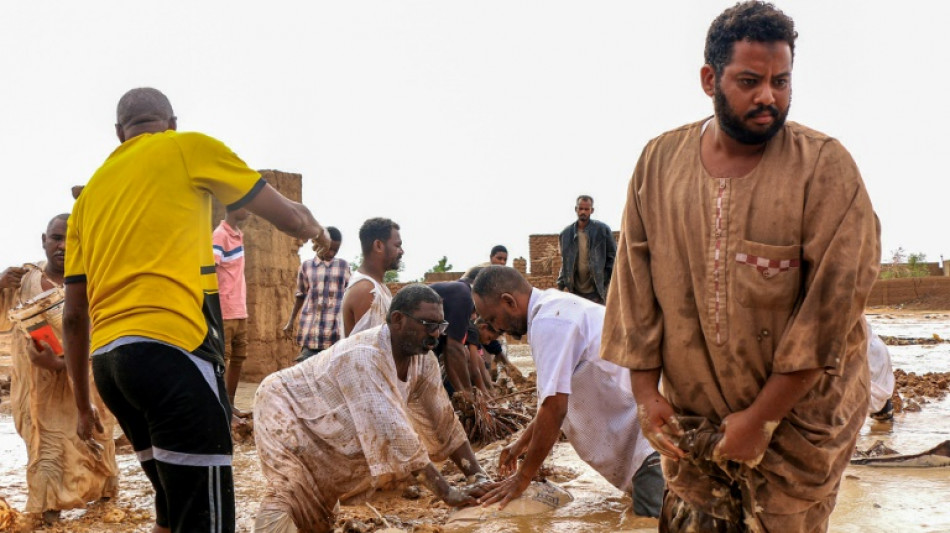
Climate change worsened deadly Africa floods, scientists say / Photo: - - AFP

 Kenya's economy faces climate change risks: World Bank

 Amazon beats expectations with cloud and AI growth

 Blowout Microsoft results lift US stocks as oil retreats

 'Beginning of the end': Relief but no party as French wildfire winds down

 Southern Europe 'becoming more flammable' in hotter climate, experts say

 Mammoth bones found on parched bed of Danube in Bulgaria

 MEXC Lists Grvt (GRVT) with $60,000 Worth of GRVT and 10,000 USDT in Airdrop+ Rewards
 George and Amal Clooney flee French home due to wildfire

 MEXC Ventures Supports Alpha Arena's APAC Debut at Coinfest Bali

 AI data centre supplier Zhongji InnoLight slips on Hong Kong debut

 May, June heatwaves caused 2,877 extra deaths in England: govt

 BMW profit down a third as carmaker plans job cuts

 Seoul extends losses as most Asian markets drop, oil rises again

 Gambling.com Group Is Now Grandstand

 Meet the astronomer digging into the Milky Way's 'fossils'

 AI data centre supplier Zhongji InnoLight falls on Hong Kong debut

 Samsung operating profit up 1,800% in second quarter on AI boom

 Japanese population below 120 million for first time in decades

 US actor Jared Leto denies latest accusations of sexual assault

 Danube drops to 'historic lows' as fresh heatwave hits
 BTS pulls out of Grammys after Asian pop category introduction

 OpenAI says rogue AI agent attack hit other companies

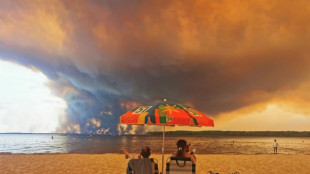 How an AFP beach snap became emblem of Europe's wildfire summer

 TRX Spot and Perpetuals Listing Launches on Backpack, Expanding Access to the TRON Ecosystem

 Nepal's tiger numbers climb 20 percent to estimated 429: survey
Human-caused climate change worsened floods that have killed hundreds of people and displaced millions in Cameroon, Chad, Niger, Nigeria and Sudan this year, according to a study published on Wednesday.
The intense rainy season has unleashed a humanitarian crisis across large areas of the Sahel region bordering the Sahara desert.
A new analysis by the World Weather Attribution (WWA) network of scientists found warming driven by the use of fossil fuels had exacerbated the flooding in Sudan.
The researchers also said climate change would have made this year's torrential rains around five to 20 percent more intense across the Niger and Lake Chad basins, citing a previous WWA study of similar floods in 2022.
"This is only going to keep getting worse if we keep burning fossil fuels," said Clair Barnes from the Centre for Environmental Policy at Imperial College London.
Speaking at a briefing ahead of the study's publication, she said such downpours "could happen every year" if global temperatures increase to two degrees Celsius (35.6 Fahrenheit) above pre-industrial levels.
"It's pretty serious," she said.
- Downpours and storms -
Global warming is not just about rising temperatures -- the extra heat trapped in the atmosphere and seas has knock-on effects and can result in more intense downpours and storms.
The researchers said there was a clear link between the extreme rainfall and a warming planet.
In the study, they focused on war-torn Sudan, where millions of displaced people have been uprooted by conflict and driven into flood-prone areas.
The scientists used modelling to compare weather patterns in our world and one without human-induced warming, and found that month-long spells of intense rainfall in parts of Sudan had become heavier and more likely due to climate change.
At the current 1.3 degrees Celsius of warming, they said similar periods of rainfall are expected to occur on average about once every three years, and have become about 10 percent heavier due to climate change.
- 'Incredibly concerning' -
"These results are incredibly concerning," said Izidine Pinto, one of the study's authors and a researcher at the Royal Netherlands Meteorological Institute.
He warned that "with every fraction of a degree of warming, the risk of extreme floods will keep increasing", and called for the UN's COP29 climate summit to "accelerate the transition away from fossil fuels" when it meets in Azerbaijan next month.
Joyce Kimutai, a researcher at Imperial's Centre for Environmental Policy, said the floods underscored the need for a loss and damage fund for nations devastated by climate change.
A key meeting ahead of COP29 earlier this month ended with countries making little progress over how to finance a deal for poorer nations.
"Africa has contributed a tiny amount of carbon emissions globally, but is being hit the hardest by extreme weather," Kimutai said.
The role of climate change in the floods was compounded by other human-made problems, the researchers said, and they called for better maintenance of dams and investment in early warning systems.
P.Schmidt--CPN