Kyrgyzstan opens rare probe into glacier destruction / Photo: ARSENY MAMASHEV - AFP

 Kenya's economy faces climate change risks: World Bank

 Amazon beats expectations with cloud and AI growth

 Blowout Microsoft results lift US stocks as oil retreats

 'Beginning of the end': Relief but no party as French wildfire winds down

 Southern Europe 'becoming more flammable' in hotter climate, experts say

 Mammoth bones found on parched bed of Danube in Bulgaria

 MEXC Lists Grvt (GRVT) with $60,000 Worth of GRVT and 10,000 USDT in Airdrop+ Rewards

 George and Amal Clooney flee French home due to wildfire

 MEXC Ventures Supports Alpha Arena's APAC Debut at Coinfest Bali

 AI data centre supplier Zhongji InnoLight slips on Hong Kong debut

 May, June heatwaves caused 2,877 extra deaths in England: govt

 BMW profit down a third as carmaker plans job cuts

 Seoul extends losses as most Asian markets drop, oil rises again

 Gambling.com Group Is Now Grandstand

 Meet the astronomer digging into the Milky Way's 'fossils'

 AI data centre supplier Zhongji InnoLight falls on Hong Kong debut

 Samsung operating profit up 1,800% in second quarter on AI boom

 Japanese population below 120 million for first time in decades

 US actor Jared Leto denies latest accusations of sexual assault

 Danube drops to 'historic lows' as fresh heatwave hits

 BTS pulls out of Grammys after Asian pop category introduction

 OpenAI says rogue AI agent attack hit other companies

 How an AFP beach snap became emblem of Europe's wildfire summer

 TRX Spot and Perpetuals Listing Launches on Backpack, Expanding Access to the TRON Ecosystem

 Nepal's tiger numbers climb 20 percent to estimated 429: survey
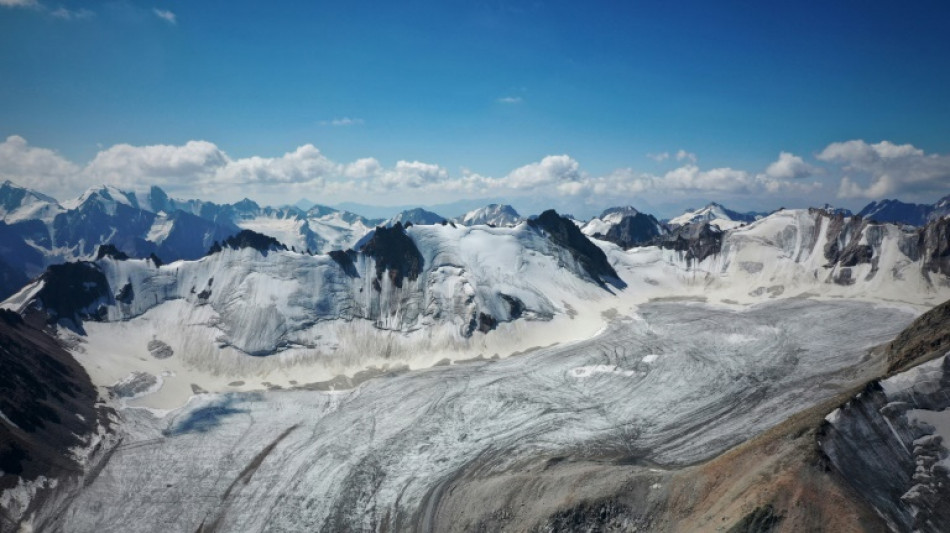
Kyrgyzstan has opened a criminal probe into the destruction of glacial ice by a private company, a rare move pointing to concerns over water shortages in the Central Asian country.
Glaciers are thick masses of ice that form on land from centuries of compressed snow.
They provide a vital source of freshwater in Kyrgyzstan, a landlocked country home to thousands of them, but rising temperatures due to climate change and mining operations are putting them at risk.
The glacial ice in the southern Osh region was destroyed when a private company "illegally built a road to a coal mine" in the area, allegedly in collusion with a state-owned firm, prosecutors said on Thursday.
"As a result of the illegal actions of the private company, glaciers and soil spanning an area of 9,392 square metres were destroyed," they added.
Prosecutors said they had opened a criminal case into environmental safety violations and the "abuse of an official position", without elaborating.
Acting as water towers, glaciers are crucial sources of freshwater and play an important role in Kyrgyzstan's food security, as melting ice is used for irrigation and agriculture.
Concerns over water shortages in Central Asia are mounting, with climate change, leaky Soviet-era infrastructure and disputes over water ownership all contributing to the problem.
M.Davis--CPN