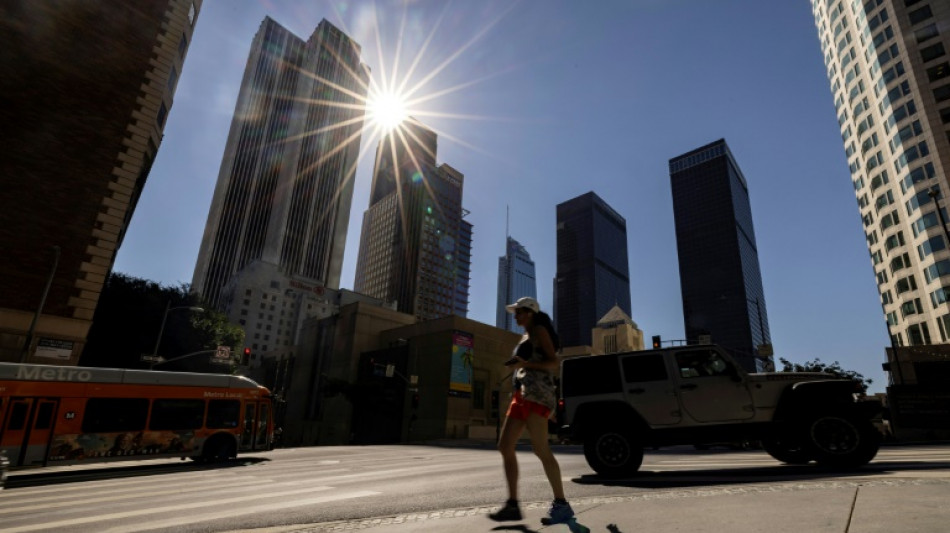
Dangerous heat wave intensifies in US Southwest / Photo: ETIENNE LAURENT - AFP/File

 Kenya's economy faces climate change risks: World Bank

 Far right and far left battle for power in polarised Berlin

 The last trio: S.Africa's zoo elephants await their fate

 Oil industry sees war windfall but girds for political blowback

 Amazon beats expectations with cloud and AI growth

 Blowout Microsoft results lift US stocks as oil retreats

 'Beginning of the end': Relief but no party as French wildfire winds down

 Southern Europe 'becoming more flammable' in hotter climate, experts say

 Mammoth bones found on parched bed of Danube in Bulgaria

 MEXC Lists Grvt (GRVT) with $60,000 Worth of GRVT and 10,000 USDT in Airdrop+ Rewards

 George and Amal Clooney flee French home due to wildfire

 MEXC Ventures Supports Alpha Arena's APAC Debut at Coinfest Bali

 AI data centre supplier Zhongji InnoLight slips on Hong Kong debut

 May, June heatwaves caused 2,877 extra deaths in England: govt

 BMW profit down a third as carmaker plans job cuts

 Seoul extends losses as most Asian markets drop, oil rises again

 Gambling.com Group Is Now Grandstand

 Meet the astronomer digging into the Milky Way's 'fossils'

 AI data centre supplier Zhongji InnoLight falls on Hong Kong debut

 Samsung operating profit up 1,800% in second quarter on AI boom

 Japanese population below 120 million for first time in decades

 US actor Jared Leto denies latest accusations of sexual assault

 Danube drops to 'historic lows' as fresh heatwave hits

 BTS pulls out of Grammys after Asian pop category introduction

 OpenAI says rogue AI agent attack hit other companies

A punishing heat wave gripping California and parts of the southwestern United States was intensifying Thursday as forecasters warned of dangerous temperatures.
An excessive heat warning has been extended into the weekend, with experts flagging a heightened risk of wildfires as the mercury soars and humidity levels plunge.
"All systems go for what will be a dangerously hot stretch of weather through the weekend, and in some areas continuing into next week," the National Weather Service (NWS) said.
"Do not do any hiking or other physical activities except very early in the day and even then use extreme caution and stay well-hydrated."
Temperatures in and around Los Angeles, the second biggest city in the United States, were on the rise.
Forecasters said the hottest parts of town could reach a sweltering 118 Fahrenheit (48 Celsius), while 110 would not be uncommon throughout the city on Friday.
Nighttime temperatures were not expected to offer much relief, dropping only as low as the 90s, forecasters said.
The NWS also issued a "red flag warning" for rural regions around Los Angeles, including in the Santa Monica Mountains where the heat and low humidity were combining to heighten the risk of wildfire.
While the flame-fanning winds that often come in September were not expected, "there is a history of large fires with similar weather conditions during this time of the year."
High temperatures in the US Southwest -- much of which is desert -- are not unusual at this time of year.
But scientists say human-caused global warming is pushing norms higher, and creating more unstable weather patterns.
M.Anderson--CPN