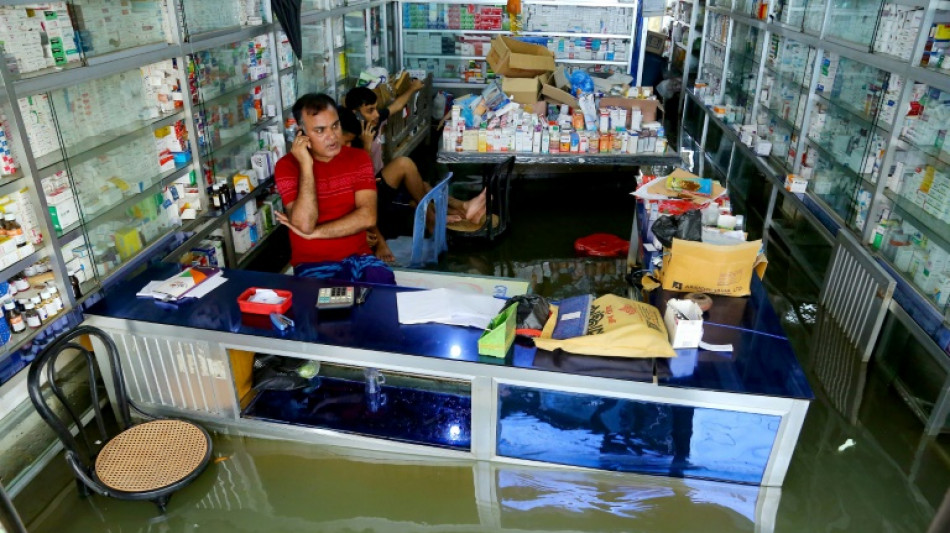
Floods kill nine in India and Bangladesh, millions affected / Photo: Mamun Hossain - AFP

 Kenya's economy faces climate change risks: World Bank

 Far right and far left battle for power in polarised Berlin

 The last trio: S.Africa's zoo elephants await their fate

 Oil industry sees war windfall but girds for political blowback

 Amazon beats expectations with cloud and AI growth

 Blowout Microsoft results lift US stocks as oil retreats

 'Beginning of the end': Relief but no party as French wildfire winds down

 Southern Europe 'becoming more flammable' in hotter climate, experts say

 Mammoth bones found on parched bed of Danube in Bulgaria

 MEXC Lists Grvt (GRVT) with $60,000 Worth of GRVT and 10,000 USDT in Airdrop+ Rewards

 George and Amal Clooney flee French home due to wildfire

 MEXC Ventures Supports Alpha Arena's APAC Debut at Coinfest Bali

 AI data centre supplier Zhongji InnoLight slips on Hong Kong debut

 May, June heatwaves caused 2,877 extra deaths in England: govt

 BMW profit down a third as carmaker plans job cuts

 Seoul extends losses as most Asian markets drop, oil rises again

 Gambling.com Group Is Now Grandstand

 Meet the astronomer digging into the Milky Way's 'fossils'

 AI data centre supplier Zhongji InnoLight falls on Hong Kong debut

 Samsung operating profit up 1,800% in second quarter on AI boom

 Japanese population below 120 million for first time in decades

 US actor Jared Leto denies latest accusations of sexual assault

 Danube drops to 'historic lows' as fresh heatwave hits

 BTS pulls out of Grammys after Asian pop category introduction

 OpenAI says rogue AI agent attack hit other companies

Torrential rains and surging rivers across northeast India and neighbouring Bangladesh have killed at least nine people, disaster officials said Thursday, with more than three million people affected.
Monsoon rains cause widespread destruction every year, but experts say climate change is shifting weather patterns and increasing the number of extreme events.
Disaster authorities in India's northeastern state of Assam said eight people had died over the past day, taking the death toll due to the downpours since mid-May to 46.
Some 2,800 villages in the state have been submerged, affecting over 1.6 million people, they said.
Assam's Chief Minister Himanta Biswa Sarma said the current situation in the state was due to rain in India's upstream state of Arunachal Pradesh.
"No human intervention can stop it," he said.
In low-lying Bangladesh, downstream from India, the disaster management agency said floods had impacted around 1.8 million people.
It warned waters would rise over the next three days.
A 21-year-old man died after being swept away by surging waters while fishing.
Much of the country is made up of deltas as the Himalayan rivers of the Ganges and Brahmaputra, which slowly wind towards the sea after coursing through India.
The summer monsoon brings South Asia 70-80 percent of its annual rainfall, as well as death and destruction due to flooding and landslides.
The rainfall is hard to forecast and varies considerably, but scientists say climate change is making the monsoon stronger and more erratic.
Y.Uduike--CPN