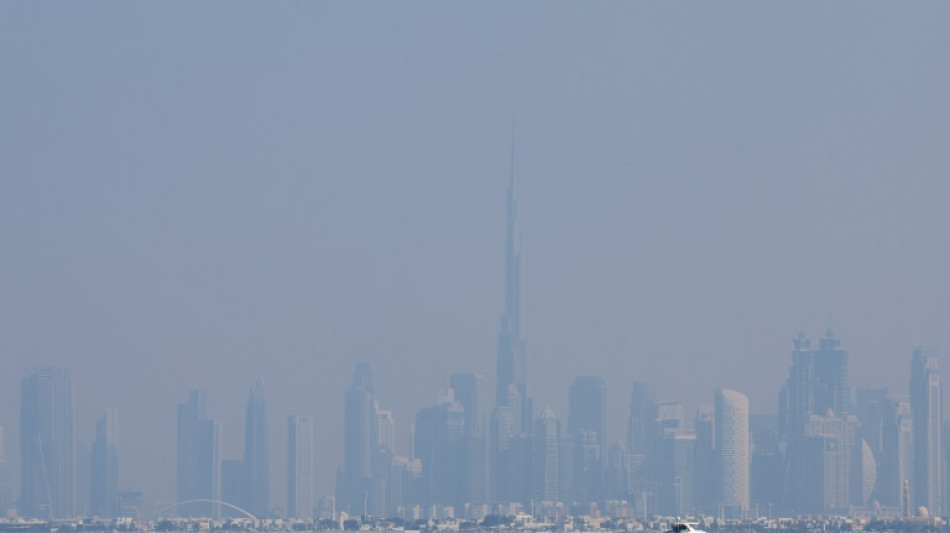
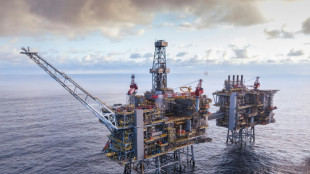
Climate deal won't have immediate impact on Gulf oil / Photo: Giuseppe CACACE - AFP

 Kenya's economy faces climate change risks: World Bank
 New York sues online prediction markets giant Kalshi
 Profits surge at US oil giant amid Iran war supply shock
 Stock markets rally on tech rebound

 France, Spain assess scorched terrain as new wildfires threaten other regions
 Chipmaker Kioxia reports AI-driven 45-fold surge in quarterly net profit
 Far right and far left battle for power in polarised Berlin

 The last trio: S.Africa's zoo elephants await their fate

 Oil industry sees war windfall but girds for political blowback

 Amazon beats expectations with cloud and AI growth

 Blowout Microsoft results lift US stocks as oil retreats

 'Beginning of the end': Relief but no party as French wildfire winds down

 Southern Europe 'becoming more flammable' in hotter climate, experts say

 Mammoth bones found on parched bed of Danube in Bulgaria

 MEXC Lists Grvt (GRVT) with $60,000 Worth of GRVT and 10,000 USDT in Airdrop+ Rewards

 George and Amal Clooney flee French home due to wildfire

 MEXC Ventures Supports Alpha Arena's APAC Debut at Coinfest Bali

 AI data centre supplier Zhongji InnoLight slips on Hong Kong debut

 May, June heatwaves caused 2,877 extra deaths in England: govt

 BMW profit down a third as carmaker plans job cuts

 Seoul extends losses as most Asian markets drop, oil rises again

 Gambling.com Group Is Now Grandstand

 Meet the astronomer digging into the Milky Way's 'fossils'

 AI data centre supplier Zhongji InnoLight falls on Hong Kong debut

 Samsung operating profit up 1,800% in second quarter on AI boom

An agreement to "transition away" from fossil fuels may be a landmark moment but don't expect quick changes among the major producers of the Gulf, where the deal was hammered out.
After the UN's COP28 climate talks in Dubai, Saudi Energy Minister Prince Abdulaziz bin Salman immediately played down the text, insisting it would have "no impact on exports" from the country that ships more oil than any other.
The deal "doesn't impose anything" on oil-producing countries and allows them to cut emissions "according to their means and their interests", the minister said.
It is not an "agreement on the immediate or progressive elimination of fossil fuels, but a process of transition", he told Saudi TV channel Al Arabiya Business on Wednesday.
The prince had earlier voiced staunch opposition to including a phasing-down of fossil fuels in the Dubai text, which ultimately omitted any mention of "phase-down" or "phase-out".
Striking a deal that appeases nearly 200 countries -- even though some critics were not in the room when it was passed -- followed some deft deal-making by the COP28 presidency.
The United Arab Emirates' official WAM news agency called it a "win-win for all", describing COP28 as a "watershed moment in the fight against climate change".
For French Energy Minister Agnes Pannier-Runacher, it was also an exercise in realpolitik.
The deal's phrasing was "a very elegant way by the different negotiators to find a way out for all parties... nobody loses face and it's the climate and the planet that win".
- 'Producing oil for decades' -
Saudi Arabia and the UAE are investing in renewable energy and have pledged to decarbonise their domestic economies -- not including the fossil fuels they sell abroad.
They are also, like other oil producers including the United States, building up their capacities to cater for an expected rise in demand.
However, the realities of a post-oil future and the economic opportunities of the energy transition are not lost on the Gulf monarchies, analysts say.
"They'll keep producing and exporting oil for decades," Ben Cahill, senior fellow at the Center for Strategic and International Studies' Energy Security and Climate Change Program, told AFP.
"But the UAE is also investing to create a more diversified energy system and sees itself as a global player in financing the energy transition."
Andreas Krieg, a political risk analyst specialising in the Middle East, said it was a "significant and trend-setting statement" as it was agreed in the UAE under a COP28 president, Sultan Al Jaber, who is CEO of oil giant ADNOC.
"I think this is a shift in narrative for the hydrocarbon rentier states of the Gulf, who understand that the intent of phasing out fossil fuels will be reality-checked by a fairly stable demand for oil and certainly gas in the coming decades outside of the developed world," he said.
- 'Million-dollar question' -
How Saudi Arabia was brought on board is the "million-dollar question" said Cinzia Bianco, a visiting follow at the European Council on Foreign Relations.
"The UAE benefit from the production of fossil fuels, but they have already embraced that transition, way before the other producers," she said.
"It was easier for them than it was for the Saudis, who have still not embraced it to the same extent, to be the shepherd of a compromise position."
Krieg said the Saudi opposition "has to be seen in the light of growing intra-Gulf competition and was an attempt to undermine the prospect of COP28 becoming successful.
"However, considering that the global consensus was so strong and overwhelming, Saudi did not want to be seen as the odd-one out."
For the UAE, COP28 was not just about environmental benefits, said Kristian Ulrichsen, fellow for the Middle East at the Baker Institute in Houston, Texas.
"The UAE invested a lot of political and diplomatic capital in COP28 and wanted precisely this kind of landmark statement that would associate the UAE with setting the global agenda and forging a new consensus for the road ahead," he said.
A.Levy--CPN