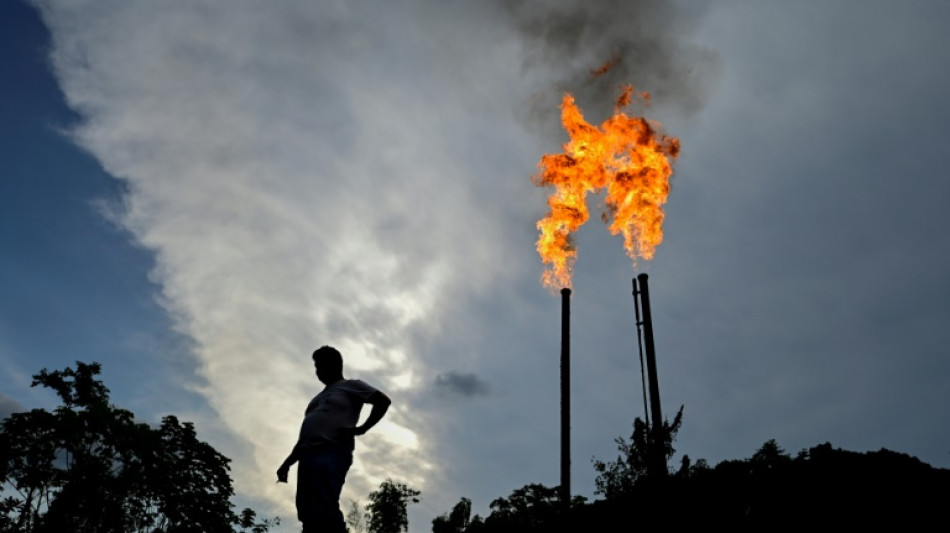
50 oil and gas companies pledge to cut operational emissions / Photo: Pedro PARDO - AFP

 Kenya's economy faces climate change risks: World Bank
 New York sues online prediction markets giant Kalshi

 Profits surge at US oil giant amid Iran war supply shock

 Stock markets rally on tech rebound

 France, Spain assess scorched terrain as new wildfires threaten other regions
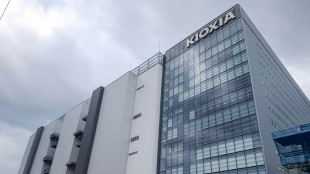 Chipmaker Kioxia reports AI-driven 45-fold surge in quarterly net profit

 Far right and far left battle for power in polarised Berlin

 The last trio: S.Africa's zoo elephants await their fate
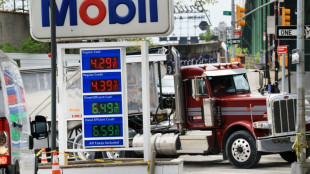 Oil industry sees war windfall but girds for political blowback

 Amazon beats expectations with cloud and AI growth

 Blowout Microsoft results lift US stocks as oil retreats

 'Beginning of the end': Relief but no party as French wildfire winds down

 Southern Europe 'becoming more flammable' in hotter climate, experts say
 Mammoth bones found on parched bed of Danube in Bulgaria
 MEXC Lists Grvt (GRVT) with $60,000 Worth of GRVT and 10,000 USDT in Airdrop+ Rewards
 George and Amal Clooney flee French home due to wildfire

 MEXC Ventures Supports Alpha Arena's APAC Debut at Coinfest Bali
 AI data centre supplier Zhongji InnoLight slips on Hong Kong debut

 May, June heatwaves caused 2,877 extra deaths in England: govt
 BMW profit down a third as carmaker plans job cuts
 Seoul extends losses as most Asian markets drop, oil rises again
 Gambling.com Group Is Now Grandstand

 Meet the astronomer digging into the Milky Way's 'fossils'
 AI data centre supplier Zhongji InnoLight falls on Hong Kong debut

 Samsung operating profit up 1,800% in second quarter on AI boom

Fifty oil and gas companies representing 40 percent of global production pledged to decarbonise their operations by 2050 at the UN's COP28 climate talks in Dubai on Saturday.
Saudi giant Aramco and ADNOC of the United Arab Emirates were among 29 national companies to sign a non-binding agreement that also envisaged zero methane emissions and eliminating routine flaring this decade.
Aramco, the world's biggest oil company, and ADNOC, whose CEO Sultan Al Jaber is president of CO28, had already announced similar CO2-reduction targets -- which do not include emissions when their fuels are used by customers.
"Whilst many national oil companies have adopted net-zero 2050 targets for the first time, I know that they and others, can and need to do more," Jaber said.
Unlike the Western oil majors, which are intensely scrutinised by the public, few large national oil companies had announced such targets.
PetroChina and Brazil's Petrobras also signed up to the new accord, named the Oil and Gas Decarbonization Charter.
The National Oil Company of Libya, Malaysia's Petronas and Sonangol of Angola were also among the signatories, along with France's TotalEnergies, US firm ExxonMobil, and Britain's BP and Shell.
The charter is part of a set of initiatives designed to accelerate the decarbonisation of the global energy industry, prepared in the year leading up to COP28.
They are voluntary commitments unlike the decisions of COP28, which are taken by consensus between nearly 200 countries under the aegis of the United Nations.
Melanie Robinson, of the World Resources Institute, a non-profit research body, said the agreement showed that non-binding pledges from the industry were not sufficient to address climate change.
"This charter is proof that voluntary commitments from the oil and gas industry will never foster the level of ambition necessary to tackle the climate crisis," she said.
"We can't meet our climate goals unless governments set policies that rapidly and equitably transition our economy away from fossil fuels."
S.F.Lacroix--CPN