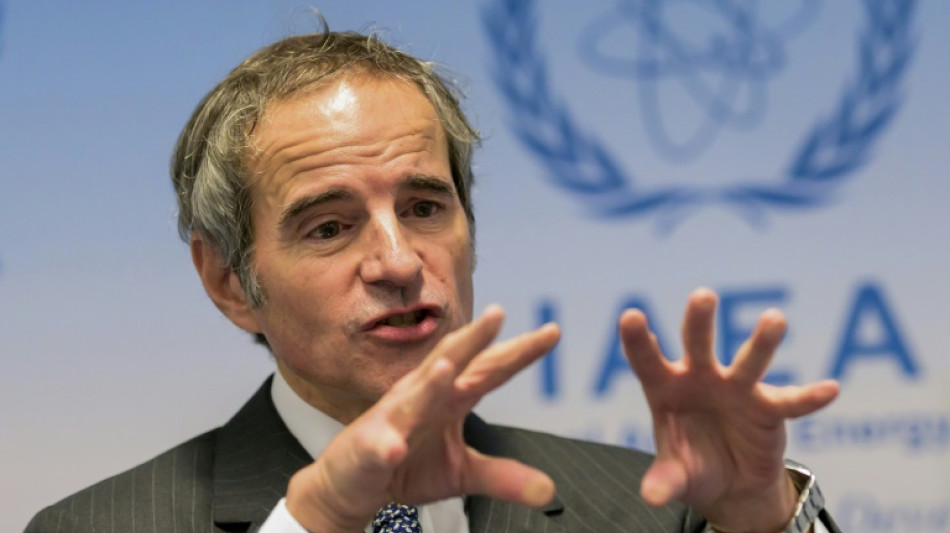
Nuclear power has role to play, atomic energy head tells AFP at COP28 / Photo: Joe Klamar - AFP

 Kenya's economy faces climate change risks: World Bank
 New York sues online prediction markets giant Kalshi

 Profits surge at US oil giant amid Iran war supply shock
 Stock markets rally on tech rebound
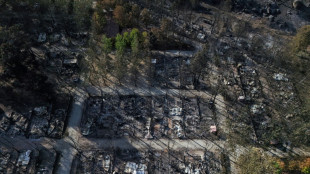 France, Spain assess scorched terrain as new wildfires threaten other regions
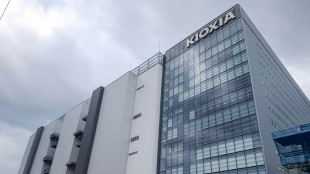 Chipmaker Kioxia reports AI-driven 45-fold surge in quarterly net profit

 Far right and far left battle for power in polarised Berlin

 The last trio: S.Africa's zoo elephants await their fate

 Oil industry sees war windfall but girds for political blowback

 Amazon beats expectations with cloud and AI growth

 Blowout Microsoft results lift US stocks as oil retreats

 'Beginning of the end': Relief but no party as French wildfire winds down

 Southern Europe 'becoming more flammable' in hotter climate, experts say

 Mammoth bones found on parched bed of Danube in Bulgaria

 MEXC Lists Grvt (GRVT) with $60,000 Worth of GRVT and 10,000 USDT in Airdrop+ Rewards

 George and Amal Clooney flee French home due to wildfire

 MEXC Ventures Supports Alpha Arena's APAC Debut at Coinfest Bali

 AI data centre supplier Zhongji InnoLight slips on Hong Kong debut

 May, June heatwaves caused 2,877 extra deaths in England: govt

 BMW profit down a third as carmaker plans job cuts

 Seoul extends losses as most Asian markets drop, oil rises again

 Gambling.com Group Is Now Grandstand

 Meet the astronomer digging into the Milky Way's 'fossils'

 AI data centre supplier Zhongji InnoLight falls on Hong Kong debut

 Samsung operating profit up 1,800% in second quarter on AI boom

It would be a mistake to reject nuclear power because of problems at a handful of projects, Rafael Grossi, head of the International Atomic Energy Agency said in an interview with AFP.
Grossi was speaking at the COP28 conference in Dubai, where on Saturday a group of large countries are expected to call for nuclear power capacity to be tripled by 2050 as part of the fight against global warming.
Supporters of atomic power say it is an essential source of reliable emissions-free energy.
But detractors point to the risks and high costs of massive nuclear projects at a time when the price of renewable energies continues to fall.
"There is work to do," Grossi admitted, citing the financing needs of countries that wish to extend their nuclear fleets, such as Brazil, Argentina, and South Africa.
Grossi said countries tempted to take the nuclear leap, including Morocco, Senegal, Kenya and the Philippines, face similar challenges.
"There are statutes in some international lending organisations that exclude financing for nuclear," the Argentinian director general said.
"I think that is completely obsolete. It does not correspond to any scientific or technological criteria."
The World Bank, for instance, has not financed a nuclear project since 1959.
"I think, and I hope there will be an evolution" in their thinking, Grossi said.
- Proliferation risk 'should not exist' -
Some environmentalists argue that with certain nuclear projects already 10 years behind schedule, they are simply too costly and will not be ready in time to respond to climate challenges.
But rejecting all nuclear projects because of these setbacks would be "an error", Grossi insisted.
"Look, here in the Emirates... there was no nuclear here a decade ago and now there are four reactors," meeting about a quarter of the country's electricity demands.
The nuclear industry is resting much of its hopes on small modular reactors (SMR), which are less powerful but easier to construct.
There are concerns that less developed countries might not have the means to keep these installations safe and avoid proliferation.
"It is a legitimate question, but that is why we were created," Grossi responded, pointing to the flag of his agency, which carries atomic symbols on a United Nations blue background.
"Any country wanting to develop a nuclear programme must follow a full procedure and draw up an agreement with the Agency," he said.
"In principle, that means the risk of proliferation should not exist."
For example, the Emirates had to complete 19 steps while developing its civil nuclear programme, including setting up an independent supervisory body.
Grossi said he does not think the dangers faced by Ukraine's reactors since the start of Russia's invasion are an argument against nuclear power, either.
"The problem is war, not nuclear," he said without hesitation.
However, he could not hide his concern as winter approaches.
"The ground will harden, the tanks can move, the rivers will freeze, we see a lot of military equipment on both sides. Yes, that obviously worries us."
P.Gonzales--CPN