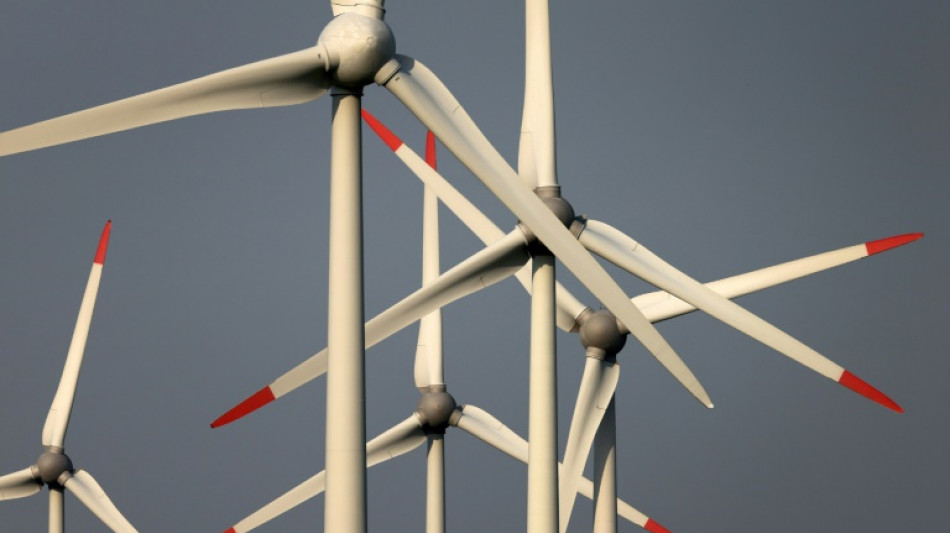
Over 110 countries support tripling renewables by 2030: EU chief / Photo: Daniel ROLAND - AFP/File

 Kenya's economy faces climate change risks: World Bank
 New York sues online prediction markets giant Kalshi

 Profits surge at US oil giant amid Iran war supply shock
 Stock markets rally on tech rebound

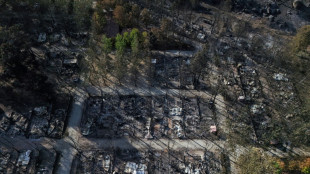 France, Spain assess scorched terrain as new wildfires threaten other regions
 Chipmaker Kioxia reports AI-driven 45-fold surge in quarterly net profit
 Far right and far left battle for power in polarised Berlin

 The last trio: S.Africa's zoo elephants await their fate
 Oil industry sees war windfall but girds for political blowback
 Amazon beats expectations with cloud and AI growth

 Blowout Microsoft results lift US stocks as oil retreats

 'Beginning of the end': Relief but no party as French wildfire winds down

 Southern Europe 'becoming more flammable' in hotter climate, experts say

 Mammoth bones found on parched bed of Danube in Bulgaria

 MEXC Lists Grvt (GRVT) with $60,000 Worth of GRVT and 10,000 USDT in Airdrop+ Rewards

 George and Amal Clooney flee French home due to wildfire

 MEXC Ventures Supports Alpha Arena's APAC Debut at Coinfest Bali

 AI data centre supplier Zhongji InnoLight slips on Hong Kong debut

 May, June heatwaves caused 2,877 extra deaths in England: govt

 BMW profit down a third as carmaker plans job cuts

 Seoul extends losses as most Asian markets drop, oil rises again

 Gambling.com Group Is Now Grandstand

 Meet the astronomer digging into the Milky Way's 'fossils'

 AI data centre supplier Zhongji InnoLight falls on Hong Kong debut

 Samsung operating profit up 1,800% in second quarter on AI boom

More than 110 countries want the COP28 climate negotiations to adopt a goal of tripling renewable energy and doubling energy efficiency by 2030, European Commission President Ursula von der Leyen said Friday.
The European Union first appealed for the new target earlier this year, and the cause has since been taken up by COP28 hosts the United Arab Emirates, then the G7 and G20 groups of nations.
G20 nations alone account for nearly 80 percent of global greenhouse gas emissions.
Von der Leyen told leaders at the UN climate talks in Dubai that it was "fantastic" that more than 110 nations had already embraced the goal.
"I call now on all of us to include these targets in the final COP decision, because this sends a strong message to investors and consumers alike," she said from the podium.
The discussions about the renewables goal are both separate but closely linked to far more difficult negotiations about whether a final COP28 deal will commit nations to phasing down -- or phasing out -- all fossil fuels.
In September, when G20 nations committed to "encourage efforts" towards tripling renewables capacity, their final statement remained silent about the future role played by fossil fuels, which account for the bulk of greenhouse gas emissions.
All credible pathways for achieving global carbon neutrality by mid-century depend on massively scaling up wind, solar, hydroelectric and other renewable energies such as biomass to displace the demand for planet-heating oil, gas and coal.
This is "the single most important lever" for reducing carbon pollution from burning fossil fuels, and capping warming under the Paris Agreement's ambitious threshold of 1.5 degrees Celsius compared with the pre-industrial period, the International Energy Agency (IEA) has said.
There has already been progress. Between 2015 and 2022, renewable capacity increased on average by 11 percent each year.
Against a backdrop of soaring oil prices and energy insecurity linked to the war in Ukraine, the IEA forecasts unprecedented growth of about 30 percent in 2023.
Not all countries will have to make the same efforts to slash emissions. Of the 57 nations analysed by the think tank Ember, more than half were on track to meet or exceed their 2030 targets.
But other large emitters such as Australia, Japan, South Korea and the United Arab Emirates still have plenty of room for improvement.
T.Morelli--CPN