Oil firms face 'moment of truth' in climate crisis: IEA / Photo: Pedro PARDO - AFP/File

 Nintendo producer 'all nervous' as Zelda classic remake hits shelves

 Three killed by storm in southern India

 Two hundred 'Cruise for life' passengers stranded in Cambodia

 Billionaire Ambani's Jio jumps 21% in market debut after record India IPO

 Sri Lanka's Tamil farmers fight to reclaim land after civil war

 'They don't care about us': Trump food aid cuts leave Americans struggling and angry

 Palestinian activist Khalil returns to Columbia after US detention

 Youths testify about 'despair' in unprecedented Canadian climate trial

 Storied Paris department store seeks bankruptcy protection
 Boeing shares tumble after it releases cautious growth forecast

Oil and gas firms will face a crucial choice at UN climate talks next week between contributing to the climate crisis or embracing the clean energy transition, the International Energy Agency said Thursday.
The future of fossil fuels that play a massive role in climate change will be at the heart of COP28 negotiations in Dubai, as the world struggles to meet the goal of limiting warming to 1.5 degrees Celsius.
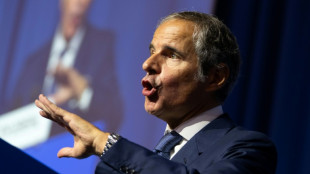
"The oil and gas industry is facing a moment of truth at COP28 in Dubai," IEA Executive Director Fatih Birol said ahead of the November 30-December 12 conference.
"With the world suffering the impacts of a worsening climate crisis, continuing with business as usual is neither socially nor environmentally responsible," he said.
In a report, the Paris-based energy watchdog said the industry's engagement has been "minimal" so far, accounting for less than one percent of global clean energy investment.
It invested $20 billion in clean energy last year, or just 2.7 percent of its total capital spending.
To meet the Paris Agreement's 1.5C target, the oil and gas sector must devote 50 percent of its investments on clean energy projects by 2030.
By comparison, $800 billion is invested in the oil and gas sector each year.
While investment in oil and gas supply is still needed, the figure is twice as high as what should be spent to respect the Paris goals, the agency said.
"Producers must choose between contributing to a deepening climate crisis or becoming part of the solution by embracing the shift to clean energy," the IEA said.
- Oil sector stalling -
Oil and gas use would fall by 75 percent by 2050 if governments successfully pursued the 1.5C target and emissions from the energy sector reached net zero by then, the report said.
Instead of cutting fossil fuels outright, oil giants have touted several once-marginal technologies as promising solutions to cut emissions.
They include carbon capture and storage (CCS), direct air capture and carbon credit trading.
CCS prevents CO2 from entering the atmosphere by siphoning exhaust from power plants, while direct air capture pulls CO2 from thin air.
Both technologies have been demonstrated to work, but remain far from maturity and commercial scalability.
"The industry needs to commit to genuinely helping the world meet its energy needs and climate goals –- which means letting go of the illusion that implausibly large amounts of carbon capture are the solution," Birol said.
The think tank Carbon Tracker said in September that oil and gas sector emission reduction pledges have stalled and in some cases gone backwards.
Oil major BP watered down a previous 2030 production cut target and Shell said its "liquids" output would remain stable -- both angering climate campaigners.
- Tripling renewables capacity -
Campaigners have raised concerns over the influence of fossil fuel interests at the UN climate conference, noting that COP28 president Sultan Al Jaber is both UAE climate envoy and head of state-owned oil firm ADNOC.
Jaber has proposed tripling global renewable energy capacity and doubling the annual rate of energy efficiency improvements by 2030.
"The fossil fuel sector must make tough decisions now, and their choices will have consequences for decades to come," Birol said.
"Clean energy progress will continue with or without oil and gas producers. However, the journey to net zero emissions will be more costly, and harder to navigate, if the sector is not on board."
M.P.Jacobs--CPN