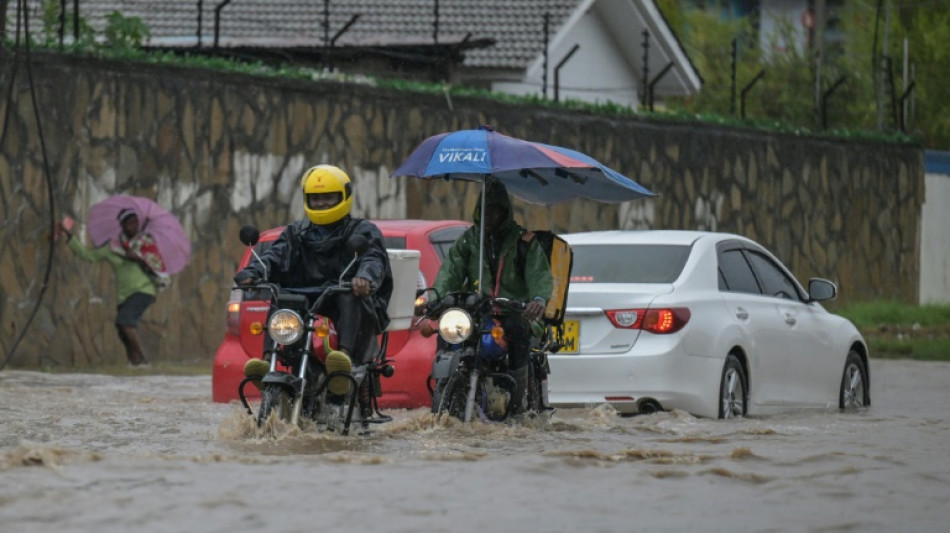
Flash floods kill 100 in Horn of Africa: charity / Photo: SIMON MAINA - AFP/File

 Kenya's economy faces climate change risks: World Bank

 US Fed dissenters call for rate hikes over sustained inflation
 New York sues online prediction markets giant Kalshi

 Profits surge at US oil giant amid Iran war supply shock

 Stock markets rally on tech rebound

 France, Spain assess scorched terrain as new wildfires threaten other regions

 Chipmaker Kioxia reports AI-driven 45-fold surge in quarterly net profit

 Far right and far left battle for power in polarised Berlin

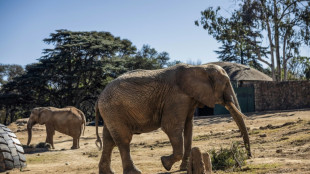 The last trio: S.Africa's zoo elephants await their fate

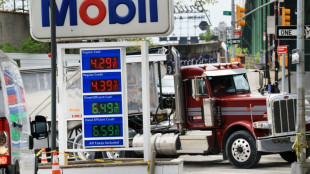 Oil industry sees war windfall but girds for political blowback

 Amazon beats expectations with cloud and AI growth

 Blowout Microsoft results lift US stocks as oil retreats

 'Beginning of the end': Relief but no party as French wildfire winds down

 Southern Europe 'becoming more flammable' in hotter climate, experts say

 Mammoth bones found on parched bed of Danube in Bulgaria

 MEXC Lists Grvt (GRVT) with $60,000 Worth of GRVT and 10,000 USDT in Airdrop+ Rewards
 George and Amal Clooney flee French home due to wildfire

 MEXC Ventures Supports Alpha Arena's APAC Debut at Coinfest Bali

 AI data centre supplier Zhongji InnoLight slips on Hong Kong debut

 May, June heatwaves caused 2,877 extra deaths in England: govt

 BMW profit down a third as carmaker plans job cuts

 Seoul extends losses as most Asian markets drop, oil rises again

 Gambling.com Group Is Now Grandstand

 Meet the astronomer digging into the Milky Way's 'fossils'

 AI data centre supplier Zhongji InnoLight falls on Hong Kong debut

More than 100 people, including 16 children, have died and over 700,000 been forced out of their homes in the Horn of Africa due to flash flooding, the British charity Save the Children said Thursday.
The region, particularly Kenya, Somalia and Ethiopia, has been lashed by unrelenting downpours since the beginning of the month due to the El Nino weather phenomenon, inundating homes and farmland.
About 46 people had died in Kenya, 32 in Somalia and another 33 in Ethiopia, Save the Children said, warning the rains were "showing no signs of slowing down".
The Horn of Africa is one of the regions most vulnerable to climate change and extreme weather events are occurring with increased frequency and intensity.
The region is emerging from the worst drought in four decades after multiple failed rainy seasons that left millions of people in need and devastated crops and livestock.
"Heavy flooding and displacement have cut off families and children from basic services including access to food, healthcare, water and hygiene services," said Xavier Joubert, Ethiopia director for Save the Children.
"With that comes the real risk of waterborne diseases including cholera and measles."
Humanitarian groups have warned that the situation is only likely to worsen and called for urgent global intervention as El Nino is expected to last until at least April 2024.
El Nino is typically associated with increased heat worldwide, as well as drought in some parts of the world and heavy rains elsewhere.
Between October 1997 and January 1998, devastating floods caused by El Nino led to more than 6,000 deaths in five Horn of Africa countries.
At least 1,800 people died in Somalia where the Juba River burst its banks.
At the end of 2019, 265 people died and tens of thousands were displaced during two months of relentless rainfall in several countries in East Africa.
O.Ignatyev--CPN