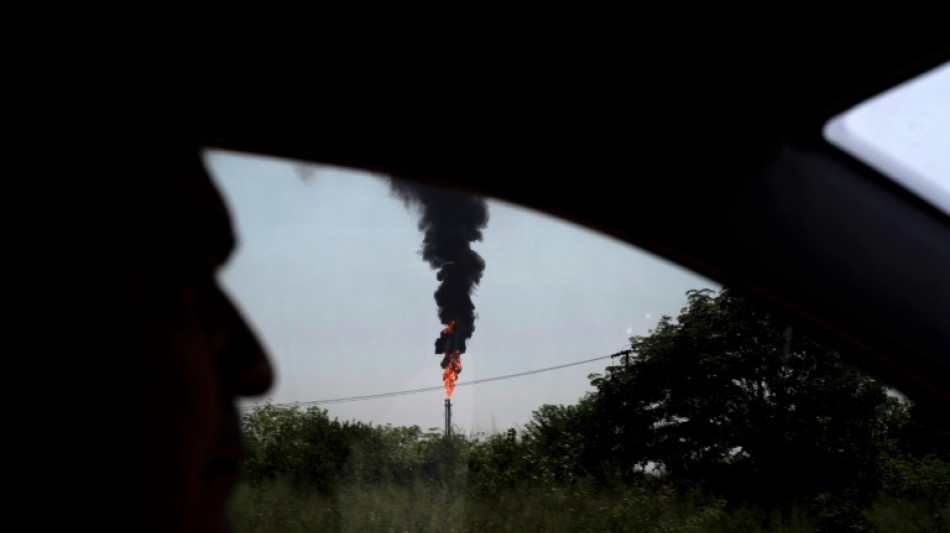
World severely off track to limit planet-heating emissions: UN / Photo: Yuri CORTEZ - AFP/File

 Kenya's economy faces climate change risks: World Bank
 US Fed dissenters call for rate hikes over sustained inflation
 New York sues online prediction markets giant Kalshi

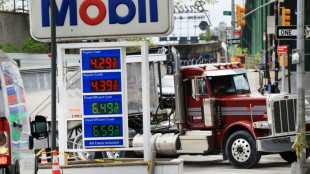 Profits surge at US oil giant amid Iran war supply shock

 Stock markets rally on tech rebound

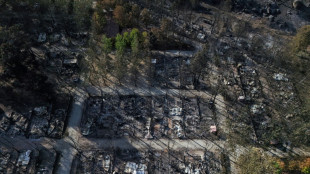 France, Spain assess scorched terrain as new wildfires threaten other regions
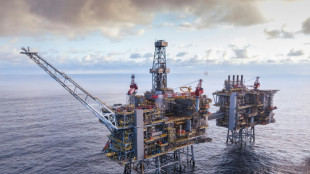
 Chipmaker Kioxia reports AI-driven 45-fold surge in quarterly net profit
 Far right and far left battle for power in polarised Berlin

 The last trio: S.Africa's zoo elephants await their fate

 Oil industry sees war windfall but girds for political blowback

 Amazon beats expectations with cloud and AI growth

 Blowout Microsoft results lift US stocks as oil retreats

 'Beginning of the end': Relief but no party as French wildfire winds down

 Southern Europe 'becoming more flammable' in hotter climate, experts say

 Mammoth bones found on parched bed of Danube in Bulgaria

 MEXC Lists Grvt (GRVT) with $60,000 Worth of GRVT and 10,000 USDT in Airdrop+ Rewards

 George and Amal Clooney flee French home due to wildfire

 MEXC Ventures Supports Alpha Arena's APAC Debut at Coinfest Bali

 AI data centre supplier Zhongji InnoLight slips on Hong Kong debut

 May, June heatwaves caused 2,877 extra deaths in England: govt

 BMW profit down a third as carmaker plans job cuts

 Seoul extends losses as most Asian markets drop, oil rises again

 Gambling.com Group Is Now Grandstand

 Meet the astronomer digging into the Milky Way's 'fossils'

 AI data centre supplier Zhongji InnoLight falls on Hong Kong debut

The world is "failing to get a grip" on climate change, the UN warned Tuesday, as an assessment of current climate pledges shows only minor progress on reducing emissions this decade.
In a report released just weeks before high-stakes climate negotiations, the United Nations climate change organisation said the world was failing to act with sufficient urgency to curb greenhouse gas emissions.
With temperatures soaring and 2023 expected to become the warmest year so far in human history, scientists say the pressure on world leaders to curb planet-heating greenhouse gas pollution has never been more urgent.
The UN found that combined climate plans from nearly 200 nations would put the world on a path for 2030 carbon emissions just two percent below 2019 levels.
That is far short of the 43 percent fall that the UN's IPCC climate panel says are needed to limit warming to the Paris deal target of 1.5 degrees Celsius since the preindustrial era.
"Every fraction of a degree matters, but we are severely off track. COP28 is our time to change that," said UN Climate Change chief Simon Stiell.
He called for climate talks in Dubai this month to mark a "clear turning point" for a world already wracked by increasing floods, heatwaves and storms.
Scientists have warned that humanity is dangerously close to blowing past the 1.5C global heating limit, risking intensifying impacts.
"The world is failing to get a grip on the climate crisis," said UN Secretary-General Antonio Guterres, warning countries were not acting fast enough to avoid climate catastrophe.
"Inch by inch progress will not do. It is time for a climate ambition supernova in every country, city, and sector."
- Closing the gap -
Under the 2015 Paris deal, countries are required to submit ever deeper emission cutting plans, known as Nationally Determined Contributions, or NDCs.
The latest annual UN assessment of these plans includes 20 updated NDCs submitted between September 2022 and September 2023, including from Mexico, Turkey, Norway and COP28 hosts the United Arab Emirates.
Last year's report used a 2010 benchmark and found that if the world's NDCs were fully implemented, emissions would be 10.6 percent higher by 2030.
This time around there has been "only a fractional improvement", Stiell said, with emissions projected to be 8.8 percent higher in 2030 than in 2010.
In September, a global stocktake of the world's progress on averting the worst impacts of climate change warned that the world was far off target.
Global greenhouse gas emissions must peak by 2025 and drop sharply thereafter to keep the 1.5C limit in view, it said, drawing from a major scientific assessment by the UN's IPCC science advisory panel.
Achieving net zero carbon emissions by 2050 -- another Paris goal -- will also require phasing out the burning of all fossil fuels whose emissions cannot be captured or compensated.
- 'The only chance' -
A response to the stocktake will form the centrepiece of the November 30 to December 12 COP28 meeting, with crucial debates over the future of oil, gas and coal -- the main drivers of planet-heating emissions.
But currently, countries are still failing to match their actions to what scientists say is needed to avoid blasting past the world's agreed global warming limits.
This month a report by the United Nations Environment Programme (UNEP) found that planned production increases in major petrostates would result in 460 percent more coal, 82 percent more gas and 29 percent more oil than would be consistent with limiting warming to 1.5C.
And the room to manoeuvre might also be tighter than previously understood.
In October, new research found that the amount of CO2 the world can emit and still have a 50 percent chance of limiting warming to 1.5C is much smaller than previously thought and could be used up in six years at current pollution levels.
"We are still miles off where we need to be for limiting global warming to 1.5C," said Tom Evans, policy advisor at the think tank E3G, adding that the response to the stocktake will be "critical".
"It's the only chance we have to make sure that the next set of climate targets -- due by 2025 -- will put us in a place to close this gap."
A.Zimmermann--CPN