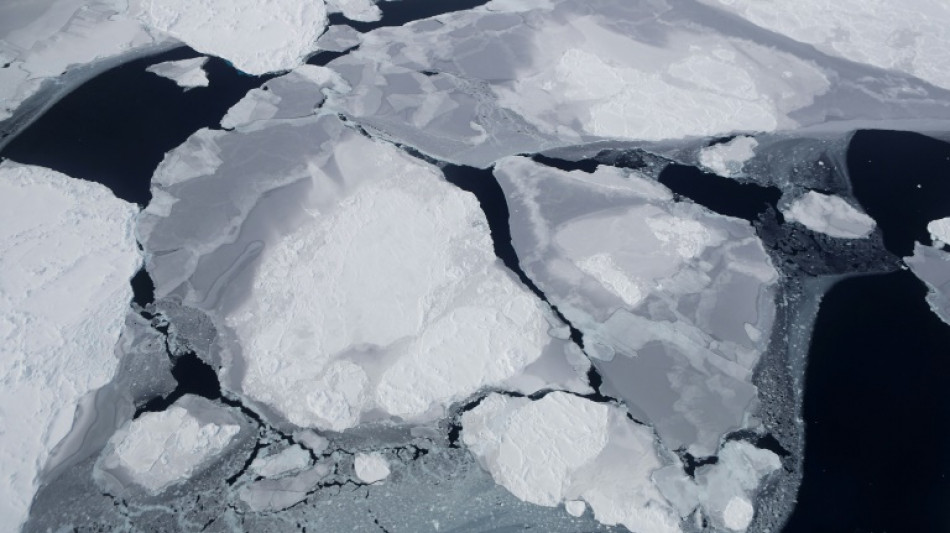
WWF urges end to deadlock on new Antarctic reserves / Photo: MARIO TAMA - GETTY IMAGES NORTH AMERICA/AFP/File

 Kenya's economy faces climate change risks: World Bank

 Hungary to shut nuclear plant as heatwave hits central Europe
 Tech-fuelled rally fizzles as oil prices rise

 Alarm over climate-linked low level of German waterways

 Commerzbank agrees to talks with UniCredit after two-year standoff

 Fornaro Legal Releases Guidance to Help Businesses Maintain Clear Ownership Records During Growth

 Japan probe made closest-ever asteroid flyby: space agency
 British oil giant BP aims to sell North Sea business

 China factory activity slides as leaders seek spending boost

 Tech rebound fuels record-breaking rally in South Korean stocks

 Cables and cooling bring AI windfall to Indian suppliers

 Anthropic's models gained unauthorized 'real-world' access during testing

 Apple tops estimates in CEO Cook's final quarter, but shares fall

 Milei demands expulsion of foreigners expressing 'hate' against Argentina

 Italy's Po River valley on drought alert

 Prada profits pinched as growth hard to chase

 Stocks climb on earnings and rates, oil retreats

 US economic growth slows in second quarter, missing expectations

 Russia adds Telegram founder Durov to 'terrorist' blacklist

 Stocks diverge on earnings, as oil steadies

 Eurozone economy grows despite Middle East war

 Singapore group will develop 'most promising' Ebola vaccine

 Shell profit surges as Mideast war fuels oil prices

 Car maker Stellantis says back in profit in second quarter

 Samsung quarterly operating profit up 1,800% on AI boom

Members of a multinational group on Antarctic conservation must end a years-long deadlock and agree on new marine reserves in the region as sea-ice shrinks to record lows, the WWF urged Wednesday.
The Commission for the Conservation of Antarctic Marine Living Resources begins a fortnight of meetings in Australia next week, with the creation of three new protected marine areas once again on the table.
The areas were first proposed in 2010, before being scaled down in 2017, in an attempt to win more support.
But their creation has persistently been blocked by China and Russia, including most recently at the commission's June meeting in Chile.
Environmental NGO WWF called Wednesday for the commission to finally act, given the record low levels of sea-ice in the region and evidence of "mass deaths of vulnerable species."
The protected areas "would limit human activity, particularly fishing, in the critical habitats these species need to recover and develop resilience to a changing environment," said Emily Grilly, WWF Antarctic conservation manager.
"We can't stop all the effects of climate change in the short term, but we can take the pressure off in other ways."
The bid to create the sanctuaries around Antarctica would safeguard nearly four million square kilometres (1.5 million square miles) of ocean from human activities.
It would be the largest act of ocean protection in history, WWF said.
But there has historically been little appetite for the project from Beijing and Moscow, who have expressed concerns about compliance issues and fishing rights.
Last month, sea ice around Antarctica hit its lowest winter levels since records began 45 years ago, the US National Snow and Ice Data Center said.
The measurement was preliminary, as continued winter conditions could cause additional ice formation, but it correlates with a trend of declining ice seen since August 2016.
There is debate among scientists over the cause of the shift, with some reluctant to establish a formal link with global warming.
Climate models have struggled in the past to predict changes in the Antarctic ice pack.
The effect on wildlife in the region is already clear, however, with scientists in August reporting a "catastrophic breeding failure" of emperor penguins as sea ice gave way beneath fledgling chicks.
Thousands of baby penguins are believed to have died, with all but one of five sites monitored by scientists experiencing 100 percent loss.
A.Leibowitz--CPN