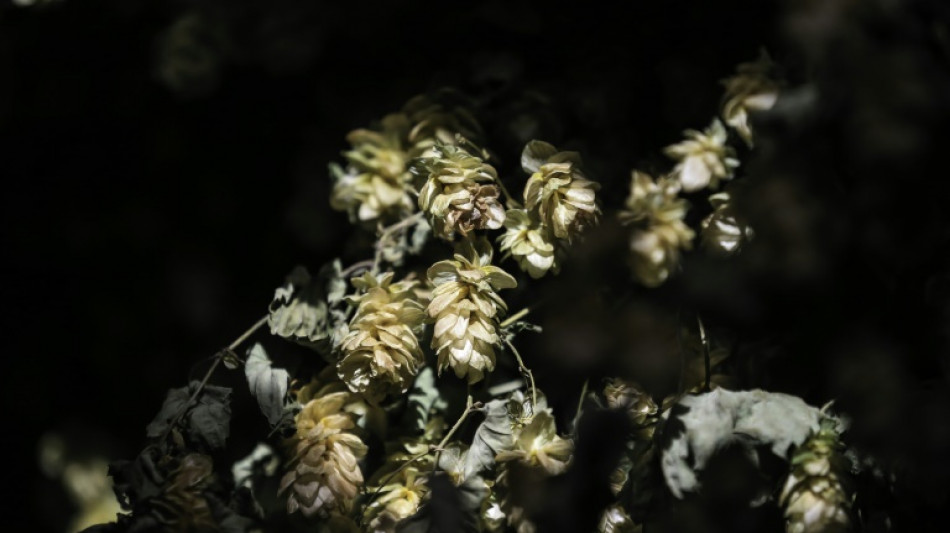
Beer faces unbitter future due to climate change: study / Photo: LINDSEY PARNABY - AFP/File

 Kenya's economy faces climate change risks: World Bank

 Hungary to shut nuclear plant as heatwave hits central Europe

 Tech-fuelled rally fizzles as oil prices rise

 Alarm over climate-linked low level of German waterways

 Commerzbank agrees to talks with UniCredit after two-year standoff

 Fornaro Legal Releases Guidance to Help Businesses Maintain Clear Ownership Records During Growth

 Japan probe made closest-ever asteroid flyby: space agency

 British oil giant BP aims to sell North Sea business

 China factory activity slides as leaders seek spending boost

 Tech rebound fuels record-breaking rally in South Korean stocks

 Cables and cooling bring AI windfall to Indian suppliers

 Anthropic's models gained unauthorized 'real-world' access during testing

 Apple tops estimates in CEO Cook's final quarter, but shares fall

 Milei demands expulsion of foreigners expressing 'hate' against Argentina

 Italy's Po River valley on drought alert

 Prada profits pinched as growth hard to chase

 Stocks climb on earnings and rates, oil retreats

 US economic growth slows in second quarter, missing expectations

 Russia adds Telegram founder Durov to 'terrorist' blacklist

 Stocks diverge on earnings, as oil steadies

 Eurozone economy grows despite Middle East war

 Singapore group will develop 'most promising' Ebola vaccine

 Shell profit surges as Mideast war fuels oil prices

 Car maker Stellantis says back in profit in second quarter

 Samsung quarterly operating profit up 1,800% on AI boom

Climate change threatens the cultivation in Europe of aromatic hops which gives beer its bitterness, according to a study published Tuesday in Nature Communications.
European varieties of hops are prized and used by brewers around the world, but rising temperatures and less rain are reducing yields and the concentration of the compounds that provide beer its refreshing tartness.
The researchers observed this trend by analysing data from five sites in the Czech Republic, Germany, and Slovakia, which along with Poland are the primary hops growers in Europe, study co-author Miroslav Trnka said.
Yields fell between 9.5 and 19.4 percent at four sites and were stable at a fifth when data from 1995-2018 was compared with 1971-1994.
Meanwhile the concentration of the bitter compounds, alpha acids, decreased.
Extrapolating from the data, the researchers predicted a drop in yield of between four and 18 percent, compared with 1989-2019 while the concentration of alpha acids could drop between 20 and 31 percent as temperatures rise and rainfall is impacted.
With droughts expected to increase in central and southern Europe "it will be necessary to expand the area of aroma hops by 20 percent compared to the current production area to compensate for a future decline in" potency and yields, said the study.
It called for "urgent adaptation measures to stabilise international market chains" such as moving crops to more suitable areas or irrigating.
Hops farmers are trying to adapt, but Trnka said their options are limited as "hops needs a specific combination of climate and soil" and the introduction of genetically modified plants designed to better support warmer temperatures and drought is prohibited in Europe.
Brewers can also try to modify their methods to adapt to the reduced bitterness in hops.
D.Philippon--CPN