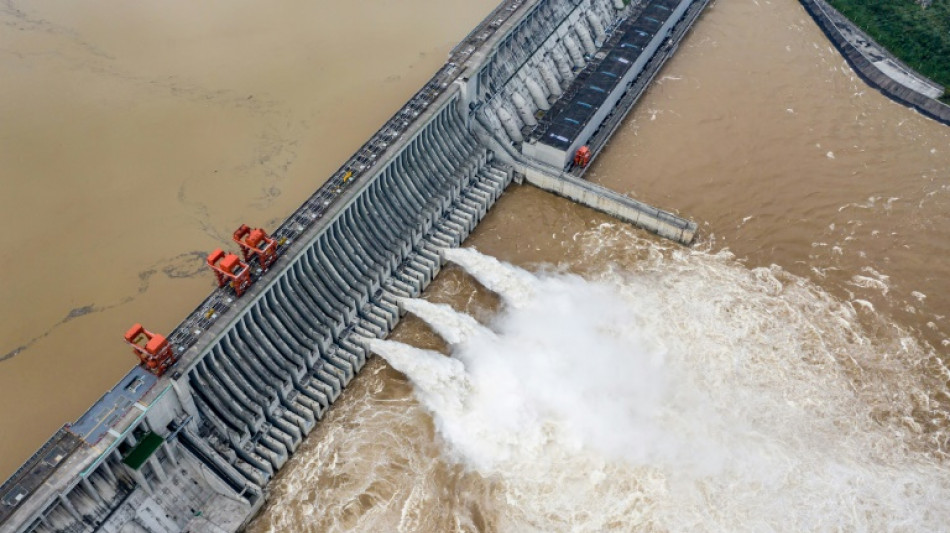
Drought caused 'historic' global hydropower drop in early 2023 / Photo: STR - AFP/File

 Kenya's economy faces climate change risks: World Bank

 Hungary to shut nuclear plant as heatwave hits central Europe

 Tech-fuelled rally fizzles as oil prices rise

 Alarm over climate-linked low level of German waterways

 Commerzbank agrees to talks with UniCredit after two-year standoff

 Fornaro Legal Releases Guidance to Help Businesses Maintain Clear Ownership Records During Growth

 Japan probe made closest-ever asteroid flyby: space agency

 British oil giant BP aims to sell North Sea business

 China factory activity slides as leaders seek spending boost

 Tech rebound fuels record-breaking rally in South Korean stocks

 Cables and cooling bring AI windfall to Indian suppliers

 Anthropic's models gained unauthorized 'real-world' access during testing

 Apple tops estimates in CEO Cook's final quarter, but shares fall

 Milei demands expulsion of foreigners expressing 'hate' against Argentina
 Italy's Po River valley on drought alert
 Prada profits pinched as growth hard to chase
 Stocks climb on earnings and rates, oil retreats

 US economic growth slows in second quarter, missing expectations

 Russia adds Telegram founder Durov to 'terrorist' blacklist

 Stocks diverge on earnings, as oil steadies

 Eurozone economy grows despite Middle East war

 Singapore group will develop 'most promising' Ebola vaccine

 Shell profit surges as Mideast war fuels oil prices

 Car maker Stellantis says back in profit in second quarter

 Samsung quarterly operating profit up 1,800% on AI boom

Dry conditions, particularly in China, caused a "historic" global drop in hydropower generation in the first half of 2023, a new analysis shows, highlighting the effects of climate change.
The research by renewable energy think tank Ember argues the drop is a "warning shot that hydro output could negatively affect the speed of the electricity transition".
The group said global hydropower generation fell 8.5 percent in the year to June, more than any full-year decline over the last two decades.
Three-quarters of that decline was the result of falls in China, which baked through record temperatures earlier this year.
Between winter 2022 and spring 2023, most areas of southwest China experienced significantly less precipitation and higher temperatures than in a normal year, according to Beijing's ministry of emergency management.
The fall in hydropower output meant global carbon emissions rose very slightly in the first half of 2023, despite a 12-percent increase in solar and wind power worldwide.
Lower growth in electricity demand helped keep the rise in emissions smaller than it might otherwise have been, Ember said in the report released Thursday.
China, however, saw its emissions rise nearly eight percent as it compensated for the loss of hydropower.
But while the extreme heat and drought conditions that caused this year's decline may have been driven by climate change, the think tank warned it remains hard to calculate future effects.
The consequences of "climate change on hydro potential are geographically varied", the group noted.
"Changes in rainfall patterns and intensity as well as increased evaporation will affect hydro output both positively and negatively depending on the region."
Some parts of central Africa, India, central Asia and northern high latitudes could see their potential to generate hydropower increase.
But in southern Europe, the southern United States and elsewhere, it is likely to weaken.
The chief of this year's COP climate meeting has called for a global tripling of renewable energy capacity by 2030.
And the International Energy Agency last month projected fossil fuel demand will peak by 2030.
But wind and solar generation grew more slowly in the first half of this year than in the same period last year, reflecting the fragility of gains in the sector.
"While it is encouraging to see the remarkable growth of wind and solar energy, we can't ignore the stark reality of adverse hydro conditions intensified by climate change," said Malgorzata Wiatros-Motyka, Ember's senior electricity analyst.
"The world is teetering at the peak of power sector emissions, and we now need to unleash the momentum for a rapid decline in fossil fuels by securing a global agreement to triple renewables capacity this decade."
P.Petrenko--CPN