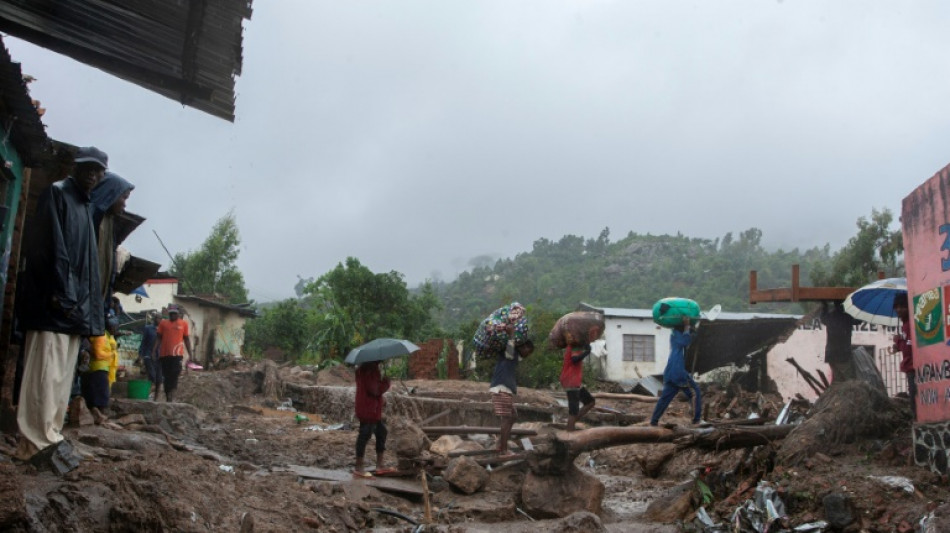
US offers no new cash to climate fund for developing world / Photo: Amos Gumulira - AFP

 Kenya's economy faces climate change risks: World Bank
 Hungary to shut nuclear plant as heatwave hits central Europe

 Tech-fuelled rally fizzles as oil prices rise
 Alarm over climate-linked low level of German waterways

 Commerzbank agrees to talks with UniCredit after two-year standoff
 Fornaro Legal Releases Guidance to Help Businesses Maintain Clear Ownership Records During Growth

 Japan probe made closest-ever asteroid flyby: space agency
 British oil giant BP aims to sell North Sea business
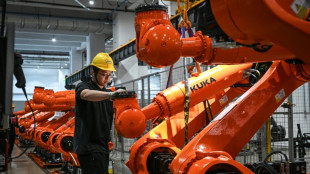 China factory activity slides as leaders seek spending boost

 Tech rebound fuels record-breaking rally in South Korean stocks

 Cables and cooling bring AI windfall to Indian suppliers

 Anthropic's models gained unauthorized 'real-world' access during testing

 Apple tops estimates in CEO Cook's final quarter, but shares fall

 Milei demands expulsion of foreigners expressing 'hate' against Argentina

 Italy's Po River valley on drought alert

 Prada profits pinched as growth hard to chase

 Stocks climb on earnings and rates, oil retreats

 US economic growth slows in second quarter, missing expectations

 Russia adds Telegram founder Durov to 'terrorist' blacklist

 Stocks diverge on earnings, as oil steadies

 Eurozone economy grows despite Middle East war

 Singapore group will develop 'most promising' Ebola vaccine

 Shell profit surges as Mideast war fuels oil prices

 Car maker Stellantis says back in profit in second quarter

 Samsung quarterly operating profit up 1,800% on AI boom

The United States offered no fresh cash to the world's largest climate fund on Thursday, overshadowing pledges of financial support for nations most vulnerable to global warming and infuriating campaigners.
The Green Climate Fund (GCF), seen as a key element of the landmark 2015 Paris Agreement, funnels grants and loans for adaptation and mitigation projects, mostly in Africa, the Asia-Pacific region, Latin America and the Caribbean.
It plays a part in the promise by rich countries to supply $100 billion of climate finance to poorer nations every year, which has already missed an initial 2020 deadline.
Financing is one of the most contentious topics in international climate diplomacy as the world scrambles to limit warming to 1.5 degrees Celsius above pre-industrial levels.
Developing countries least responsible for climate change are seeking support from richer polluting nations to adapt to the increasingly ferocious and expensive consequences of extreme weather, and for their transitions to cleaner energy.
The issue will play a major role in crunch UN talks, COP28, beginning in Dubai on November 30.
More than $9.3 billion was pledged at the donor conference in Bonn, with the total set to rise as countries prepare to make announcements soon, according to the German government.
But the United States refused to announce a new contribution, citing "uncertainty in our budget processes".
The US House of Representatives is in limbo after far-right Republicans helped to oust its speaker Kevin McCarthy on Tuesday, weeks ahead of a new funding deadline that could shut down the federal government.
Washington emphasised its "strong and steadfast confidence" in the GCF, according to a statement read out on behalf of Alexia Latortue, Assistant Secretary for International Trade and Development.
But "to stay at the vanguard and rise to the moment on climate, the GCF must evolve," the statement added.
The United States pledged around $3 billion for the fund's first resource mobilisation in 2014 under former president Barack Obama, but his successor Donald Trump gave nothing five years later.
- 'Inexcusable' -
Australia -- one of the world's biggest polluters -- said it was rejoining the fund after withdrawing under former conservative leader Scott Morrison.
Israel said it would make its first contribution, while countries including Belgium, Finland and Ireland committed to stumping up fresh cash.
But campaigners were left disappointed by what they saw as a lack of action by countries who reiterated previously announced pledges or made no new efforts.
"With COP28 on the horizon, the GCF replenishment conference has fallen short of expectations," said Harjeet Singh, head of global political strategy at Climate Action Network International.
"The silence of the United States, even as it participates on the GCF board and shapes policies without meeting its financial obligations, is glaring and inexcusable."
Ahead of the conference, Britain, France and Germany had already made pledges that collectively totalled billions of dollars.
Austria, Canada, the Czech Republic, Denmark, Iceland, Luxembourg, Monaco, Slovakia, Slovenia, South Korea and Spain had also made commitments.
Conference chairman Mahmoud Mohieldin reminded delegates after the pledging session that "countries can pledge during the four-year cycle, but the earlier the better, the more the better."
- $50 billion by 2030 -
The GCF wants to invest more through a decade it sees as critical for climate action.
Rolling out solar panels in Pakistan and making Philippine agriculture more resilient in the face of unpredictable weather are among projects that have been approved.
The GCF has laid out a "50by30" vision to manage $50 billion by 2030 -- almost triple its current capital of $17 billion.
It aims to focus efforts in developing countries between next year and 2027.
The GCF currently has more than 100 implementing partners and various financial instruments. A first tranche of replenishment funds worth $10 billion was pledged for the 2020-2023 period.
The UN's Independent High-Level Expert Group on Climate Finance last year estimated developing nations would need more than $2 trillion a year by 2030 to fund climate resilience and development priorities.
T.Morelli--CPN