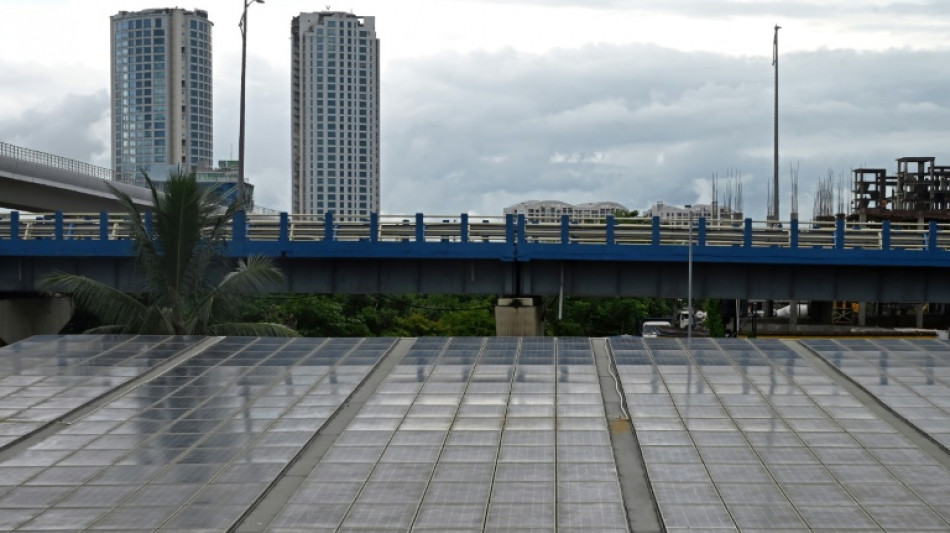
India must rapidly scale solar to reach renewable targets: study / Photo: Dibyangshu SARKAR - AFP/File

 Kenya's economy faces climate change risks: World Bank

 Hungary to shut nuclear plant as heatwave hits central Europe

 Tech-fuelled rally fizzles as oil prices rise

 Alarm over climate-linked low level of German waterways

 Commerzbank agrees to talks with UniCredit after two-year standoff

 Fornaro Legal Releases Guidance to Help Businesses Maintain Clear Ownership Records During Growth

 Japan probe made closest-ever asteroid flyby: space agency

 British oil giant BP aims to sell North Sea business

 China factory activity slides as leaders seek spending boost

 Tech rebound fuels record-breaking rally in South Korean stocks

 Cables and cooling bring AI windfall to Indian suppliers

 Anthropic's models gained unauthorized 'real-world' access during testing

 Apple tops estimates in CEO Cook's final quarter, but shares fall

 Milei demands expulsion of foreigners expressing 'hate' against Argentina

 Italy's Po River valley on drought alert

 Prada profits pinched as growth hard to chase

 Stocks climb on earnings and rates, oil retreats

 US economic growth slows in second quarter, missing expectations

 Russia adds Telegram founder Durov to 'terrorist' blacklist

 Stocks diverge on earnings, as oil steadies

 Eurozone economy grows despite Middle East war

 Singapore group will develop 'most promising' Ebola vaccine

 Shell profit surges as Mideast war fuels oil prices

 Car maker Stellantis says back in profit in second quarter

 Samsung quarterly operating profit up 1,800% on AI boom

India needs to increase its solar energy capacity by 36 percent a year for at least the next half-decade to meet its energy mix goals, an analysis said Tuesday.
It also urgently needs grid upgrades and more storage capacity to deal with the intermittent nature of renewable energy sources, according to the report from UK-based energy think tank Ember.
But there are signs of progress in the world's most populous country, which is heavily reliant on polluting coal for energy generation.
Investments in the renewable sector are growing, and India commissioned a record amount of solar capacity this year, Ember said.
The report takes India's National Electricity Plan (NEP), unveiled earlier this year, as a starting point.
The document, covering the decade to 2032, projects India will continue to rely on coal, but with renewables making up an ever-greater share of its power generation mix.
While solar accounted for just five percent of India's total electricity generation in financial year 2022, the NEP projects it will make up 25 percent within a decade.
But achieving that will require a massive ramp-up of capacity every year for at least the next half-decade.
And India needs better storage solutions to address the variable supply of sources like solar and wind.
Failure to do so could cause power cuts, and "put pressure on state and national planners to hastily plan for increasing the coal capacity, which could result in future lock-ins," the report warned.
India, this year's G20 host, has seen its per capita coal emissions rise 29 percent in the last seven years and has shied away from any policy to phase down coal.
Y.Jeong--CPN