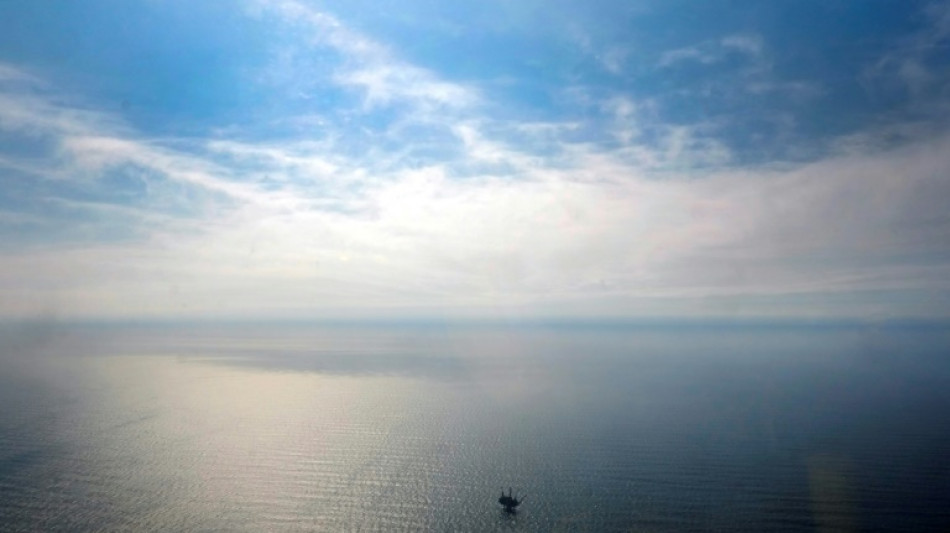
UK grants controversial North Sea oil and gas output / Photo: ANDY BUCHANAN, ANDY BUCHANAN - AFP/File

 Kenya's economy faces climate change risks: World Bank
 Hungary to shut nuclear plant as heatwave hits central Europe

 Tech-fuelled rally fizzles as oil prices rise

 Alarm over climate-linked low level of German waterways

 Commerzbank agrees to talks with UniCredit after two-year standoff
 Fornaro Legal Releases Guidance to Help Businesses Maintain Clear Ownership Records During Growth

 Japan probe made closest-ever asteroid flyby: space agency
 British oil giant BP aims to sell North Sea business
 China factory activity slides as leaders seek spending boost

 Tech rebound fuels record-breaking rally in South Korean stocks

 Cables and cooling bring AI windfall to Indian suppliers

 Anthropic's models gained unauthorized 'real-world' access during testing

 Apple tops estimates in CEO Cook's final quarter, but shares fall

 Milei demands expulsion of foreigners expressing 'hate' against Argentina

 Italy's Po River valley on drought alert

 Prada profits pinched as growth hard to chase

 Stocks climb on earnings and rates, oil retreats

 US economic growth slows in second quarter, missing expectations

 Russia adds Telegram founder Durov to 'terrorist' blacklist

 Stocks diverge on earnings, as oil steadies

 Eurozone economy grows despite Middle East war

 Singapore group will develop 'most promising' Ebola vaccine

 Shell profit surges as Mideast war fuels oil prices

 Car maker Stellantis says back in profit in second quarter

 Samsung quarterly operating profit up 1,800% on AI boom

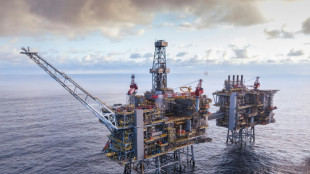
Britain on Wednesday authorised oil and gas production in its largest undeveloped field to boost energy security, one week after diluting net zero targets, triggering more condemnation by green groups.
Norwegian oil and gas producer Equinor and Ithaca Energy, a subsidiary of Israeli group Delek, will together invest $3.8 billion in developing the field situated in the North Sea off the coast of Scotland.
The North Sea Transition Authority, a UK oil and gas regulator, said in a statement that it had "granted development and production consent for the Rosebank field, north-west of Shetland".
Equinor has an 80-percent interest in the project and Ithaca the remainder.
"Rosebank stands as the largest undeveloped field in the UK," said Gilad Myerson, executive chairman at Ithaca Energy.
"The Rosebank project will create thousands of jobs and contribute significantly to securing the UK's energy needs for many years to come," he added.
The UK government maintains it must beef up energy security via continued production of fossil fuels following the invasion of Ukraine by key producer Russia, even if it means impacting its target on net zero carbon emissions.
- 'We need oil and gas' -
"We are investing in our world-leading renewable energy but... we will need oil and gas as part of that mix on the path to net zero and so it makes sense to use our own supplies from North Sea fields such as Rosebank," said Energy Security Secretary Claire Coutinho.
"We will continue to back the UK's oil and gas industry to underpin our energy security, grow our economy and help us deliver the transition to cheaper, cleaner energy," she added.
Wednesday's announcement comes one week after Prime Minister Rishi Sunak softened policies aimed at the UK achieving net zero carbon emissions by 2050.
He did this by saying a ban on the sale of petrol and diesel cars would be pushed back from 2030 to 2035.
Sunak also announced an easing of energy efficiency targets for rental properties and backtracked on plans to make homeowners replace gas boilers with heat pumps.
The UK oil and gas regulator on Wednesday said the decision to authorise new North Sea output had taken "net zero considerations into account throughout the project's lifecycle".
- 'Morally obscene' -
But the announcement triggered fierce criticism from environmentalists.
"This is morally obscene," Green Party lawmaker Caroline Lucas said on the X social media platform, formally known as Twitter.
"It won't improve energy security or lower bills -- but it will shatter our climate commitments."
Philip Evans, Greenpeace UK's climate campaigner, said "Sunak has proven once and for all that he puts the profits of oil companies above everyday people".
He added in a statement: "We know that relying on fossil fuels is terrible for our energy security, the cost of living, and the climate."
Geir Tungesvik, executive vice president for projects, drilling and procurement at Equinor, said "developing the Rosebank field will allow us to grow our position as a broad energy partner to the UK, while optimising our oil and gas portfolio, and increasing energy supply in Europe".
Production to pump out a total 300 million barrels of oil was expected to begin in 2026-27.
T.Morelli--CPN