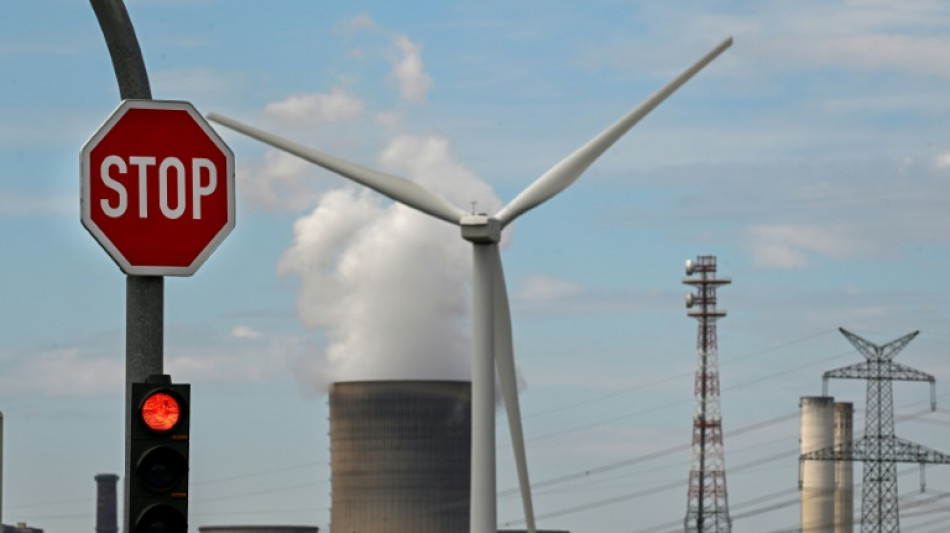
Rich nations, China must accelerate race to net zero: IEA / Photo: Ina FASSBENDER - AFP

 Kenya's economy faces climate change risks: World Bank
 Hungary to shut nuclear plant as heatwave hits central Europe

 Tech-fuelled rally fizzles as oil prices rise

 Alarm over climate-linked low level of German waterways

 Commerzbank agrees to talks with UniCredit after two-year standoff
 Fornaro Legal Releases Guidance to Help Businesses Maintain Clear Ownership Records During Growth

 Japan probe made closest-ever asteroid flyby: space agency
 British oil giant BP aims to sell North Sea business

 China factory activity slides as leaders seek spending boost

 Tech rebound fuels record-breaking rally in South Korean stocks
 Cables and cooling bring AI windfall to Indian suppliers
 Anthropic's models gained unauthorized 'real-world' access during testing

 Apple tops estimates in CEO Cook's final quarter, but shares fall

 Milei demands expulsion of foreigners expressing 'hate' against Argentina

 Italy's Po River valley on drought alert

 Prada profits pinched as growth hard to chase

 Stocks climb on earnings and rates, oil retreats

 US economic growth slows in second quarter, missing expectations

 Russia adds Telegram founder Durov to 'terrorist' blacklist

 Stocks diverge on earnings, as oil steadies

 Eurozone economy grows despite Middle East war
 Singapore group will develop 'most promising' Ebola vaccine
 Shell profit surges as Mideast war fuels oil prices

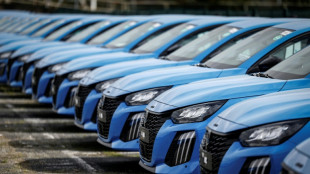 Car maker Stellantis says back in profit in second quarter

 Samsung quarterly operating profit up 1,800% on AI boom

Rich and developing nations alike must sharply improve their net-zero targets, the International Energy Agency said Tuesday, warning that a clean energy surge was the main reason the world's climate goals are still within reach.
Wealthy countries must now reach carbon neutrality in around 2045, five years early, and China should speed up by a decade to 2050 to keep to the Paris goal of limiting warming to 1.5 degrees Celsius above pre-industrial levels, the IEA said.
"The world has already delayed too long to avoid hard choices," the global energy watchdog said.
The report, which comes ahead of crunch UN climate talks, updates the IEA's landmark 2021 "Net Zero Roadmap", which said new fossil fuel development was incompatible with global decarbonisation by mid-century and the 1.5C target.
Two years later the IEA has seen progress in the form of record growth in solar power capacity and electric car sales.
These are in line with the IEA's pathway to net-zero emissions, as are the plans put in place by industry to roll out new manufacturing for them.
The energy sector is "changing faster than many people think", the IEA said, adding that together these clean energy technologies are projected to deliver a third of the emissions reductions needed by 2030.
But it warned of the negative impact of increased fossil fuel investments and "stubbornly high emissions" during the same period, which saw a post-pandemic economic rebound and the energy crisis driven by Russia's invasion of Ukraine.
"The pathway to 1.5C has narrowed in the past two years, but clean energy technologies are keeping it open," said IEA chief Fatih Birol.
- Fossil focus -
The IEA this month forecast that world demand for oil, gas and coal would peak this decade thanks to the "spectacular" growth of cleaner energy technologies and electric cars.
But far from resting on that success, Birol said countries need to work together to substantially speed up climate action.
Even a small delay in ramping up emissions cuts beyond the current pledges "would cause global temperature to exceed 1.5C for almost 50 years", the report warned.
It laid out a potential pathway for the energy sector -- the largest single source of greenhouse gas emissions -- to achieve net-zero emissions and contribute towards curbing warming to 1.5C.
The IEA said staying on track "means almost all countries must move forward their targeted net zero dates", with its pathway based on an "equitable" redistribution of targets, pulling forward China and richer countries to allow developing nations more breathing space to decarbonise after 2050.
The report also calls for a "huge policy-driven ramping up of clean energy capacity" driving fossil fuel demand 25 percent lower by 2030.
And it warned that if the world's current oil and gas fields and coal plants operate to the end of their lifespans, the world would significantly overshoot its CO2 budget to stay within 1.5C.
Singling out China, the IEA said the country is projected to account for 45 percent of emissions from existing fossil fuel assets between 2023 and 2050.
- 'Expensive and unproven' -
At just under 1.2C of warming so far, the world has already seen a crescendo of deadly and destructive extreme weather and the most vulnerable populations are hit hardest.
A recent UN progress report on the Paris goals warned the world was not on track to limit warming to 1.5C.
It stressed that phasing out fossil fuels whose emissions cannot be captured or compensated is necessary to achieve net-zero carbon emissions by 2050.
This is likely to be at the heart of debates at the UN's COP28 climate summit in Dubai, a major oil producer, between November 30 and December 12.
"The age of fossil fuels is ending," said Laurence Tubiana, head of the European Climate Foundation.
"In Dubai, the COP presidency will have to show what post-fossil fuel leadership looks like."
The IEA threw its weight behind critics of so-called carbon removal technologies, which have been given greater prominence as the world fails to slash emissions.
These include industrial and nature-based processes to extract CO2 molecules from the atmosphere and store them permanently.
The IEA said a scenario of delayed climate action would force the world to rely on these "expensive and unproven at scale" carbon removal technologies.
If such technologies fail to deliver at the scale needed -- including effectively filtering 0.1 percent of Earth's atmosphere every year by 2100 -- the IEA said returning temperatures to 1.5C "would not be possible".
M.Davis--CPN