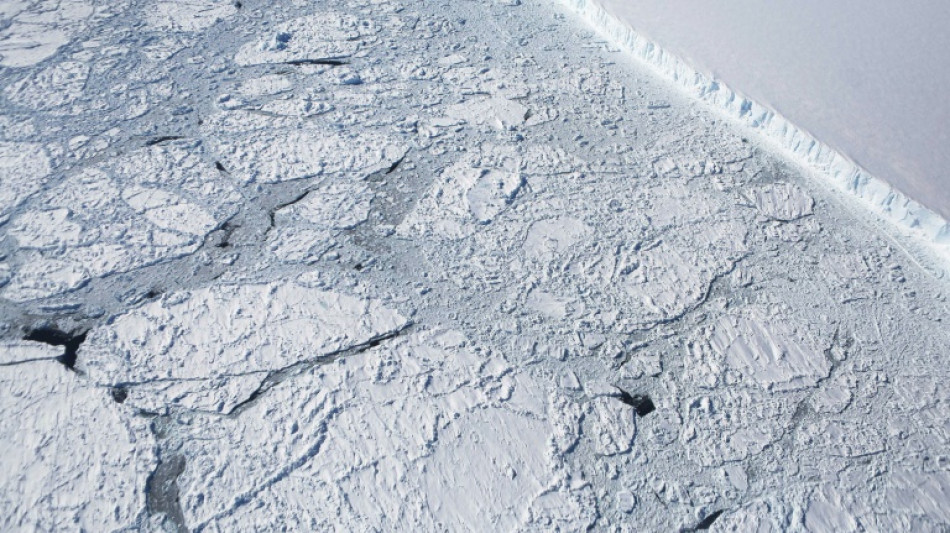
Antarctic sea ice hits lowest winter maximum on record: US data / Photo: MARIO TAMA - GETTY IMAGES NORTH AMERICA/AFP

 Kenya's economy faces climate change risks: World Bank

 Hungary to shut nuclear plant as heatwave hits central Europe

 Tech-fuelled rally fizzles as oil prices rise

 Alarm over climate-linked low level of German waterways

 Commerzbank agrees to talks with UniCredit after two-year standoff

 Fornaro Legal Releases Guidance to Help Businesses Maintain Clear Ownership Records During Growth

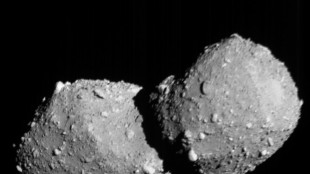 Japan probe made closest-ever asteroid flyby: space agency

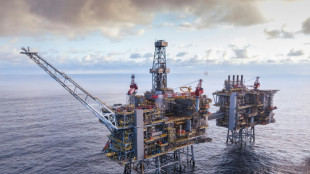 British oil giant BP aims to sell North Sea business

 China factory activity slides as leaders seek spending boost

 Tech rebound fuels record-breaking rally in South Korean stocks

 Cables and cooling bring AI windfall to Indian suppliers

 Anthropic's models gained unauthorized 'real-world' access during testing

 Apple tops estimates in CEO Cook's final quarter, but shares fall

 Milei demands expulsion of foreigners expressing 'hate' against Argentina

 Italy's Po River valley on drought alert

 Prada profits pinched as growth hard to chase

 Stocks climb on earnings and rates, oil retreats

 US economic growth slows in second quarter, missing expectations

 Russia adds Telegram founder Durov to 'terrorist' blacklist

 Stocks diverge on earnings, as oil steadies

 Eurozone economy grows despite Middle East war

 Singapore group will develop 'most promising' Ebola vaccine

 Shell profit surges as Mideast war fuels oil prices

 Car maker Stellantis says back in profit in second quarter

 Samsung quarterly operating profit up 1,800% on AI boom

The sea ice around Antarctica likely had a record low surface area when it was at its maximum size this winter, a preliminary US analysis of satellite data showed Monday.
As the southern hemisphere transitions into spring, the US National Snow and Ice Data Center (NSIDC) said in a statement that Antarctic sea ice had only reached a maximum size of 16.96 million square kilometers (6.55 million square miles) this year, on September 10.
The ice pack typically reaches its largest size during the colder winter months, so the September 10 reading will likely remain this year's maximum.
"This is the lowest sea ice maximum in the 1979 to 2023 sea ice record by a wide margin," said the NSIDC, a government-supported program at the University of Colorado at Boulder.
At its high-point this year, the sea ice was 1.03 million square kilometers smaller than the previous record, roughly the size of Texas and California combined.
"It's a record-smashing sea ice low in the Antarctic," said NSIDC scientist Walt Meier.
He added that the growth in sea ice appeared "low around nearly the whole continent as opposed to any one region."
In February, at the height of the austral summer, the Antarctic sea ice pack had reached a minimum extent of 1.79 million square kilometers, also a record, according to the NSIDC.
The ice pack then grew back at an unusually slow pace, despite the onset of winter.
Meanwhile at the other end of the globe, where summer is drawing to a close, Arctic sea ice reached a low of 4.23 million square kilometers, the NSIDC said. It represents the sixth lowest minimum in 45 years of recordkeeping.
- Warming oceans -
For several decades, the Antarctic sea ice pack had remained stable, even expanding slightly.
But "since August 2016, the Antarctic sea ice extent trend took a sharp downturn across nearly all months" the NSIDC said.
There is debate among scientists over the cause of the shift, with some reluctant to establish a formal link with global warming. Climate models have struggled in the past to predict changes in the Antarctic ice pack.
The downward trend is "now thought to be linked to warming in the uppermost ocean layer," the NSIDC said.
"There is some concern that this may be the beginning of a long-term trend of decline for Antarctic sea ice, since oceans are warming globally."
Melting pack ice has no immediate impact on sea levels, as it forms by freezing salt water already in the ocean.
But the white ice reflects more of the Sun's rays than darker ocean water, so its loss accentuates global warming.
The loss of pack ice also exposes Antarctica's coastline to greater wave action, which could destabilize the freshwater ice cap and endanger coastal habitats. The melting land ice would cause a catastrophic rise in sea levels.
However the NSIDC notes a possibility that waves impacting the ice sheet may increase "accumulation near the coast, offsetting in part the threat of rising sea level."
X.Cheung--CPN