
Efforts to clean up power sector too slow: watchdog / Photo: STRINGER - AFP

 Kenya's economy faces climate change risks: World Bank

 Hungary to shut nuclear plant as heatwave hits central Europe

 Tech-fuelled rally fizzles as oil prices rise

 Alarm over climate-linked low level of German waterways

 Commerzbank agrees to talks with UniCredit after two-year standoff

 Fornaro Legal Releases Guidance to Help Businesses Maintain Clear Ownership Records During Growth

 Japan probe made closest-ever asteroid flyby: space agency

 British oil giant BP aims to sell North Sea business

 China factory activity slides as leaders seek spending boost

 Tech rebound fuels record-breaking rally in South Korean stocks

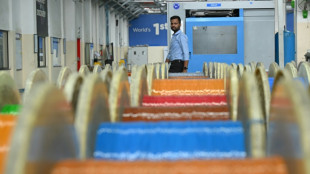 Cables and cooling bring AI windfall to Indian suppliers

 Anthropic's models gained unauthorized 'real-world' access during testing

 Apple tops estimates in CEO Cook's final quarter, but shares fall

 Milei demands expulsion of foreigners expressing 'hate' against Argentina
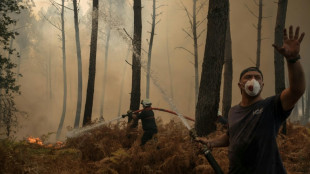
 Italy's Po River valley on drought alert
 Prada profits pinched as growth hard to chase

 Stocks climb on earnings and rates, oil retreats

 US economic growth slows in second quarter, missing expectations

 Russia adds Telegram founder Durov to 'terrorist' blacklist

 Stocks diverge on earnings, as oil steadies

 Eurozone economy grows despite Middle East war

 Singapore group will develop 'most promising' Ebola vaccine

 Shell profit surges as Mideast war fuels oil prices

 Car maker Stellantis says back in profit in second quarter

 Samsung quarterly operating profit up 1,800% on AI boom

Many of the most polluting countries are failing to cut carbon emissions from their energy sectors quickly enough to meet the goal of limiting global warming to 1.5 degrees Celsius, a watchdog said on Tuesday.
The report comes days after the United Nations said the world was facing catastrophic climate change and was perilously far from meeting goals for slashing carbon pollution.
Slashing greenhouse gas emissions from the highly polluting power generation sector is vital to meet the goal of the 2015 Paris Agreement.
Under that accord, nations agreed to try and cap Earth's temperature rise to 1.5C above mid-19th century levels.
A fierce debate over how to move away from generating energy by burning fossil fuels is likely to take centre stage at crunch UN climate talks beginning in Dubai in November. The negotiations are seen as the most important since the Paris deal.
Climate Action Tracker (CAT), a scientific monitoring group, measured what progress had been made towards meeting the 1.5C goal -- both worldwide and in individual countries -- by setting targets for the share of gas, coal and renewables countries used to generate power.
None of the countries or blocs assessed -- Australia, Brazil, Britain, Chile, China, the European Union, Germany, India, Indonesia, Japan, Mexico, Morocco, Turkey, South Africa, the United Arab Emirates and the United States -- were fully on track to meet the targets, it said.
"Governments still appear to be hedging their bets and procrastinating on a fossil fuel phaseout" despite the opportunities for wind and solar expansion, said the report's lead author, Neil Grant.
The future of fossil fuels, he said, is "one of swift decline".
To clean up the power sector by 2040, developed nations must phase out coal by 2030 and "unabated" fossil gas by 2035. Developing countries need to follow suit by 2040, CAT said.
"Unabated" generally refers to fossil fuels that are burned without their polluting emissions being captured before they are released into the atmosphere.
All countries must derive more than 80 percent of their electricity from renewable sources like wind and solar by 2035, and between 90 and 100 percent by 2050, if they are to meet the CAT benchmarks.
No country CAT analysed had an explicit gas phaseout plan, it said.
Most countries were not doing enough to speed up their transition to renewable energy, with Japan and Mexico the worst laggards, it said.
Despite plans for new coal plants falling globally, the report raised concerns about a "spree" of permits for new facilities in China.
- Renewables boom 'too slow' -
No country was on track to meet all the three targets, CAT said.
Britain was the only country to be on track to meet one of the targets because it planned to phase out coal by 2024, it said.
The EU, Germany, Chile and South Africa were moving in the right direction.
The targets the United States and Britain have set for decarbonising their power sectors by 2035 are in line with the 1.5C goal. But both countries need to do more to actually achieve these targets, the report said.
And renewables are not being brought on stream fast enough to enable fossil fuels to be phased out in time, it said.
It did note, however, that Germany and Chile were "ahead of the pack" in switching to renewables.
Oil-producing nations have for years touted the idea of capturing carbon emissions before they go out into the atmosphere as a potential solution for curbing global warming.
Climate experts warn this could be a distraction from urgently weaning the world off fossil fuels.
The oil- and gas-dependent United Arab Emirates, which will host the key UN climate talks in November, advocates phasing out carbon emissions rather than the fossil fuels themselves.
But CAT pointed out that carbon capture and storage could play no role in curbing greenhouse gas pollution from the coal sector and only a marginal one in gas-derived energy.
As for developing nations, they urgently need financial aid to wean themselves off fossil fuels, the group said.
The handful of "Just Energy Transition Partnerships" initiatives championed by wealthier countries was insufficient, it said.
Y.Ponomarenko--CPN