Storms kill 14 in Mediterranean, east Europe / Photo: Sakis MITROLIDIS - AFP

 Kenya's economy faces climate change risks: World Bank
 Hungary to shut nuclear plant as heatwave hits central Europe
 Tech-fuelled rally fizzles as oil prices rise

 Alarm over climate-linked low level of German waterways

 Commerzbank agrees to talks with UniCredit after two-year standoff
 Fornaro Legal Releases Guidance to Help Businesses Maintain Clear Ownership Records During Growth

 Japan probe made closest-ever asteroid flyby: space agency
 British oil giant BP aims to sell North Sea business

 China factory activity slides as leaders seek spending boost

 Tech rebound fuels record-breaking rally in South Korean stocks

 Cables and cooling bring AI windfall to Indian suppliers

 Anthropic's models gained unauthorized 'real-world' access during testing

 Apple tops estimates in CEO Cook's final quarter, but shares fall

 Milei demands expulsion of foreigners expressing 'hate' against Argentina

 Italy's Po River valley on drought alert

 Prada profits pinched as growth hard to chase

 Stocks climb on earnings and rates, oil retreats

 US economic growth slows in second quarter, missing expectations

 Russia adds Telegram founder Durov to 'terrorist' blacklist

 Stocks diverge on earnings, as oil steadies

 Eurozone economy grows despite Middle East war

 Singapore group will develop 'most promising' Ebola vaccine

 Shell profit surges as Mideast war fuels oil prices

 Car maker Stellantis says back in profit in second quarter

 Samsung quarterly operating profit up 1,800% on AI boom

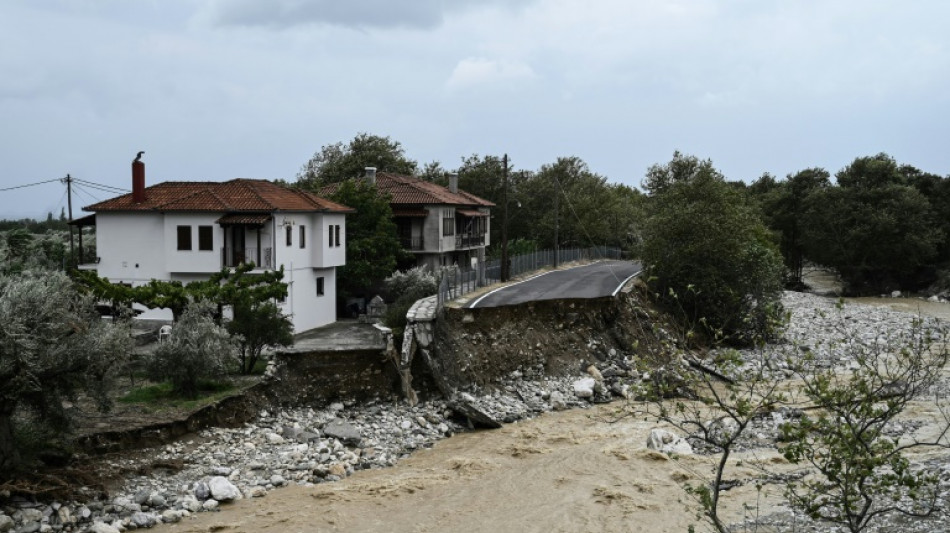
Storms have killed at least 14 people in Greece, Turkey and Bulgaria, with a Greek region hit by more rain in 24 hours than it normally sees in a year, officials said Wednesday.
A period of extreme heat has given way to heavy storms, turning streets in northwestern Turkey into rivers and hitting Greece with unprecedented downpours as it recovers from weeks of wildfires.
"Everything saved from the fire we had in July has been destroyed by this bad weather," said Christos Kleftakis, 49, in Nea Anchialos, near the central Greek city of Volos.
"This is unprecedented -- these severe weather events, the strength of the rain, the wind. I've never seen anything like that before," he added.
As the world warms, the atmosphere contains more water vapour which increases the risk of heavy precipitation in some parts of the world, notably in Asia, Western Europe and Latin America.
Combined with other factors such as urbanisation and land-use planning, these more intense rainfall events contribute to flooding.
Greece's central Magnesia region got rainfall of 600-800 millimetres (24-31 inches) over a 24-hour period including Tuesday, a government meteorologist told reporters in Athens.
Dimitris Ziakopoulos called it an "unprecedented phenomenon" for the country's meteorological data, which dates back to 1955.
The storm, dubbed "Daniel" by Greek weather experts, has been battering the country since Monday, mainly affecting the Magnesia region and its capital city Volos, 300 kilometres (185 miles) north of Athens.
An 87-year-old woman missing since Tuesday was found dead on Wednesday in the village of Paltsi in Magnesia, fire department spokesman Yannis Artopios told public broadcaster Ert.
Another person was found dead Wednesday in the city of Karditsa in central Greece.
On Tuesday, a 51-year-old man was found dead near Volos after being swept away by a rising torrent.
Electricity has been out in Volos since Tuesday morning, while buildings and roads in nearby villages have been severely damaged by landslides and flooding, according to an AFP journalist at the scene.
- Fires followed by floods -
The torrential rains in Greece follow weeks of devastating wildfires.
"This is an extreme phenomenon", said Greek Prime Minister Kyriakos Mitsotakis.
In Istanbul, the downpours came after a particularly dry summer that saw the water reservoirs of the city of 16 million people fall to nine-year lows.
The Istanbul governor's office said two people died.
Turkish emergency services said five people have died and one was missing in floods that hit the northwestern city of Kirklareli.
Bulgaria's Black Sea coast has also been hit by the heaviest rains in years, killing at least four and leaving several thousand tourists stranded.
Heavy rain and thunderstorms since late Monday caused rivers to overflow, damaging bridges and cutting off access in the region south of the coastal city of Burgas.
"It's a disaster... the steep terrain (along the coast) creates an enormous danger," Prime Minister Nikolay Denkov said, adding "long-term solutions" would be needed to secure the area.
The rains were the heaviest since 1994 with as much rain falling in 24 hours as usually in several months, according to head of the fire department Alexandar Dzhartov.
Flooding -- rare in the Black Sea coast area -- is becoming increasingly common in Bulgaria with the impact of climate change and the poor maintenance of infrastructure.
Y.Ibrahim--CPN