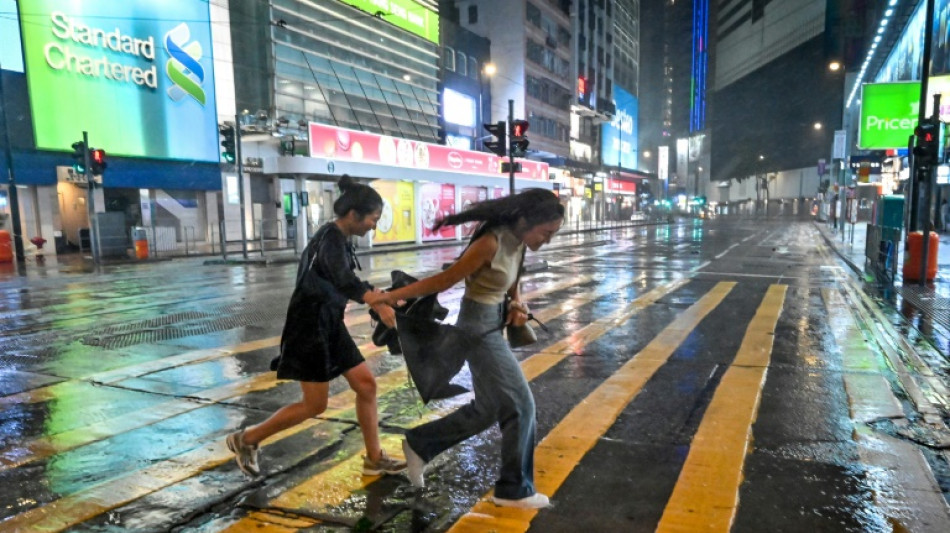
Typhoon Saola slams southern China after battering Hong Kong / Photo: Mladen ANTONOV - AFP

 Kenya's economy faces climate change risks: World Bank
 Hungary to shut nuclear plant as heatwave hits central Europe
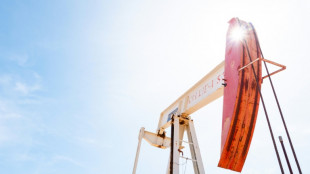 Tech-fuelled rally fizzles as oil prices rise

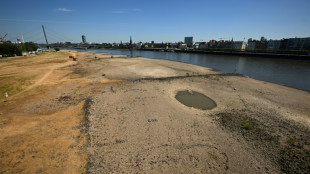 Alarm over climate-linked low level of German waterways

 Commerzbank agrees to talks with UniCredit after two-year standoff
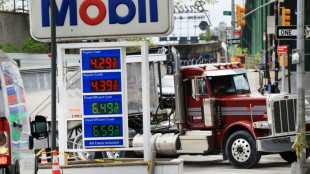
 Fornaro Legal Releases Guidance to Help Businesses Maintain Clear Ownership Records During Growth

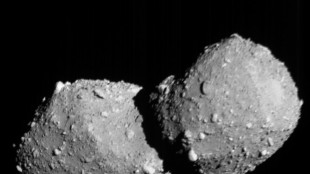 Japan probe made closest-ever asteroid flyby: space agency
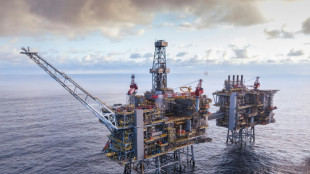 British oil giant BP aims to sell North Sea business
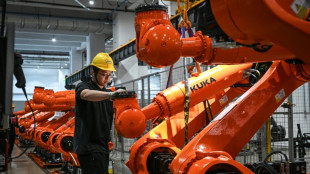 China factory activity slides as leaders seek spending boost

 Tech rebound fuels record-breaking rally in South Korean stocks
 Cables and cooling bring AI windfall to Indian suppliers
 Anthropic's models gained unauthorized 'real-world' access during testing

 Apple tops estimates in CEO Cook's final quarter, but shares fall

 Milei demands expulsion of foreigners expressing 'hate' against Argentina

 Italy's Po River valley on drought alert

 Prada profits pinched as growth hard to chase

 Stocks climb on earnings and rates, oil retreats

 US economic growth slows in second quarter, missing expectations

 Russia adds Telegram founder Durov to 'terrorist' blacklist

 Stocks diverge on earnings, as oil steadies

 Eurozone economy grows despite Middle East war

 Singapore group will develop 'most promising' Ebola vaccine

 Shell profit surges as Mideast war fuels oil prices

 Car maker Stellantis says back in profit in second quarter

 Samsung quarterly operating profit up 1,800% on AI boom

Typhoon Saola roared ashore in southern China early Saturday as a weakened but still dangerous threat that has lashed Hong Kong and forced millions to hunker down for one of the region's strongest storms in decades.
Tens of millions of people across Hong Kong, Shenzhen and other southern Chinese megacities had braced for the menace of a cyclone rated as a super typhoon.
And while it delivered a fierce but glancing blow to the special administrative region, Saola -- now downgraded to a severe typhoon -- landed south of Hong Kong with its toughest blows.
China's National Meteorological Center said Saola made landfall at around 3:30 am Saturday (2030 GMT Friday) to the south of the city of Zhuhai in Guangdong province, south of casino hub Macau.
Over 880,000 people were evacuated across two Chinese provinces ahead of Saola making landfall, hundreds of flights were cancelled across the region, and trees were uprooted around the rain-battered streets of Hong Kong.
China's national weather office predicted Saola "may become the strongest typhoon to make landfall in the Pearl River Delta since 1949", referring to a low-lying region that includes Hong Kong, Macau and much of Guangdong province.
With a direct hit possible, authorities in Hong Kong had raised the warning level Friday evening to the city's highest -- "T10" -- which had only been issued 16 times since World War II before Saola.
By 3:40 am, after more than seven long hours under T10, Hong Kong downgraded to level T8. But with dangerous gusts up to 139 kilometers (86 miles) per hour they urged residents to remain vigilant.
"As gales and violent squalls are still occurring in places, precautions should not yet be relaxed," the Hong Kong Observatory warned in a bulletin.
Still that marked a downgrade from 11:00 pm Friday, when Saola was just 30 kilometres south-southwest of the city, and packing sustained wind speeds of 185 kilometres per hour.
Hong Kong residents struggled with flailing umbrellas as they ran under the unrelenting rainfall, while people wearing plastic bags on their heads rushed home past sandbags stacked in waterfront areas to prevent flooding.
The observatory said "the maximum water level may reach a historical record", warning that "there will be serious flooding".
The last time Hong Kong issued a T10 warning was in 2018, when Typhoon Mangkhut slammed into the city, shredding trees and unleashing floods, and leaving more than 300 people injured.
In mainland China, Mangkhut killed six people and impacted the lives of more than three million others.
Across the mainland border in neighbouring Guangdong province, authorities evacuated more than 780,000 people from high-risk areas, while eastern Fujian province saw more than 100,000 moved to safer ground.
Trains in and out of Guangdong were also suspended until 6:00 pm Saturday, while the national flood defence agency raised its emergency response for prevention to its second-highest level.
"It's going to affect our life," said Wu Wenlai, 43, who had to close his restaurant in a Shenzhen suburb.
"My eldest son was planning to fly to Chengdu today for university and his flight has been cancelled now."
- More intense typhoons -
Southern China is frequently hit in summer and autumn by typhoons that form in the warm oceans east of the Philippines and then travel west.
Climate change has increased the intensity of tropical storms, with more rain and stronger gusts leading to flash floods and coastal damage, experts say.
In Hong Kong, authorities received at least seven confirmed cases of flooding, as well as nearly 40 reports of downed trees. The city's hospital authority reported seven people seeking medical treatment during Saola.
Businesses taped up their glass displays and windows, while high-rise buildings swayed under the whipping gusts.
In eastern Heng Fa Chuen -- a coastal residential area and the site of devastation during 2018's Typhoon Mangkhut -- officers in orange vests urged storm-watchers to go home, as trees leaned sideways from the heavy gusts.
In the low-lying fishing village of Lei Yue Mun, which is prone to flooding, water seeped into shops, prompting residents to set up sandbags and board up doors.
burs-dhc/mlm/tjj
H.Cho--CPN