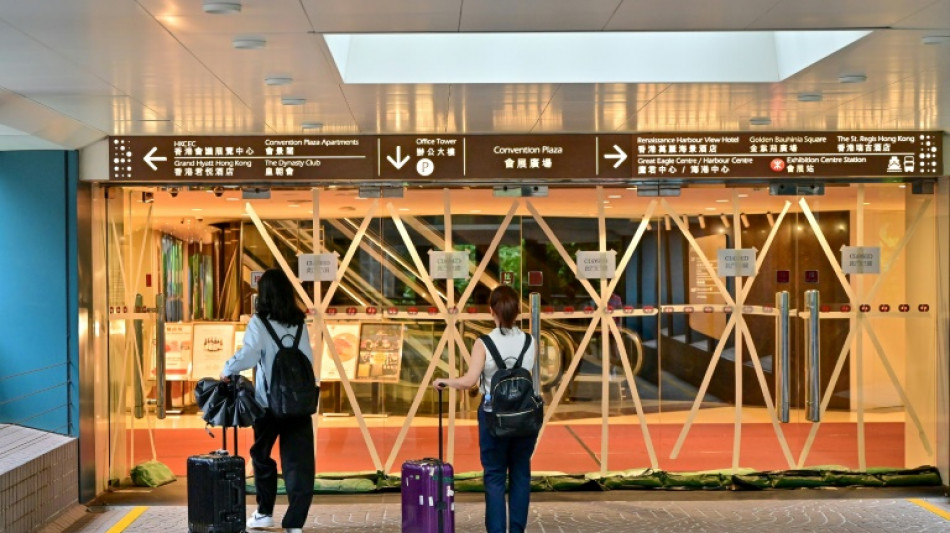
Super Typhoon Saola sweeps towards southern China megacities / Photo: Mladen ANTONOV - AFP

 Kenya's economy faces climate change risks: World Bank
 Hungary to shut nuclear plant as heatwave hits central Europe
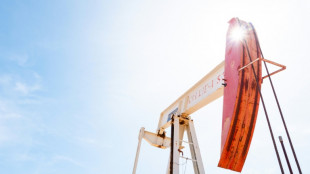 Tech-fuelled rally fizzles as oil prices rise

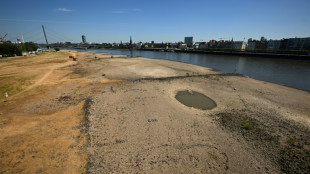 Alarm over climate-linked low level of German waterways

 Commerzbank agrees to talks with UniCredit after two-year standoff
 Fornaro Legal Releases Guidance to Help Businesses Maintain Clear Ownership Records During Growth

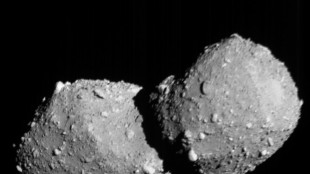 Japan probe made closest-ever asteroid flyby: space agency
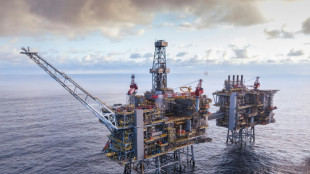 British oil giant BP aims to sell North Sea business
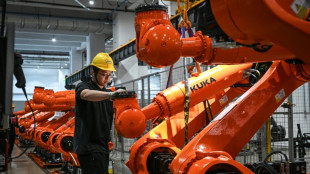 China factory activity slides as leaders seek spending boost
 Tech rebound fuels record-breaking rally in South Korean stocks
 Cables and cooling bring AI windfall to Indian suppliers
 Anthropic's models gained unauthorized 'real-world' access during testing

 Apple tops estimates in CEO Cook's final quarter, but shares fall

 Milei demands expulsion of foreigners expressing 'hate' against Argentina

 Italy's Po River valley on drought alert

 Prada profits pinched as growth hard to chase

 Stocks climb on earnings and rates, oil retreats

 US economic growth slows in second quarter, missing expectations

 Russia adds Telegram founder Durov to 'terrorist' blacklist

 Stocks diverge on earnings, as oil steadies

 Eurozone economy grows despite Middle East war

 Singapore group will develop 'most promising' Ebola vaccine

 Shell profit surges as Mideast war fuels oil prices

 Car maker Stellantis says back in profit in second quarter

 Samsung quarterly operating profit up 1,800% on AI boom

Tens of millions of people across southern China hunkered down Friday as Super Typhoon Saola swept towards the megacities of Hong Kong and Shenzhen, forcing the cancellations of hundreds of flights, shutting business and closing schools.
Packing sustained wind speeds at 210 kilometres (130 miles) per hour as it moved towards Hong Kong, Saola could be one of the most powerful typhoons to hit Guangdong if it makes landfall in the province.
By 11 am (0300 GMT), it was 180 km east-southeast of Hong Kong, where the stock market cancelled trading because of the T8 signal -- the city's third-highest typhoon warning level.
By late morning, neighbouring Shenzhen in Guangdong announced the suspension of work, businesses and market activity from 4 pm, while transportation will be halted in the evening.
"Apart from emergency response personnel and livelihood protection personnel, people are advised not to go out," said the emergency response department of Shenzhen, a city of 17.7 million.
"The city will open all shelters for the public to take refuge."
Authorities had already issued the highest typhoon warning for the storm, which Chinese state media said would make landfall "in the coastal areas stretching from Huilai to Hong Kong" on Friday afternoon or evening.
Across the mainland border in Hong Kong, the city's weather observatory warned that Saola could skirt within 100 kilometres south of the territory, causing a storm surge around Victoria Harbour.
"There may be serious flooding," it said, adding that the eastern coastal areas could see water levels reach the heights of 2018 when Typhoon Mangkhut hit Hong Kong and injured more than 300 people.
Streets were deserted as a drizzle blanketed Hong Kong Island, with wind and rain expected to pick up later.
Businesses and homes around Hong Kong duct-taped glass displays and windows, while office buildings near the harbour barricaded their entrances to prevent water damage.
Surfers took advantage of the high winds -- expected to reach 63 kilometres per hour -- and tackled the huge waves generated by the coming typhoon at a Hong Kong beach.
- Flights 'mostly normal' -
A direct hit on Hong Kong is rare, but the observatory said it would "assess the need to issue higher tropical cyclone warning signals" in the evening -- with the possibility of raising the threat level to the highest "T10".
Hong Kong's airport authority said the morning departing flights were "mostly normal" but from 2 pm, arriving and departing flights have "basically been cancelled".
"As of now, we have had 366 flights cancelled and 40 flights delayed... Thanks to the support of airlines and our various service providers, we could ensure that 600 flights today operated normally," Wing Yeung, general manager of Airport Authority terminal operations, told reporters.
Hong Kong's flagship airline Cathay Pacific had already cancelled all flights in and out of Hong Kong between 0600 GMT Friday and 0200 GMT Saturday.
Its subsidiary, budget airline HK Express, announced it was cancelling 70 Friday and Saturday flights in and out of Hong Kong.
Saola displaced thousands earlier this week as it passed the northern Philippines, but no direct casualties have been reported so far.
Southern China is frequently hit in summer and autumn by typhoons that form in the warm oceans east of the Philippines and then travel west.
While they can cause temporary disruption to cities like Hong Kong and Macau, fatalities have become much less common thanks to stronger building codes and better flood management systems.
burs-dhc/qan
U.Ndiaye--CPN