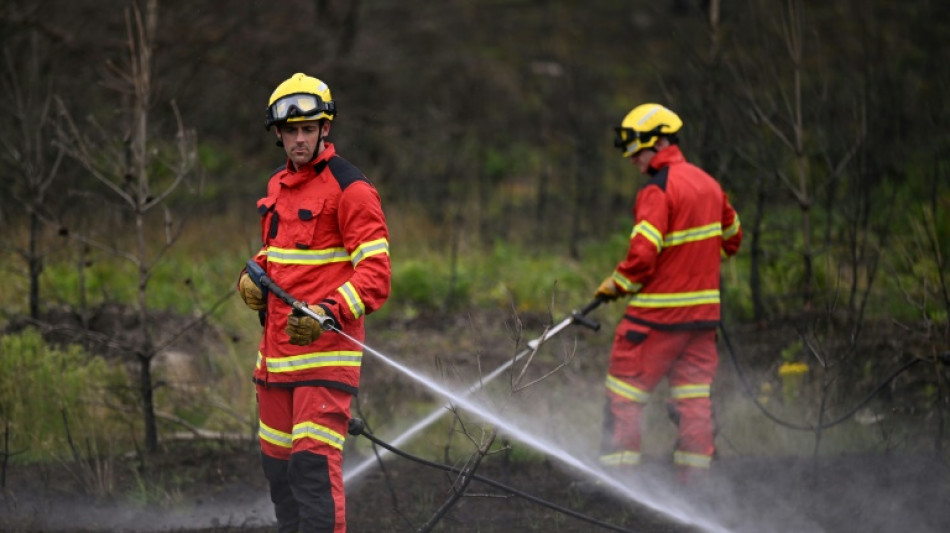
'The risk is real': UK fire service preps for wildfires / Photo: Daniel LEAL - AFP

 Kenya's economy faces climate change risks: World Bank
 Hungary to shut nuclear plant as heatwave hits central Europe

 Tech-fuelled rally fizzles as oil prices rise
 Alarm over climate-linked low level of German waterways

 Commerzbank agrees to talks with UniCredit after two-year standoff
 Fornaro Legal Releases Guidance to Help Businesses Maintain Clear Ownership Records During Growth

 Japan probe made closest-ever asteroid flyby: space agency
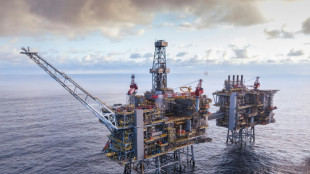 British oil giant BP aims to sell North Sea business

 China factory activity slides as leaders seek spending boost

 Tech rebound fuels record-breaking rally in South Korean stocks

 Cables and cooling bring AI windfall to Indian suppliers

 Anthropic's models gained unauthorized 'real-world' access during testing

 Apple tops estimates in CEO Cook's final quarter, but shares fall

 Milei demands expulsion of foreigners expressing 'hate' against Argentina

 Italy's Po River valley on drought alert

 Prada profits pinched as growth hard to chase

 Stocks climb on earnings and rates, oil retreats

 US economic growth slows in second quarter, missing expectations

 Russia adds Telegram founder Durov to 'terrorist' blacklist

 Stocks diverge on earnings, as oil steadies

 Eurozone economy grows despite Middle East war

 Singapore group will develop 'most promising' Ebola vaccine

 Shell profit surges as Mideast war fuels oil prices

 Car maker Stellantis says back in profit in second quarter

 Samsung quarterly operating profit up 1,800% on AI boom

At a military training site in Surrey, southeast England, a small team of firefighters blast the surrounding heathland with water as they practise tackling a different kind of enemy: climate change.
The county's fire service is investing in new equipment, training and tactics to respond to the threat of wildfires, which is growing as Britain's climate becomes drier and more unpredictable.
Last summer, as the country recorded droughts and its highest-ever temperature, it saw a spate of wildfires, including one of the largest in recent UK history in Surrey that stretched over 10 kilometres (6.2 miles).
Parts of the region are also seeing wildfires outside the typically hotter, drier summer months, according to the fire service.
However, Surrey is not unique within the UK, as wildfires increasingly occur across a country, despite its reputation for wet weather and rolling green hills.
"We're now treating wildfires as business as usual," said Surrey fire investigation officer Matt Oakley, as colleagues showed off their new kit at the site, which was scorched by a wildfire last year.
"And the conditions are going to get more extreme as the next two decades move on," he told AFP, blaming rising global temperatures.
- 'Ignition' potential -
Britain's Meteorological Office warned in a new study last month that the extreme heat experienced nationwide in 2022 would become more frequent and intense because of climate change.
With that comes the increased risk of wildfires in more places.
At the height of last year's heatwave, where temperatures passed 40 Celsius (104 Fahrenheit) for the first time, a grass fire on the edge of east London spread across 40 hectares (nearly 100 acres), damaging 17 houses as well as other structures and vehicles.
The level of destruction was unprecedented, with Britons normally associating wildfires with southern Europe, north America and Australia.
Oakley, who advises other British fire services on wildfire tactics, said the scenes in east London "could happen almost anywhere" that rural and urban environments meet.
"We've got a massively populated island... we've got a real interaction between natural habitat and people, and when that occurs the potential for ignition is always there," he warned.
After last year's wildfires, Surrey Fire and Rescue Service invested an additional £1 million ($1.26 million) into its wildfire prevention and response capabilities.
The force, which has four wildfire stations spread across the 648 square-mile (1,679 square-kilometre) county southwest of London, now holds regular wildfire drills at each.
It boasts four "Unimog" firefighting vehicles -- able to spray 1,500 litres of water per minute up to 60 metres away using a mounted hose -- and 25 Land Rover Defender trucks kitted out for wildfires.
Firefighters have new lightweight jackets, goggles and helmets tailored for challenging outdoor conditions.
The service has also developed dozens of "risk plans" for different parts of England's most wooded county, mapping out what is needed and where to mitigate the potential impact of wildfires.
- 'More to burn' -
This summer may have been largely a washout across much of Britain, reducing the immediate risk of outbreaks.
But Surrey firefighters view the recent heavy rainfall wearily, noting it has boosted the amount of vegetation.
"When it dries out, you've got more to burn," said David Nolan, an area commander.
"So it's not about if we don't have fire that we've got away with it, it's about understanding that we've just increased the risk for future years."
He said the county was now seeing grass blazes even in the depths of winter.
"We have fires that can happen at any time, so the risk is real 12 months of the year," Nolan added.
Surrey is also putting greater emphasis on prevention, visiting landowners year-round to emphasise the importance of integrating firebreaks into their landscapes.
Rural affairs officer Marli Holland tours schools and other community sites to educate the public about outdoor fire hazards.
At the military training site, the team deploy a thermal imaging camera to demonstrate the prolonged impact on the ground of a disposable barbeque.
The surface temperature was around 170 degrees Celsius (338 degrees Fahrenheit) even half an hour after the smouldering barbeque had been removed from the spot.
"If you can take a picnic rather than a disposal barbecue, (you) just eliminate that risk... don't have campfires and take all your litter home," Holland said. "That simple messaging can hopefully reduce the risk of wildfires."
D.Goldberg--CPN