Sahara desert dust coats swathes of Spain

 Lights out in Laos as electricity exports surge

 Steven Strogatz weighs AI mathematics advances and their consequences for researchers
 Anthropic boss calls for AI slowdown, Altman and Musk agree

 French IT giant Capgemini sells subsidiary after row over ICE links

 Quebec Brokerage Qubit Insurance Announces New Data on Coverage Shortfalls as Rebuilding Costs Rise

 Lady Gaga welcomes first child with fiance: US media

 Bhutan business bets on hazelnuts for farming future

 'Widow's Bay' and 'The Pitt' are favorites for Emmys night

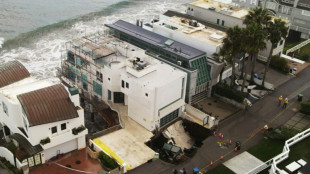
 Coastal erosion forces cancellation of California music festival

 Argentina's Dirty War rears its head in Venice film

 UK lawmakers throw out bill to legalise assisted dying

 US inflation steady in August, fueling Fed rate hike expectations

 New York marks 25th anniversary of 9/11 attacks

 Nepal flood reconstruction bill to be $4.78 bn: foreign ministry

 JUMO and Standard Bank launch Social Finance Framework to scale inclusive finance in Africa

 Doomsday tech: could AI really kill us all?

 French comedy show 'Call my agent' makes film comeback

 It's all coming back: Celine Dion fans gear up for Paris return

 Researchers eye AI revolution in natural disaster forecasts

 US braces for inflation report that may push Fed to hike rates

 Musk threatens legal action over documentary

 Latin America fact-check group asks Meta not to replace verification practice

 AI Risks to Enter 60–80% of Liability and Cyber Insurance Underwriting by 2028, ScienceSoft Predicts

 Tribal Launches Campfire, Letting Business and Technical Teams Build on Salesforce Together

 Stocks fall as fresh oil surge fans inflation fears

A mass of hot air from the Sahara desert dumped dust on large parts of Spain including Madrid on Tuesday, colouring the sky orange and coating cars and streets.
People used hoses to wash down the dust in the centre of the capital where a brown film covered windows in apartment buildings.
Haze created by the hot air is driven across the Mediterranean Sea by powerful winds called "la calima". The phenomenon is common in Spain, and especially the Canary Islands, off Morocco.
But the latest episode was "extraordinary", greatly reducing visibility over swathes of the country, said Ruben del Campo, spokesman for the state weather agency AEMET.
Cities from Granada in the south, Madrid in the centre and Leon in the northeast, were affected.
Dust was forecast to continue to arrive in "large quantities" during Tuesday and Wednesday and later reach up to the Netherlands and Germany, the spokesman said.
Air quality in Madrid and the nearby cities of Segovia and Avila was "extremely unfavourable", according to local authorities.
Storms in the Sahara create ground wind gusts which lift sand and dust into the air, the weather office said in a video posted on Twitter.
The smaller particles are suspended in the air due to the temperature difference between the ground and the hot air above. The wind then blows the particles north.
D.Goldberg--CPN