'As long as we have AC': Phoenix heat shows gap between US rich, poor / Photo: Patrick T. Fallon - AFP

 iPhone 18預購後出現可疑扣款 四間銀行調查未授權交易

 Galaxy Tab S12系列效果圖曝光 Ultra擬配雙鏡頭及瀏海螢幕

 Altman tells Fortune OpenAI will not go public in 2026

 ستاندرد آند بورز تثبت تصنيف السعودية عند A+

 Steven Strogatz weighs AI mathematics advances and their consequences for researchers

 Venezuelans outside Caracas say capital not sharing blackout burden

 Anthropic boss calls for slowing pace of AI development

 BRICS nations urge 'maximum restraint' in Middle East war

 Europe eyes battle over 'pervert' AI glasses

 Children in flood-hit Nepal grapple with loss, cling to hope

 Venice Film Festival: A look back on the highlights

 DR Congo school fire stampede death toll rises to 26: UNICEF

 Dance Fitness Tempe Announces Expansion of Accessible Digital Movement Programs

 Europe saw record summer air traffic despite Mideast war: Eurocontrol

 Relatives of 9/11 victims hit out at Saudi Arabia -- and US leaders

 Relative of 9/11 victim unleashes searing attack on Saudi Arabia

 Czech antitrust office lets Turkey's Pegasus Airlines buy Smartwings

 Investors on edge as energy costs, surging bond yields roil markets

 UK lawmakers to vote again on failed assisted dying bill

 Yemen's Houthis complete takeover of Bab al-Mandab area: govt official to AFP

 Fast-pace dance takes I.Coast's working-class streets by storm

 Fans celebrate Celine Dion's Paris return with giant karaoke

 Appreciation, anger await as Trump heads to Irish golf resort

 Putin arrives in India for BRICS summit coloured by wars

 Carney says in touch with Trump, Canada ready for 'fair' trade deal

Melanie Floyd took her kids to the zoo in Phoenix in the morning, when temperatures in the heat wave roasting the city and much of the US southwest were still bearable.
Standing before a turtle exhibit, she downplayed this extreme weather event in a world grappling with climate change.
"As long as we have AC and as long as everyone is making smart choices," this stay-at-home mother aged 32 told AFP, "staying hydrated, going in the shade, staying cool, not overexerting themselves, I think it's tolerable."
At her home it is, indeed, nice and cool. She keeps the air conditioning between 75 and 78 degrees Fahrenheit (23 and 26 degrees Celsius) so she can look after her kids, aged two and six, comfortably as they play with coloring books and crafts.
Outside, day after day for more than three weeks, the temperature in Phoenix is surpassing a hard-to-fathom 110F.
The heatwave affecting much of the southwest and southern United States -- including the record temperatures in Phoenix -- is igniting debate on how fast global warming is moving.
For Floyd, this particular weather event is no big deal.
"You have to fluctuate as the weather fluctuates, so you have to be flexible with it," Floyd said.
In this desert city many people that spoke to AFP expressed similar views about the rising frequency of brutally dangerous heat as global warming caused by human activity grinds on: One must learn to live with it.
- Living without AC -
For many of them life is a series of mad dashes from offices to restaurants to shops, all with air conditioning cranked up good and frosty.
In the city center and well-to-do suburbs, people do not think twice about leaving their car running while they get out to do an errand, so as to keep it cool for when they come back.
But in less wealthy areas, heat like this is another thing altogether.
"If the temperatures go on like this, many people will not be able to cope," said Rosalia Licea, 37, who is raising five kids on her own.
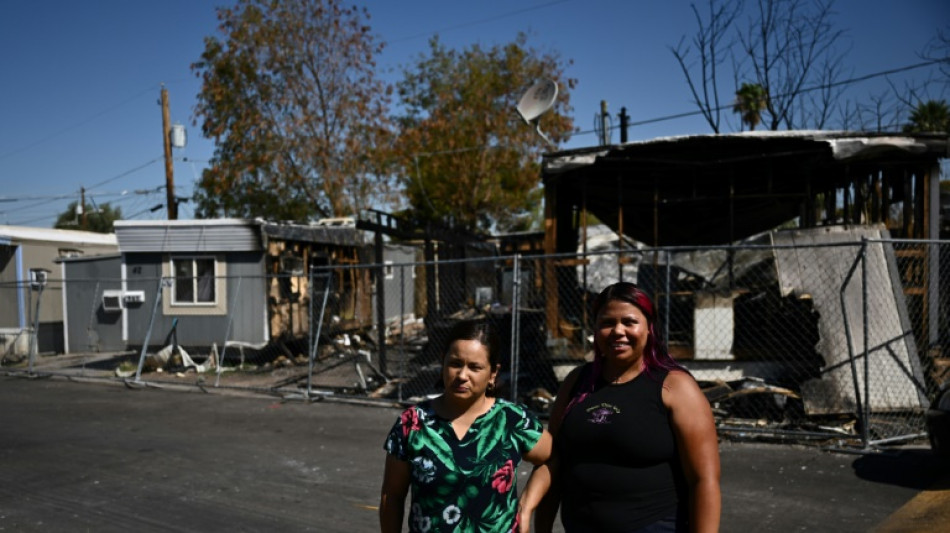
She lives in a mobile home park where most of the trailers are from the 1950s. Early in this heat wave her air conditioning broke down.
For two days the temperature inside their mobile home hit 97F. The whole family had to take refuge in the room of the eldest child, which had a window AC unit. One of the smaller kids started having headaches.
Licea, who hails from Mexico, works several low-paying jobs to make ends meet. She does not have the $2,000 it would cost to buy a new AC system.
So she came up with a makeshift solution: spend $800 to fix the broken one.
"I had no choice, what with my kids," she said. "It was the priority, more than buying groceries or paying my rent."
Even with the new motor in the old AC unit, one of the air conduits is broken so the cold does not reach her living room. That is something else she will have to pay to have fixed.
- AC going full blast -
Licea tried but failed to qualify for aid offered by the city or some utility companies for people to upgrade their air conditioning units.
A study in 2022 by Arizona State University found that while mobile homes make up five percent of all housing in Maricopa County, which includes Phoenix and its suburbs, they account for 30 percent of indoor heat-related deaths in the city.
"It is easy to say 'we can adapt' when you have access to everything," Licea said. "It is different for us."
A fire broke out some days ago at her mobile home park, where the residences are hooked up directly to electrical pylons through shoddy connections.
One mobile home was destroyed. The fire is believed to have started because of an electrical overload, with washing machines, dryers, fridges and full-blast air conditioning all operating at once.
After 19 years in Arizona, Licea lives in fear of an electrical short circuit. So she mainly prepares salads for meals and tries to avoid turning on the lights to keep her electricity consumption, and the temperature, as low as possible.
"If I could move to a state that is not so hot I would do it," Licea said.
Y.Tengku--CPN