Coin Press - 30 Days to Save the Economy?

NYSE - LSE
CMSC 0.29% 22.085 $
RYCEF 0% 19.25 $
GSK 0.59% 52.78 $
VOD 11.14% 14.72 $
NGG 0.33% 82.59 $
RBGPF 8.69% 67.35 $
BCE 0.28% 21.38 $
AZN -4.01% 171.61 $
RIO 1.16% 90.54 $
BTI -0.03% 60.02 $
RELX 1.14% 32.44 $
CMSD 0.31% 22.38 $
BCC 5.02% 76.06 $
BP 1.66% 39.2 $
JRI -0.15% 13.01 $

30 Days to Save the Economy?


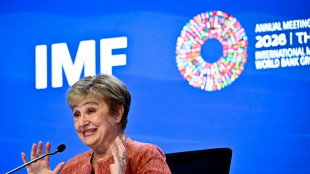
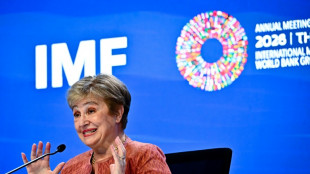
The United States finds itself once again at the crossroads of war and economic stability. In late February 2026 the White House authorised joint strikes with Israel on Iranian targets, assassinating the country’s supreme leader and damaging military and civilian infrastructure. Iran responded by shutting the Strait of Hormuz, the chokepoint through which roughly a fifth of the world’s crude oil travels. In the weeks that followed, global benchmark oil prices surged past $100 per barrel and gasoline in the United States climbed towards $4 per gallon. Economists fear that a prolonged campaign could inflict a painful bout of stagflation – the toxic combination of soaring prices and stagnating growth last seen in the 1970s.

President Donald Trump initially suggested the military campaign would be over within four to five weeks. Those four weeks will expire in late March. Investors and households are watching anxiously to see whether the president will de‑escalate before the economic damage becomes entrenched. The question is not merely whether the conflict is winnable but whether the United States can afford an extended confrontation while its labour market is weakening and inflation remains stubbornly above the Federal Reserve’s target.

A sharp energy price shock
The closure of the Strait of Hormuz has squeezed global oil supplies, sending Brent crude above $100 a barrel and threatening to push it to $150 if the conflict drags on. The International Energy Agency described the disruption as the largest in the history of the global oil market. Tanker operators have hesitated to sail through the chokepoint despite offers of naval escorts, and insurers have demanded higher premiums. The prospect of drones and missile attacks on oil tankers and refineries in Gulf states has added to the sense of peril.

Higher oil prices are feeding directly into consumer inflation. Petrol prices in the United States, which averaged roughly $3 per gallon before the conflict, are poised to reach $4. Aviation fuel and diesel have risen even faster, increasing freight and airline ticket costs. Natural gas prices, which often track oil, are also climbing. Though the United States now produces more oil and gas than it consumes, it remains integrated into global markets: domestic producers are selling at world prices, and any disruption to global supply pushes up domestic costs. Analysts note that every 5 % rise in oil prices adds roughly one‑tenth of a percentage point to inflation.

Weakening labour market
The energy shock has arrived when the jobs market is showing signs of fatigue. Employers unexpectedly cut 92,000 jobs in February, the first negative print since the pandemic, and the unemployment rate has ticked up to 4.4 %. Manufacturers and retailers cite weak demand and higher borrowing costs as reasons for redundancies. Construction activity has slowed as high mortgage rates deter new buyers. Consumer confidence has fallen, and people have begun to trim discretionary spending.

A sluggish jobs market means households are less able to absorb higher living costs. Rising petrol and grocery prices, coupled with stagnant wages, erode real income. Economists warn that if the conflict persists into April the combination of soft employment and high inflation could trigger a classic wage‑price spiral: workers demand higher pay to offset rising prices, firms raise prices to cover wage bills, and inflation expectations become entrenched. In such a scenario the Federal Reserve would be caught between fighting inflation and supporting employment.

Persistent inflation and policy dilemma
Even before the Iran war, core inflation was running around 3 %, above the Federal Reserve’s 2 % target. Shelter costs and services inflation proved sticky despite cooling goods prices. Policymakers were divided over whether to hold rates steady or cut them to support the labour market. The energy shock complicates this calculus. A spike in oil and gas prices boosts headline inflation and risks lifting core inflation through higher transportation and production costs. Yet raising interest rates to curb inflation could further weaken growth and employment.

Analysts at Deutsche Bank argue that the longer oil stays above $100 per barrel, the greater the risk of a sustained stagflationary shock. Simulations by Oxford Economics suggest that if Brent crude averages $140 per barrel for two months, U.S. GDP growth would stall and unemployment would rise as businesses cut back. Even a milder scenario, with oil averaging $100 per barrel, could shave tenths of a percentage point from global growth. Such outcomes would mirror the 1970s, when oil embargoes triggered price spikes and recession.

Financial markets on edge
Equity markets have been whiplashed by war headlines. Shares sank when the conflict began but recovered after the president hinted that the war was “very far ahead” of his four‑week timetable. Investors nonetheless remain nervous: home‑building and banking stocks have underperformed, while defence and energy companies have rallied. Rising energy costs have pushed bond yields higher, reflecting expectations of persistent inflation. Volatility indices have spiked, and safe‑haven assets such as gold have attracted inflows. If the war drags on, corporate earnings could be squeezed by higher costs and softer demand, deepening the market correction.

Why thirty days matters
When President Trump authorised strikes on Iran, he reassured voters that the campaign would be brief. With mid‑term elections looming, his advisers understand that spiralling petrol prices and job losses could erode public support. The political significance of the thirty‑day marker lies in signalling whether the administration can deliver a quick victory or becomes bogged down in an open‑ended conflict. Should hostilities continue into April, markets may conclude that the president is prioritising geopolitical goals over domestic prosperity.

The window is also critical for the Federal Reserve. Central bankers meet in early April to decide whether to adjust interest rates. A ceasefire before then would allow them to look through the temporary oil shock and focus on the labour market. Prolonged fighting, by contrast, could force them to choose between raising rates to contain inflation or cutting them to support growth – a decision reminiscent of the dilemmas faced during the oil crises of the 1970s.

Political and public reactions
Public opinion is deeply polarised. Supporters of the war argue that Iran’s nuclear ambitions and support for militant groups justify decisive action. Critics counter that the attack lacked congressional approval, violated international law, and risks drawing the United States into a protracted quagmire. Many citizens question the competence of the country’s leadership, suggesting that mismanagement at home and abroad has created a climate of perpetual crisis.

Observers warn that war spending exacerbates fiscal strains. The national debt has climbed above $36 trillion, and financing a foreign campaign through borrowing could intensify pressure on bond markets and the dollar. Savers worry that inflation will erode their savings, while borrowers fear higher interest rates. Others see an opportunity to accelerate the transition to renewable energy, arguing that dependence on fossil fuels from the Middle East leaves the economy vulnerable to geopolitical shocks. These voices call for investments in electric vehicles, green infrastructure and domestic energy independence.

Paths forward
Ending the war within the next thirty days could avert the worst economic outcomes. Diplomats and military strategists must work urgently towards a ceasefire that secures the Strait of Hormuz and ends drone and missile attacks. In parallel, the administration could pursue the following measures:

-  Release strategic reserves: Drawing from the Strategic Petroleum Reserve can provide temporary relief to fuel markets, signalling that the government will act to stabilise prices.

-  Targeted fiscal support: Temporary tax credits or subsidies for low‑income households can cushion the blow of higher energy costs without stoking inflationary pressures. Funding should be offset elsewhere to avoid widening the deficit.

-  Investment in resilience: Accelerating investment in renewable energy, domestic oil and gas infrastructure and electricity grids will reduce future vulnerability to external shocks.

-  Prudent monetary policy: The Federal Reserve should remain data‑dependent, considering both inflation and employment. A premature rate hike could choke off growth, while a hasty cut could stoke inflation expectations.

-  Rebuild alliances: Working with European and Asian partners to secure alternative energy routes and mediate an end to hostilities will distribute the burden of peacekeeping and restore confidence.

And the Conclusion?
The war with Iran has already delivered a stark warning: geopolitical adventures have real economic consequences. A brief campaign may have limited impact, but a drawn‑out conflict threatens to push the United States towards stagflation. Rising oil prices, job losses, and policy dilemmas are not abstract risks but daily realities for families and businesses. With the four‑week timetable closing, the president faces a decision that will define both his legacy and the nation’s economic future. Ending the war quickly, stabilising energy markets and reinvigorating domestic investment are essential steps to avoid repeating the mistakes of the 1970s and to preserve prosperity in the face of uncertainty.


Featured


Long live Ukraine - Хай живе Україна - Да здравствует Украина

Es lebe die Ukraine - Да здравствует Украина - Long live Ukraine - Хай живе Україна - Nech žije Ukrajina - Länge leve Ukraina - תחי אוקראינה - Lang leve Oekraïne - Да живее Украйна - Elagu Ukraina - Kauan eläköön Ukraina - Vive l'Ukraine - Ζήτω η Ουκρανία - 乌克兰万岁 - Viva Ucrania - Ať žije Ukrajina - Çok yaşa Ukrayna - Viva a Ucrânia - Trăiască Ucraina - ウクライナ万歳 - Tegyvuoja Ukraina - Lai dzīvo Ukraina - Viva l'Ucraina - Hidup Ukraina - تحيا أوكرانيا - Vivat Ucraina - ขอให้ยูเครนจงเจริญ - Ucraina muôn năm - ژوندی دی وی اوکراین - Yashasin Ukraina - Озак яшә Украина - Živjela Ukrajina - 우크라이나 만세 - Mabuhay ang Ukraine - Lenge leve Ukraina - Nyob ntev Ukraine - Да живее Украина - გაუმარჯოს უკრაინას - Hidup Ukraine - Vivu Ukrainio - Længe leve Ukraine - Živjela Ukrajina - Жыве Украіна - Yaşasın Ukrayna - Lengi lifi Úkraína - Lank lewe die Oekraïne

Stargate project, Trump and the AI war...

In a dramatic return to the global political stage, former President Donald J. Trump, as the current 47th President of the United States of America, has unveiled his latest initiative, the so-called ‘Stargate Project,’ in a bid to cement the United States’ dominance in artificial intelligence and outpace China’s meteoric rise in the field. The newly announced programme, cloaked in patriotic rhetoric and ambitious targets, is already stirring intense debate over the future of technological competition between the world’s two largest economies.According to preliminary statements from Trump’s team, the Stargate Project will consolidate the efforts of leading American tech conglomerates, defence contractors, and research universities under a centralised framework. The former president, who has long championed American exceptionalism, claims this approach will provide the United States with a decisive advantage, enabling rapid breakthroughs in cutting-edge AI applications ranging from military strategy to commercial innovation.“America must remain the global leader in technology—no ifs, no buts,” Trump declared at a recent press conference. “China has been trying to surpass us in AI, but with this new project, we will make sure the future remains ours.”Details regarding funding and governance remain scarce, but early indications suggest the initiative will rely heavily on public-private partnerships, tax incentives for research and development, and collaboration with high-profile venture capital firms. Skeptics, however, warn that the endeavour could fan the flames of an increasingly militarised AI race, raising ethical concerns about surveillance, automation of warfare, and data privacy. Critics also question whether the initiative can deliver on its lofty promises, especially in the face of existing economic and geopolitical pressures.Yet for its supporters, the Stargate Project serves as a rallying cry for renewed American leadership and an antidote to worries over China’s technological ascendancy. Proponents argue that accelerating AI research is paramount if the United States wishes to preserve not just military supremacy, but also the economic and cultural influence that has typified its global role for decades.Whether this bold project will succeed—or if it will devolve into a symbolic gesture—remains to be seen. What is certain, however, is that the Stargate Project has already reignited debate about how best to safeguard America’s strategic future and maintain the balance of power in the fast-evolving arena of artificial intelligence.

Latin America’s age trap

Latin America has spent generations thinking of demography as a problem of abundance. Governments built schools for swelling classes, cities spread to absorb millions of new residents, and economists worried about whether jobs, housing and food production could keep pace with a rapidly expanding population. That assumption now belongs to the past. The region is entering an era in which there will be fewer children, a slower-growing workforce and many more older people, and the transition is unfolding far faster than most political systems are prepared to admit.The shift is already measurable. Fertility in Latin America has fallen to about 1.8 children per woman and has remained below the replacement level of 2.1 since 2015. The Caribbean is lower still, at roughly 1.5. In 2024, Latin America and the Caribbean had about 663 million inhabitants, nearly 26 million fewer than projections made at the beginning of the century had anticipated. The population is now expected to peak at about 730 million in 2053 before beginning a long decline.A peak in the middle of the century does not sound like an immediate emergency. That is precisely why the risk is easy to underestimate. Demographic crises rarely arrive as a single shock. They emerge through thousands of local changes: maternity wards with fewer patients, primary schools with empty desks, small towns losing young adults, companies unable to recruit skilled staff, pension systems collecting too little and families trying to care for elderly relatives with fewer hands available.Latin America does not yet have the lowest fertility in the world, and it is not yet the oldest region. Parts of East Asia have much lower birth rates, while Europe already has a substantially larger elderly population. The reason Latin America’s predicament could prove harsher is the sequence in which the change is occurring. The region is ageing before it has become broadly prosperous, before much of its workforce has entered formal employment and before durable welfare states have been built. Europe grew old after decades of industrialisation, capital accumulation and the expansion of tax-funded social protection. Several East Asian economies face extreme demographic contraction, but many entered it with high savings, advanced infrastructure, strong education systems and highly productive firms. Latin America is approaching the same pressure with weak productivity growth, deeply unequal access to public services, fragile fiscal positions and labour markets in which informality remains normal rather than exceptional.The speed of the transformation leaves little room for complacency. In 1950, about 41 per cent of the region’s population was under the age of 15. By 2024, that share had fallen to 22.5 per cent. In the same year, roughly 65 million people were aged 65 or older, representing 9.9 per cent of the population. By 2050, that group is projected to reach about 138 million and almost 19 per cent of the total. The median age, just 18 in 1950, reached 31 in 2024 and is expected to approach 40 by mid-century.This is not simply a story about people refusing to have children. Much of the fertility decline reflects social progress. Infant mortality has fallen, contraception has become more accessible, women have gained education and economic independence, and adolescent pregnancy has declined sharply. Families no longer need many births to ensure that several children survive to adulthood. Women are also more able to decide whether and when motherhood fits their lives.The trouble is that institutions have not adapted to the freedom and expectations of modern adulthood. In many cities, secure housing is expensive, formal jobs are scarce, commuting is exhausting and childcare is limited. Parenthood can carry a severe career penalty, especially for women, while domestic and caring responsibilities remain distributed unequally. Young adults often spend years moving between temporary work, informal employment and dependence on relatives before they feel able to form a household.Low fertility therefore reflects both choice and constraint. Some people do not want children. Others want fewer than previous generations. Many would like to become parents but postpone the decision because the economic and practical conditions never appear sufficiently stable. The postponement of first births explains part of the fall, but not all of it. Completed family size is also declining, meaning that later births are not fully compensating for those deferred in early adulthood.Chile offers one of the clearest warnings. Its fertility rate fell to about 1.03 children per woman in 2024, below Japan’s level and dramatically lower than it had been only a decade earlier. Uruguay now records far fewer births than deaths. Cuba is losing population through the combined effects of low fertility, ageing and large-scale emigration. Brazil and Mexico still have enormous populations, but their national size conceals shrinking school cohorts and ageing communities across many states and municipalities. Central America remains younger on average, yet fertility there is falling rapidly as well.The economic consequences will not be determined by headcounts alone. A smaller workforce can support a larger retired population if each worker becomes more productive, if more women enter well-paid employment, if healthy older people remain active and if technology raises output. Demographic decline is not an automatic sentence to recession. It becomes dangerous when productivity stagnates and institutions fail to mobilise the people who are already present.Latin America enters this test with a serious structural weakness. Nearly 47 per cent of employed people were working informally in the first half of 2025. Among young workers, the share was about 56 per cent. Informal work often means low and unstable earnings, limited training, weak legal protection and irregular or nonexistent pension contributions. It also narrows the tax base from which governments must finance health care, pensions and long-term support. For decades, a relatively large working-age population offered the region a demographic dividend. There were more potential workers in relation to children and older dependants, creating an opportunity for faster growth and higher savings. Yet a dividend is only an opportunity, not a guarantee. Much of it was consumed during years of modest investment, unequal education and poor productivity. The favourable age structure is now beginning to close before the region has completed the economic transformation it was supposed to finance.The labour force will continue to grow for some time at regional level, but more slowly and with an older profile. Young cohorts entering employment will become smaller. Employers will face recruitment problems in areas that require technical skills, health professionals, teachers and care workers. Rural districts and smaller cities may lose working-age residents even while major metropolitan areas remain crowded. National averages will therefore hide acute local decline.Ageing will also expose the weaknesses of pension systems designed around continuous formal employment. The basic arithmetic is unforgiving. More people will draw benefits for longer periods, while growth in the number of contributors will slow. Yet raising contribution rates, reducing benefits or delaying retirement is politically difficult in societies where many people already receive inadequate support and where physically demanding work makes longer careers unrealistic.Pension coverage has expanded, including through non-contributory schemes, but adequacy remains a major problem. Around 43 per cent of older people receive pension income that is insufficient to meet minimum consumption needs. Roughly a quarter of people aged 65 and over were still participating in the labour market in 2024. For some, work in later life is a welcome source of purpose and income. For many others, it is not active ageing but economic necessity.Health systems face a related challenge. Longer lives are a major achievement, but longevity does not automatically mean more years in good health. Diabetes, cardiovascular disease, cancer, dementia and disability will demand sustained treatment, rehabilitation and assistance with daily life. Systems that remain divided between public programmes, employment-based insurance and private provision often deliver fragmented care precisely when older patients need continuity.The most immediate strain may appear not in hospitals or treasury accounts but inside homes. Long-term care remains limited or absent in much of the region, so families provide most assistance to elderly and disabled relatives. Women perform a disproportionate share of this work, often reducing paid hours or leaving employment altogether. That response becomes less viable as families become smaller, adult children migrate and more women participate in the labour market.The region’s need for professional long-term care workers could nearly triple by 2050. Without planning, the result will be a severe shortage of trained staff, a larger burden on unpaid carers and widening inequality between households that can purchase private support and those that cannot. A demographic model built on the assumption that daughters and daughters-in-law will provide unlimited free care is already breaking down.Migration complicates the picture. Latin America is simultaneously a region of emigration, immigration and large movements within its own borders. The departure of young adults can accelerate ageing in countries and communities of origin, leaving older relatives behind and draining scarce professional skills. Remittances may protect household incomes, but money sent from abroad cannot provide daily physical care.For receiving countries, migration can slow workforce decline and bring younger taxpayers into the system. It is not, however, a demographic switch that governments can simply turn on. Migrants need legal status, housing, language support where relevant, recognition of qualifications and access to formal employment. Poor integration can reproduce the same informality that already weakens public finances. Migration can redistribute population across the region, but it cannot reverse low fertility everywhere at once.Political incentives may make preparation harder. Older voters will form a growing share of electorates and will understandably defend pensions, health services and financial security. Younger households will demand affordable housing, education, childcare and better employment. Governments with limited revenue may present these needs as a competition between generations. That would be a costly mistake. Families span generations, and underinvestment in children today produces less productive workers and weaker pension finances tomorrow. The decline in the number of children also creates an opportunity. Smaller cohorts make it possible to spend more effectively on each child, improve early development, repair weak schools and expand technical education. A country with fewer young people cannot afford to waste their potential through poor teaching, malnutrition, violence or exclusion from employment. Human capital must replace population growth as the main engine of expansion.Policy should begin by abandoning the illusion that a cash payment for each birth can restore the family patterns of the twentieth century. One-off bonuses may change the timing of some births, but they do not resolve insecure work, expensive housing, inadequate childcare or the unequal division of care. Coercive or moralising pronatalism is even more dangerous. It treats women’s autonomy as the problem while ignoring the economic conditions that make desired parenthood difficult.A more credible family policy would make having children compatible with a modern life. That means reliable childcare, paid leave for both mothers and fathers, protection against workplace discrimination, predictable hours, affordable housing and reproductive health services. It also means reducing the burden of care that falls on women. Supporting families is not the same as demanding larger families. The objective should be to close the gap between the number of children people want and the number they believe they can responsibly raise.The second priority is productivity and formalisation. Governments need tax and social insurance systems that make formal employment easier for small firms and portable for workers who change jobs. Better technical education, digital infrastructure, access to finance and competition can help productive businesses expand. Higher female employment would soften workforce decline, but only if jobs provide sufficient pay and if childcare and eldercare are available.Pension reform must combine financial sustainability with social legitimacy. A universal floor can protect older people from poverty, while contributory benefits should reward formal work without excluding those whose careers were interrupted by unemployment, care or informality. Retirement ages may need gradual adjustment as healthy life expectancy rises, but rules should recognise differences in health, occupation and lifetime income. A construction worker and an office professional cannot be treated as though ageing affects them in the same way.Health policy must move towards prevention, primary care and the management of chronic disease long before old age. Long-term care should be treated as essential social infrastructure rather than a private family matter. Training carers, setting quality standards, supporting home and community services and giving respite to family members would create employment while allowing more women to remain in paid work.Older workers will also need a different labour market. Lifelong learning, flexible hours, anti-discrimination rules and adapted workplaces can help people remain productive voluntarily. The purpose is not to compel everyone to work indefinitely. It is to remove barriers that force capable people out while protecting those whose health or occupations make continued employment unreasonable.Latin America still has time, but not much. The region remains younger than Europe, and its total labour force has not yet begun a broad decline. That creates a final window in which reforms can be introduced before fiscal pressure intensifies. Waiting until the 2040s would mean attempting to build care systems, repair pensions and raise productivity after the ratio of workers to older dependants has already deteriorated sharply. The demographic crisis could become the worst of all not because Latin America will necessarily have the fewest babies or the oldest citizens, but because it risks combining rapid ageing with unfinished development. The decisive variable is no longer fertility alone. It is institutional readiness.A smaller and older population need not be poorer, lonelier or less dynamic. It can be healthier, more productive and better educated. Reaching that outcome requires governments to treat demography as a central economic issue rather than a distant social trend. Latin America does not need to force people to have children. It needs to make ordinary adulthood viable, parenthood compatible with aspiration and old age secure. Demography is not destiny, but prolonged political delay can make it feel like one.