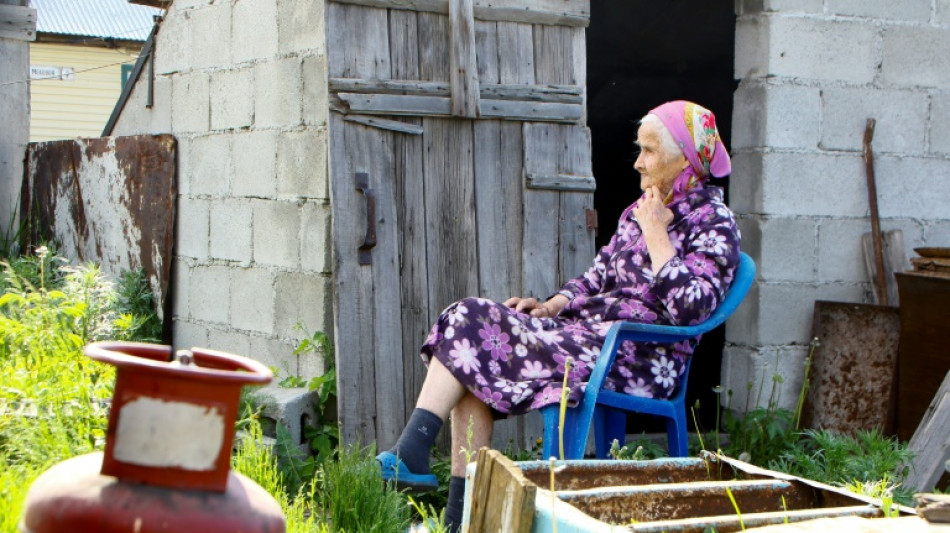
In gas-rich Kazakhstan, many rely on lethal cylinders / Photo: Ruslan PRYANIKOV - AFP

 US hosts G20 'energy abundance' talks amid Iran war shock

 Migrant workers flock to Indian Kashmir despite militant threats
 Canada's Carney seeks closer Europe ties to counter hostile US

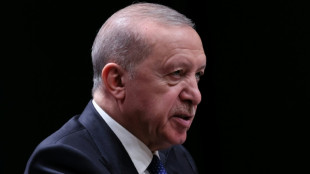 Dozens arrested in major anti-LGBTQ raids in Turkey

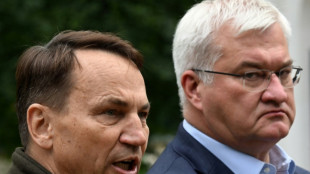 Poland, Ukraine slam Russian strikes near border as 'escalation'

 iPhone 18預購後出現可疑扣款 四間銀行調查未授權交易

 Galaxy Tab S12系列效果圖曝光 Ultra擬配雙鏡頭及瀏海螢幕

 Altman tells Fortune OpenAI will not go public in 2026

 الأرصاد السعودية تتوقع سيولاً وأمطاراً رعدية في خمس مناطق

 Anthropic details Claude misuse as US targets major illicit online marketplace

 Venezuelans outside Caracas say capital not sharing blackout burden

 Anthropic boss calls for slowing pace of AI development

 BRICS nations urge 'maximum restraint' in Middle East war

 Europe eyes battle over 'pervert' AI glasses

 Children in flood-hit Nepal grapple with loss, cling to hope

 Venice Film Festival: A look back on the highlights

 DR Congo school fire stampede death toll rises to 26: UNICEF

 Dance Fitness Tempe Announces Expansion of Accessible Digital Movement Programs

 Europe saw record summer air traffic despite Mideast war: Eurocontrol

 Relatives of 9/11 victims hit out at Saudi Arabia -- and US leaders

 Relative of 9/11 victim unleashes searing attack on Saudi Arabia

 Czech antitrust office lets Turkey's Pegasus Airlines buy Smartwings

 Investors on edge as energy costs, surging bond yields roil markets

 UK lawmakers to vote again on failed assisted dying bill

 Yemen's Houthis complete takeover of Bab al-Mandab area: govt official to AFP

The last thing Zarina Giyassova recalls before she lost consciousness in a deadly gas explosion was people "burning and screaming" in the inferno unleashed by the blast.
Giyassova suffered burns to 65 percent of her body when a gas cylinder blast ripped through a building in the northern Kazakhstan town of Shchuchinsk this year, killing 12 people.
The tragedy has reignited a debate on the domestic energy difficulties that plague the former Soviet republic.
Despite sitting on vast natural gas reserves, Kazakhstan's distribution network is fragmented, forcing a third of its 20 million people to rely on gas cylinders -- similar to the one that exploded in Shchuchinsk.
The charred shell that remained of the restaurant where Giyassova had been working until the accident in February has now been covered with metal plates and sealed.
"I woke up in the hospital. I was like a mummy, completely bandaged from head to toe. It's indescribable, the pain was unbearable," Giyassova told AFP.
"I don't know if I'll be able to move my hands or not, when I'll be able to go back to work, when I'll be able to live normally again," the 32-year-old single mother of two said.
- 'Certain degree of risk' -
Hundreds of people have been injured and killed in gas cylinder accidents in Kazakhstan in recent years.
Yaroslav Voronov, 34, a salesman in an appliance store, acknowledged that the cylinders were "not very safe."
"Everyone is scared, but there is really no alternative. We don't have a centralised gas network," he said.
The often outdated equipment increases the risk of explosion.
Around 350,000 Soviet-era cylinders, manufactured in the 1970s and 1980s, were still in circulation at the end of 2024, according to the authorities.
After the Shchuchinsk blast, the government ordered a review of the use of gas cylinders -- but without elaborating on details.
Stocking up at a gas station, Voronov said he, like millions of Kazakhs, had to "accept a certain degree of risk".
He weighed his gas cylinder on a scale -- the "made in USSR" inscription betraying its age -- before checking technical parameters and signing liability documents accepting full and exclusive responsibility in the case of an accident.
Refuelling itself is a potentially perilous manoeuvre.
Two weeks after AFP met Voronov, the gas station nearly exploded after a leak, according to Kazakh rescuers who managed to fix it in time.
- 'Very expensive' -
The Kazakh government, backed by its Russian ally which already supplies gas, has promised to build gas pipelines to achieve 65 percent connectivity by 2030.
On a visit to Astana in May, President Vladimir Putin announced that the Russia's state-owned energy giant Gazprom planned "to optimise and expand the national gas transport infrastructure to guarantee a stable energy supply" to Kazakhstan.
But the immense geography and low population density of Kazakstan makes such projects complicated and economically uncertain.
Experts also highlight geopolitical uncertainties, as the interests of Russia and China -- both neighbours of Kazakhstan -- may diverge.
Kazakh President Kassym-Jomart Tokayev -- who was silent after the Shchuchinsk explosion -- has also criticised the "intolerable slowness" of bringing new gas fields into service.
Wary of the dangers, some residents of Shchuchinsk have switched to electricity for their power needs.
Erik Bekentaev said it was a "safe and more practical" alternative.
"We haven't used gas for a year now. It was a hassle: you have to take the car to the gas station and then go up to the fourth floor," Bekentaev explained, standing next to his induction hob.
But he is in the minority.
Kazakhstan's electricity grid is also weak -- underfunded and 76-percent worn out according to the authorities, it cannot cope with high voltage.
Power line surges often cause fires.
"It is very difficult to switch entirely to electricity, it will be expensive, very expensive," Voronov said.
P.Kolisnyk--CPN