Coin Press - Embraer’s 950% surge

NYSE - LSE
RBGPF 0% 69.99 $
RYCEF 2.1% 20 $
CMSC 0.79% 20.643 $
RIO 2.48% 98.23 $
GSK 1.23% 50.915 $
BP 0.65% 45.675 $
AZN 1.59% 165.525 $
NGG 1.88% 77.485 $
BTI -0.31% 55.919 $
BCE -0.38% 22.415 $
RELX 0.48% 34.435 $
VOD 0.46% 17.54 $
CMSD 0.59% 20.411 $
BCC -0.03% 75.29 $
JRI 1.37% 11.66 $

Embraer’s 950% surge


Embraer has rewritten the aerospace playbook. From a once-overlooked regional specialist, the Brazilian manufacturer has emerged as the industry’s quiet juggernaut—outpacing its far larger rivals in shareholder returns and converting a focused product strategy into record commercial momentum. Since the pandemic trough, Embraer’s New York–listed shares have risen by well over ninefold, vaulting from single digits to new highs and putting a spotlight on how a disciplined “middle-of-the-market” bet can beat scale.

At the heart of the surge is a portfolio calibrated for today’s constraints. Where Boeing fights through quality and compliance crises and Airbus wrestles with capacity limits and engine supply headaches, Embraer has leaned into the 70–150 seat segment with its second-generation E-Jets, expanded a resilient business-jet franchise, and steadily racked up wins for its C-390 Millennium airlifter. The result: an all-time-high firm order backlog nearing $30 billion this summer, alongside quarter-record revenues and deliveries. In a supply-choked world, dependable execution is a strategy—and it shows.

Commercial aviation is the spear tip. Flagship orders in 2025—from Japan’s ANA for E190-E2s to a landmark SAS deal for up to 55 E195-E2s—signaled that network planners across developed markets want lower trip costs without sacrificing comfort or range. E2 economics have given carriers a credible alternative to deploying larger narrowbodies on thin or regional routes, and Embraer’s cabin design (no middle seat, fast turns) aligns neatly with post-pandemic route rebuilding. New-market beachheads in Mexico and continued growth with operators in Europe and the Americas are translating into delivery growth that’s outpacing last year.

Defense has become the dark horse. The C-390 Millennium, once a niche challenger, has turned into Europe’s go-to Hercules alternative, notching selections and orders across NATO and beyond. Beyond mission flexibility and speed, Embraer’s willingness to localize industrial footprints in Europe has strengthened its political and logistical case. As defense budgets rose, that combination—performance plus partnership—pulled the program into the mainstream and diversified group earnings just as commercial demand returned.

Then there is executive aviation, an underestimated earnings engine. Phenom and Praetor jets continue to compound on the back of strong utilization, fleet replacements, and aftermarket growth. Together with services and support, these businesses have added ballast to Embraer’s cash generation and helped smooth cyclicality—another reason the equity rerated higher rather than snapping back to pre-crisis multiples.

The competitive contrast is stark. Airbus remains the global delivery leader with a gargantuan backlog—but constrained slots mean years-long waits, particularly in single-aisles. Boeing, meanwhile, is still working through a prolonged manufacturing and oversight reset that has capped output and sapped buyer confidence. Embraer isn’t “bigger” than either; it’s simply been better positioned to deliver reliable capacity now, in exactly the seat ranges airlines can actually crew, fuel, and fill profitably. In public markets, timing and credibility compound.

None of this is risk-free. The E2 family’s reliance on geared-turbofan technology ties Embraer to an engine ecosystem still normalizing after widespread inspection programs. Trade policy is a new wild card, with tariff chatter periodically jolting shares. And the urban-air-mobility bet via Eve remains a long-dated option, not a 2025 cash cow. But the core machine—commercial E-Jets, executive jets, C-390, and services—is running at record velocity with improving mix and scale.

“Destroyed” may be the language of headlines; what’s indisputable is the scoreboard: since its pandemic low, Embraer has delivered a stock performance that has eclipsed both transatlantic giants, while building a backlog and delivery cadence that validate its strategic lane. In today’s aerospace cycle, the middle seat wins.



Featured


Long live Ukraine - Хай живе Україна - Да здравствует Украина

Es lebe die Ukraine - Да здравствует Украина - Long live Ukraine - Хай живе Україна - Nech žije Ukrajina - Länge leve Ukraina - תחי אוקראינה - Lang leve Oekraïne - Да живее Украйна - Elagu Ukraina - Kauan eläköön Ukraina - Vive l'Ukraine - Ζήτω η Ουκρανία - 乌克兰万岁 - Viva Ucrania - Ať žije Ukrajina - Çok yaşa Ukrayna - Viva a Ucrânia - Trăiască Ucraina - ウクライナ万歳 - Tegyvuoja Ukraina - Lai dzīvo Ukraina - Viva l'Ucraina - Hidup Ukraina - تحيا أوكرانيا - Vivat Ucraina - ขอให้ยูเครนจงเจริญ - Ucraina muôn năm - ژوندی دی وی اوکراین - Yashasin Ukraina - Озак яшә Украина - Živjela Ukrajina - 우크라이나 만세 - Mabuhay ang Ukraine - Lenge leve Ukraina - Nyob ntev Ukraine - Да живее Украина - გაუმარჯოს უკრაინას - Hidup Ukraine - Vivu Ukrainio - Længe leve Ukraine - Živjela Ukrajina - Жыве Украіна - Yaşasın Ukrayna - Lengi lifi Úkraína - Lank lewe die Oekraïne

Stargate project, Trump and the AI war...

In a dramatic return to the global political stage, former President Donald J. Trump, as the current 47th President of the United States of America, has unveiled his latest initiative, the so-called ‘Stargate Project,’ in a bid to cement the United States’ dominance in artificial intelligence and outpace China’s meteoric rise in the field. The newly announced programme, cloaked in patriotic rhetoric and ambitious targets, is already stirring intense debate over the future of technological competition between the world’s two largest economies.According to preliminary statements from Trump’s team, the Stargate Project will consolidate the efforts of leading American tech conglomerates, defence contractors, and research universities under a centralised framework. The former president, who has long championed American exceptionalism, claims this approach will provide the United States with a decisive advantage, enabling rapid breakthroughs in cutting-edge AI applications ranging from military strategy to commercial innovation.“America must remain the global leader in technology—no ifs, no buts,” Trump declared at a recent press conference. “China has been trying to surpass us in AI, but with this new project, we will make sure the future remains ours.”Details regarding funding and governance remain scarce, but early indications suggest the initiative will rely heavily on public-private partnerships, tax incentives for research and development, and collaboration with high-profile venture capital firms. Skeptics, however, warn that the endeavour could fan the flames of an increasingly militarised AI race, raising ethical concerns about surveillance, automation of warfare, and data privacy. Critics also question whether the initiative can deliver on its lofty promises, especially in the face of existing economic and geopolitical pressures.Yet for its supporters, the Stargate Project serves as a rallying cry for renewed American leadership and an antidote to worries over China’s technological ascendancy. Proponents argue that accelerating AI research is paramount if the United States wishes to preserve not just military supremacy, but also the economic and cultural influence that has typified its global role for decades.Whether this bold project will succeed—or if it will devolve into a symbolic gesture—remains to be seen. What is certain, however, is that the Stargate Project has already reignited debate about how best to safeguard America’s strategic future and maintain the balance of power in the fast-evolving arena of artificial intelligence.

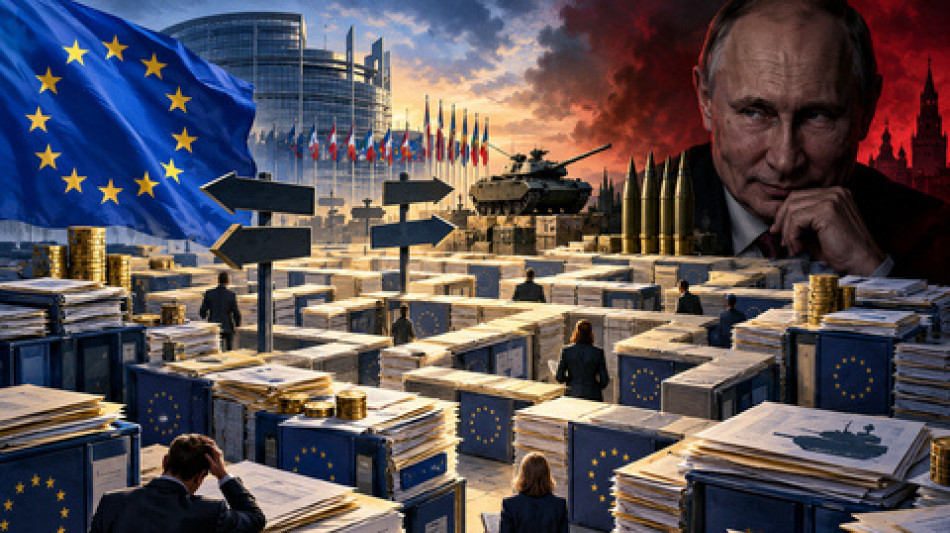
Europe’s arms money maze

Europe’s rearmament has acquired an uncomfortable companion: uncertainty about what the money actually buys. In Germany, an argument over defence-related borrowing has raised questions about whether exceptional debt is producing genuinely additional expenditure. In Estonia, unreliable inventory records and disputed ammunition contracts have brought ministerial accountability into the foreground. These are different problems, but they meet at the same point: a larger budget is not a reliable measure of a stronger defence.The contention that nobody knows what is happening to Europe’s weapons money goes too far. Budgets are published, procurement bodies operate and auditors are identifying failures. Nor do these cases establish that funds have disappeared into Russian hands or that the Kremlin engineered the difficulties. The more defensible conclusion is also more useful: Europe cannot judge rearmament by the volume of money announced. It must establish what has been purchased, accepted and made ready for use.That distinction matters strategically. An adversary need not steal the money to benefit from delays, unusable equipment or a loss of confidence in the governments spending it.What the €800 billion actually meansThe scale of the spending is substantial. Combined defence expenditure across the European Union reached €418 billion in 2025, with €454 billion estimated for 2026. Those annual totals should not be confused with the much larger, multi-year headline attached to the EU’s rearmament financing plan. The widely cited €800 billion is potential financing capacity, not a single fund already transferred to arms manufacturers. Its main components are approximately €650 billion in possible additional national expenditure enabled by fiscal flexibility over four years, and €150 billion in loans through the Security Action for Europe instrument, known as SAFE. The loans must be repaid; the additional national spending depends on governments choosing to use the available room.These distinctions are indispensable to any honest assessment. Permission to borrow is not an order placed with a factory. An order is not a completed delivery. Equipment delivered to a warehouse is not necessarily equipment that troops can operate, maintain and replenish. Treating all these stages as interchangeable allows governments to claim progress before the military benefit exists.It also creates a temptation to add together figures that describe different periods or overlapping flows of money. A credible account of rearmament should distinguish financing arrangements from annual expenditure, and both from verified outputs. Otherwise, the public is left comparing impressive totals whose practical meaning is unclear.Germany’s argument over additional spendingOn 10 September, the Ifo Institute challenged the use of Germany’s defence-related borrowing exemption. It calculated an €11 billion gap between additional borrowing and the year-on-year increase in the relevant expenditure. Ifo’s argument was that 38.5 per cent of the additional debt had not produced additional defence and security spending, instead freeing room for other purposes in the ordinary budget. The Finance Ministry rejected the comparison as legally and methodologically flawed. The exemption concerns qualifying expenditure above one per cent of gross domestic product, rather than an increase over the previous year. Ifo, for its part, said its analysis concerned additional spending, not constitutionality.This is not evidence that €11 billion was stolen. It is a dispute over the relationship between an exceptional borrowing mechanism and the political expectation attached to it. The difference is important: an arrangement can comply with its legal design while delivering less additional expenditure than citizens understand the announcement to promise.The practical question is whether new borrowing expands defence capacity or changes the way existing commitments are financed. Those outcomes can coexist within the same budget. Refinancing an established obligation may be lawful and fiscally useful, but it should not be presented as though an equivalent amount of new military capability has been purchased. Germany’s dispute therefore points to a straightforward transparency test. Governments should identify the expenditure that would have occurred anyway, the genuinely additional commitments and the delivery milestones attached to them. Without that comparison, the argument risks becoming a contest between accounting definitions while the central question—what the armed forces actually gain—remains unanswered.Estonia’s warning from the accountsIn Estonia, the problems are more immediate. Defence Minister Hanno Pevkur announced on 2 September that he would step down, accepting political responsibility for failures exposed in defence administration and procurement. His announcement did not amount to an admission of personal corruption.The National Audit Office issued a qualified opinion concerning defence inventories valued at approximately €1.2 billion because their quantities, composition and valuation could not be established reliably. It also questioned an unexplained retrospective adjustment of €99.7 million to the previous year’s inventory figures. That does not mean €1.2 billion of weapons has vanished. An unreliable balance is not the same thing as a proven loss. It means the records are insufficiently dependable to establish what the balance represents—a serious weakness in any organisation, and particularly consequential in one responsible for military readiness.Inadequate records can obstruct decisions long before a final financial loss is demonstrated. Commanders and purchasing authorities need to distinguish usable stock from equipment awaiting inspection, repair or replacement. If those categories are unclear, another procurement decision may rest on a mistaken understanding of what is already available.Auditing is therefore more than an exercise in retrospective blame. A trustworthy inventory helps determine what must be bought next, how urgently it is needed and whether previous purchases fulfilled their purpose. Poor accounting can undermine operational planning even where no theft is established.Paid for is not the same as usableEstonia’s ammunition procurement for Ukraine illustrates a second difficulty. The audit identified disputed advance payments and warned of a potential exposure to the state budget of around €70 million. That figure describes a risk, not a final, adjudicated loss.The controversy includes contracts involving the Italian company Datasel. Pevkur described ammunition delivered under the disputed arrangements as incomplete and of insufficient quality, rather than simply non-existent. Datasel disputes the criticism and has said that goods delivered and invoiced were worth approximately €58 million against about €59 million in advances. The company’s account is a contested position, not a judicial finding.The disagreement exposes a distinction that matters beyond this particular supplier. A payment record, an invoice, the physical presence of goods and acceptance of those goods for their intended use answer different questions. A supplier may point to shipments while a purchasing authority disputes whether the contractual requirement has been met. The existence of equipment does not, by itself, resolve an argument over quality or completeness.For Ukraine, the decisive consideration is usable military support. For the public authorities financing it, the additional questions are whether payment conditions were appropriate, inspections were timely and contractual protections can recover money when performance is disputed. Those questions should be settled through evidence and the relevant proceedings, not through premature declarations of guilt.The procurement lesson is nonetheless clear. Emergency purchasing needs traceable contracts, independently verified acceptance and a dependable record linking each payment to performance. Urgency may justify faster decisions. It cannot make the distinction between an invoice and a functioning delivery disappear.An oversight system split across institutionsEurope’s defence financing does not sit within a single system of scrutiny. National budgets, EU programmes, loans and off-budget arrangements have different institutional responsibilities. The European Court of Auditors’ September review described complex governance and uneven oversight arrangements, rather than a continent-wide absence of auditing.SAFE falls within the European Court of Auditors’ remit. The European Peace Facility, outside the ordinary EU budget, has its own College of Auditors. National defence expenditure is scrutinised through national institutions. The distinction is between different mandates, not between money that is automatically checked and money that is automatically unaccountable. The difficulty arises at the joins. A public explanation may follow the announcement of a financing package, while a procurement body follows the contract and an operational authority follows the equipment. Unless those accounts can be reconciled, citizens and legislators may struggle to establish the complete journey from political promise to accepted delivery.Secrecy complicates that task, but it need not prevent it. Publishing ammunition locations or technical vulnerabilities would be irresponsible. Giving properly authorised auditors access to contracts, inspections and payment records is a different matter. The need to protect operational information should not become a general excuse for withholding financial evidence.Nor should procurement integrity be treated as a rival to speed. Clearly assigned responsibility, verifiable milestones and early checks can prevent disputes from developing into expensive attempts to recover money after the event. The relevant choice is between controls that work during procurement and explanations demanded after something has gone wrong.Where Putin could benefitThese failures do not establish that Vladimir Putin has obtained everything he wanted. A Europe that turns rising expenditure into effective forces would represent a very different outcome. There is also no demonstrated Russian role in the particular German budget dispute or the Estonian accounting and contractual problems described here.The potential advantage for Moscow is indirect. Delayed or disputed deliveries can leave the intended recipient weaker than the expenditure suggests. Confusing financial claims can make it harder to defend further commitments. A succession of procurement controversies could erode confidence not only in individual contracts, but in the wider case for supporting Ukraine and strengthening European defence.That is a strategic risk, not proof of an accomplished Russian victory. The public identification of problems is itself evidence that scrutiny exists. A minister accepting political responsibility, auditors challenging unreliable balances and a government being pressed to explain its borrowing are mechanisms through which democratic systems can correct failure. Their value depends on what happens afterwards.The answer is neither to abandon rearmament nor to shield it from criticism. Governments should report progress in terms that connect money to results: contracts awarded, payments made, equipment accepted and capabilities available, with sensitive details reserved for secure oversight. Disputed transactions should remain visible until resolved rather than disappearing beneath the next spending announcement.Europe does not need to prove its determination by producing another larger number. It needs to demonstrate that the money already committed is becoming usable strength. Until it does, the distance between those two things remains an opportunity for the adversary it is trying to deter.