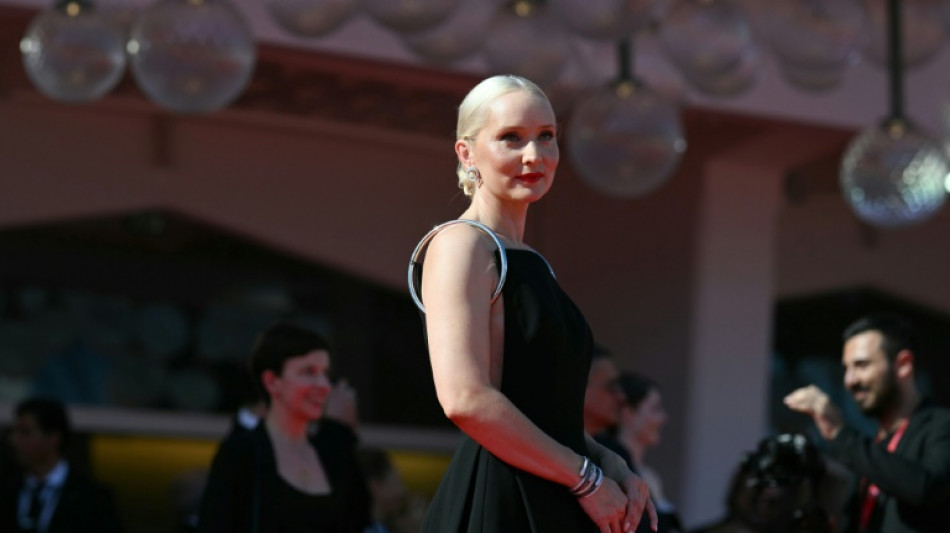
Hommage to Shaker feminist in Venice film from Mona Fastvold / Photo: Tiziana FABI - AFP

 Archaelogical 'breakthrough' could confirm origins of Paris

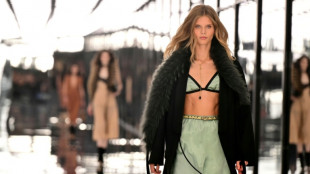 Fendi brings disco bling, Italian style, to Milan Fashion Week
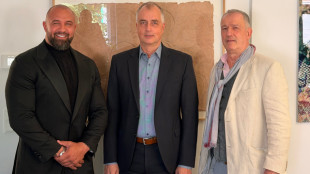
 アレックス・ボディ氏とシュテファン・ハウプト教授、ルーマニアの伝説的な美術コレクションをめぐり提携に合意
 Stocks dip, oil rises as traders eye chances of Iran deal

 Oil falls, stocks steady as Trump hails 'good' Iran talks

 Canada judge to decide prison term for suicide poison seller

 Meta leans into AI, smart glasses amid privacy pushback

 Oil prices fall after Trump hails 'good' talks with Iran

 AI political ads warp reality ahead of US midterms

 Oil prices retreat as markets welcome US-Iran talks

 French prosecutors probe secret filming of women with smart glasses

 Trump renames AI "super intelligence," rejects international oversight

 How is the EU approaching record fuel prices?

 11 hurt as teen opens fire outside school in western Turkey

 UN chief says 'Big Oil' treats atmosphere as open sewer

 Memoir by Diana's brother goes on sale after rocking UK monarchy

 Stocks climb as oil slides, AI buzz returns

 MEXC Launches “Real Stocks, Real Friends” with Rewards for Bringing Friends to Wall Street

 Stocks rise on AI buzz, oil prices cool

 In Bangladesh, Pakistan's Jinnah photo stirs anger

 China's robot dancers limber up for America's Got Talent final
 Green policies just good politics, says UK minister

 El Nino weather pattern enters record territory: scientist

 US networks halt Trump coverage in revolt over White House ban

 NOWPayments Releases Cross-Chain Payout Data Revealing Key Performance Benchmarks Across TRON, BNB Chain, and Solana

With "The Testament of Ann Lee", a movie about the founder of the 18th-century Shaker religious movement screening at the Venice Film Festival, director Mona Fastvold sought to honour a figure "on the verge of being erased from memory".
Lee, played by Amanda Seyfried in the film that premiered at Venice this week, was "one of the very first American feminists who fought for equality" between the sexes, but also between all humans, Fastvold told AFP in an interview.
Born in 1736 in Manchester, England into a working-class family, Lee -- or "Mother Ann" as her followers called her -- created the Shaker movement, a Quakers offshoot, whose worship was based on dancing and singing to reach a trance-like state.
The Shakers' principles as imposed by Lee -- perceived as the female reincarnation of Christ -- involved sexual abstinence, pacifism, the rejection of pride and wealth, and manual labour as a form of prayer.
Fastvold said she stumbled upon the Shaker heroine while researching late 18th century religious movements in the United States, where Lee emigrated in 1774 with a few disciples to escape religious persecution in England and establish a Shaker community near New York.
- Religious freedom -
"It was like a religious freedom mecca in America at the time. And people flocked to the United States to try out all kinds of wild different ideas around religion," said the New York-based Norwegian filmmaker.
Her film gives prominence to Shaker hymns, revisited by composer Daniel Blumberg, who won an Oscar this year for the music for "The Brutalist", directed by Fastvold's partner, Brady Corbet. Corbet co-wrote the screenplay for the Ann Lee film, as did Fastvold for "The Brutalist".
Fastvold said she was attracted by Lee's idea of "creating a community where you can be safe".
"That sense of community coming together, singing, dancing, moving, taking each other's pain, and helping each other through that pain... I started to have a real understanding for that aspect of it," said Fastvold.
"I didn't make this movie to be, like, 'Come join the Shakers,'" she said.
"But I do think that I wanted to treat her with a lot of love because if you look at the time that she lived in... what she did was quite extraordinary and the ideas that she had about community and empathy and kindness, and to lead with kindness and love."
- Creative prayer -
According to the filmmaker, there are only three members of the Shaker movement left, as the community slowly dies out.
At its peak around 1840, the movement had 6,000 followers from 19 communities, decades after Lee's death in 1784.
"I wanted to show her a bit as an icon. Like one does in religious paintings, and movies about Joan of Arc or Jesus Christ," Fastvold said.
"All of these male icons have gotten this treatment, how about I take that and give this to this unknown woman?" she asked.
The Shakers are best known today for their furniture, prized in the design world for its functionality and refined aesthetics.
"For them, architecture, creating furniture, creating boxes, it was a form of prayer," Fastvold said.
"That's why their things are so special. That's why people are obsessing over this furniture still, and these objects... There's prayer in that, there's this obsessive prayer in the creation of them."
C.Smith--CPN